104 Matches, One Summer: The Group Stage Fixtures You Can't Afford to Miss
The expanded 2026 World Cup delivers 104 group stage matches. Here's how to cut through the noise and find the drama.
The Problem With 104 Football Matches
There is a moment, roughly nine days into a World Cup group stage, when the human brain begins to short-circuit. The group tables blur. The permutations collapse into nonsense. You find yourself watching a match between two nations you couldn't locate on a map, and you're not sure why, except that it's on, and the remote is across the room, and your legs stopped working somewhere around match 47.
Now imagine that sensation, but amplified to a scale FIFA has never attempted before.
The 2026 World Cup in the United States, Mexico, and Canada will feature 104 group stage matches alone. One hundred and four. That's more total games than the entire 2022 tournament in Qatar, group stage through final. The expansion to 48 teams across 12 groups of four has fundamentally altered the architecture of football's greatest spectacle, and the question facing every neutral supporter is no longer "Who will win?" but "Where do I even start?"
"You are now entering a morass of endless football," wrote Guardian chief sports writer Barney Ronay, attempting to map the group stage terrain. "The trick is knowing where to look."
He's right. And the trick, it turns out, involves understanding which fixtures carry weight far beyond three points.
Why the Expanded Format Changes Everything
The jump from 32 to 48 teams was sold as inclusivity. More nations, more representation, more dreams. And that's true, at least on paper. 16 additional slots mean debutants, minnows, and countries that have spent decades on the outside looking in.
But the expansion also dilutes the group stage in ways that FIFA would prefer you not think about too carefully. Under the old format, every group match felt consequential because only two teams advanced. Now, with the top two from each of the 12 groups qualifying automatically plus the eight best third-placed teams, the mathematical pressure on established nations softens considerably.
A team like Brazil could, in theory, sleepwalk through their opening fixture and still be virtually assured of progression. That changes the texture of early matches. It changes how managers approach them. And it changes which games deliver genuine jeopardy versus which ones are simply exercises in professional competence.
The must-watch list, then, isn't just about quality. It's about stakes.
The David v Goliath Fixtures That Actually Matter
Every World Cup has its mismatches. The expanded format guarantees more of them. But the best David v Goliath matches aren't the ones where the minnow parks the bus for 90 minutes and loses 2-0. They're the ones where something ancient and irrational stirs, where the gap in talent is narrowed by the gap in desperation.
Think back to Saudi Arabia beating Argentina on the opening day in Qatar in 2022. That result didn't emerge from tactical genius alone. It emerged from the collision between a team that expected to win comfortably and a team that had absolutely nothing to lose. The expanded 2026 format should produce several such collisions, particularly in groups where a traditional powerhouse shares a pool with a debutant or a nation making only its second or third World Cup appearance.
These are the matches where the 104-game schedule earns its keep. Not in the Brazil group stage stroll, but in the fixture where Brazil's opponent plays the game of their collective lives.
Norway and the Haaland Question
No player in world football carries a more fascinating international burden right now than Erling Haaland. At Manchester City, he is a machine calibrated for trophies. For Norway, he is something far more complicated: a generational talent attached to a nation that hasn't qualified for a World Cup since 1998.
Haaland has scored 34 goals in 37 appearances for Norway. Those numbers are absurd. They are also, in the context of tournament football, essentially meaningless, because Norway have repeatedly failed to convert his individual brilliance into collective qualification. The 2026 cycle changed that. Norway qualified. And suddenly, the question transforms from "Can Haaland carry a team to the tournament?" to "What happens when he actually gets there?"
A Norway group stage match in 2026 isn't just about football. It's about whether the most lethal striker on the planet can translate club dominance into international impact at the highest level. It's a narrative that has been building since he first pulled on the red shirt. Every neutral should have at least one Norway fixture circled.
The Political Fixtures
Football has never existed in a vacuum, but the 2026 World Cup exists in a particularly charged one. Hosted across three nations with complicated diplomatic relationships, staged in a geopolitical moment that FIFA would prefer to frame as unity rather than acknowledge as tension, certain group stage fixtures will carry meaning that extends well beyond the pitch.
Ronay identified fixtures with political overtones as among the must-watch encounters, and he's not wrong. When certain nations meet in a World Cup group, the subtext writes itself. Diplomatic tensions, cultural rivalries, historical grievances. FIFA insists the tournament is a celebration of football. The players know it's also a stage where everything else bleeds through.
These matches tend to produce either extraordinary caution or extraordinary chaos. Neither is boring.
South American Fire
Brazil's group stage matches always attract massive viewership, but the 2026 edition of the Selecao arrives at a crossroads. After years of underwhelming tournament performances relative to their talent, the Brazilian national team is in the midst of a generational transition. The question isn't whether they'll advance from the group; it's whether they'll arrive looking like genuine contenders or a collection of individual brilliance still searching for a coherent identity.
A Brazil group match in the expanded format is appointment viewing for a different reason than you might expect. You're not tuning in for the result. You're tuning in to read the signals. Is the midfield clicking? Is the defense organized? Does this team believe in itself? The group stage is the first draft of a tournament narrative, and Brazil's opening chapters are always the most scrutinized in football.
The Matches Between Equals
If David v Goliath provides the romance and the political fixtures provide the subtext, then the group stage matches between evenly matched footballing nations provide the purest footballing drama. Two teams of similar quality, both knowing that a loss could mean elimination under the new best third-placed teams format, both playing with the urgency that only a World Cup can manufacture.
These are the fixtures where tactical battles become chess matches. Where a single substitution, a single set piece, a single moment of individual quality separates progress from despair. In the old 32-team format, these matches dotted every group. In the expanded 48-team format, they're concentrated in the groups where the seeding has thrown together three or four nations of comparable strength.
Identifying those groups is the first step. Watching every minute of their head-to-head encounters is the second.
How to Survive 104 Matches
Here's the honest truth: nobody is watching all 104 group stage matches. Not even the most dedicated football obsessive, the one with three screens and a subscription to every streaming service on earth. The human body was not designed for this volume of football.
The survival guide is simple. Prioritize fixtures where stakes meet quality. A dead rubber between two eliminated teams on matchday three is not worth your time, regardless of the names on the shirts. A clash between two evenly matched nations with everything to play for on matchday two is worth rearranging your entire schedule.
- Watch live: The high-stakes political and rivalry fixtures, the Norway matches, Brazil's opener, and any group where three teams are genuinely fighting for two spots.
- Watch highlights: The mismatches, the dead rubbers, and any fixture where a team has already mathematically qualified.
- Watch the narratives: Group stage football at a World Cup is never just about the 90 minutes. It's about what the 90 minutes tell us about what's coming in the knockout rounds.
The Bigger Picture
FIFA's expansion gamble rests on a simple bet: that more football means more joy. The reality is more nuanced. More football means more noise, and more noise means the signal matters more than ever.
The group stage of the 2026 World Cup will be the longest in the tournament's history. It will test the patience of casual fans and the stamina of diehards. But buried within those 104 matches are the moments that will define the tournament. Haaland's first World Cup goal. Brazil's statement of intent. A debutant nation announcing itself on the global stage. A geopolitical rivalry playing out under the floodlights.
The trick, as Ronay put it, is knowing where to look. The matches above are where you start.
The 2026 FIFA World Cup group stage begins in June 2026 across venues in the United States, Mexico, and Canada.
Editorial Integrity
This is an original SportPulse article written by our editorial team. All content is independently researched, written, and reviewed by our writers and editors before publication. We do not publish copied, aggregated, or syndicated content.
SportPulse is committed to original sports journalism. Read our editorial policy or contact us with any questions.
More Like This
All football
Ronaldo, Robots, and the Death of the Eyeball Test
Portugal survived Croatia at World Cup 2026, but a sensor-driven offside call against Ronaldo signals football's most dangerous technological overreach yet.
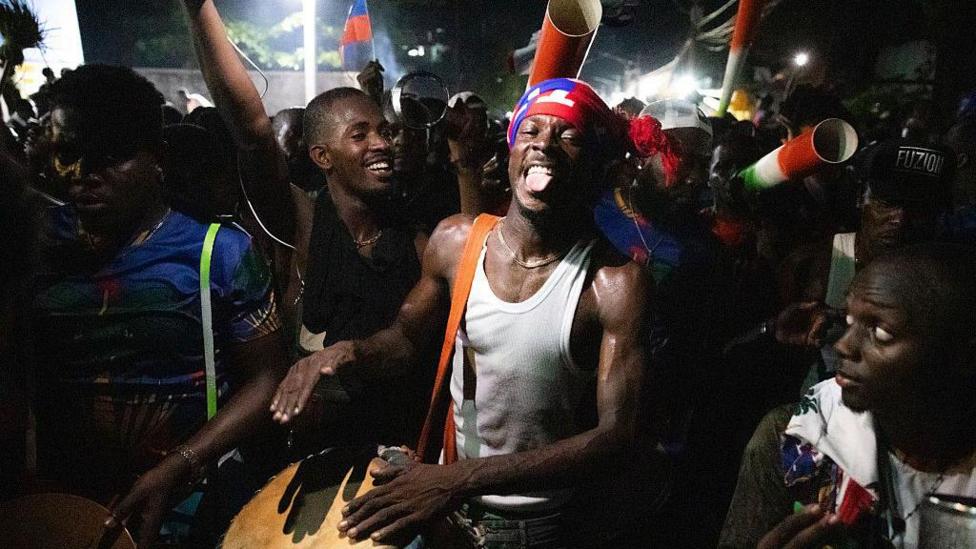
Fifty-Two Years Later, Haiti Carry a Nation's Weight onto the World Stage
Haiti's World Cup return after 52 years is less about results and more about a fractured nation reclaiming its identity through football.
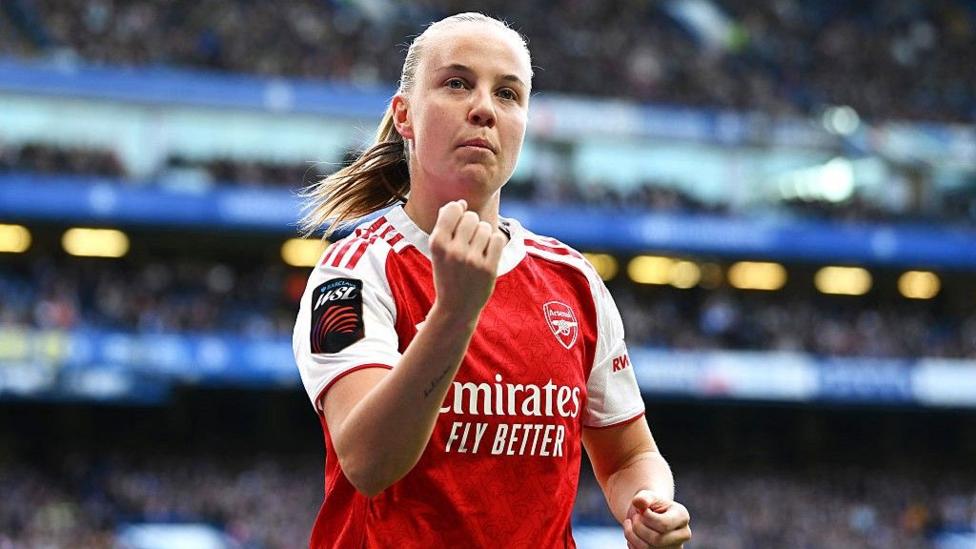
Mead Ditches Arsenal for City in Blockbuster Free Transfer
Beth Mead's shock Arsenal exit delivers Manchester City their deadliest WSL weapon on a free transfer.