Women's Rugby Has a Concussion Problem, and It Starts With the Rulebook
Rugby's head injury protocols still rely on men's data, even as research confirms women are affected differently.
The next time a women's rugby player takes a heavy blow to the head and passes a sideline concussion assessment designed around male physiology, the sport should ask itself a question it has been avoiding for years: whose body is this protocol actually protecting?
Rugby's concussion guidelines, the framework medical staff lean on to decide whether a player stays on the pitch or is pulled from it, remain built overwhelmingly on data collected from men's rugby. That is not a historical footnote. A growing body of research confirms what should have been obvious earlier: head contact affects women differently than it affects men.
Why the HIA Process Misses Female Concussion Symptoms
Concussion assessment in rugby follows standardized tools: the Head Injury Assessment (HIA) process used at elite level, and the community-game protocols that filter down to amateur clubs. These tools were developed, validated, and normed using male players as the baseline. Symptoms were catalogued from men's responses. Recovery timelines were benchmarked against men's return-to-play data. The scoring thresholds, the red-flag indicators, the graduated return protocols: all of it skews male.
Research in sports medicine has shown that women report concussion symptoms at higher rates, experience longer recovery windows, and present with different symptom profiles than men following comparable head impacts. Women are more likely to report headaches, dizziness, and cognitive fog, while men may present with balance-related symptoms more prominently. These are clinically significant differences that should shape how a sport assesses, treats, and manages head injuries in its female athletes.
Rugby has not kept pace with that science.
How the Three-Stage Assessment Can Let Players Slip Through
The HIA process in professional rugby involves three stages: an immediate on-field screen, a second evaluation at halftime or in a medical room shortly after the incident, and a post-match review the following day. Each stage uses symptom checklists, cognitive tests, and balance assessments calibrated to established norms.
When those norms are drawn primarily from men's data, the risk is twofold. A female player experiencing concussion symptoms that fall outside the male-centered threshold may be cleared to return to play. A player who is concussed but whose symptoms do not match the expected male profile may be missed entirely on the sideline, falling through a gap the protocol was never designed to catch.
The sport's own injury surveillance data has flagged gender differences in concussion incidence and outcomes, but translating that knowledge into revised protocols has been slow. Governing bodies have acknowledged the research. Updated, gender-specific guidelines have not followed at the speed the evidence demands.
Biological Sex Changes How the Brain Responds to Impact
The core finding driving this conversation: biological sex influences how the brain responds to impact. Hormonal differences, neck strength disparities, and variations in cerebrospinal fluid volume all contribute to a different vulnerability profile for women. Female athletes tend to have less neck muscle mass relative to head size, which may amplify rotational forces on the brain during contact. Oestrogen fluctuations across the menstrual cycle have also been studied as a potential modifier of concussion recovery, though that research remains in its earlier stages.
Women's bodies process head trauma differently. A sport that ignores that reality in its medical protocols is being gender-blind, not gender-neutral.
Rugby's contact intensity has increased at every level of the game in the past decade. In the women's game specifically, professionalism has accelerated physical development, collision speeds, and tackle frequencies. Players are bigger, faster, and more powerful than they were when the current concussion framework was first implemented. The medical tools assessing those collisions have not scaled at the same rate, particularly for women.
World Rugby Has Invested in Research, but Implementation Lags
World Rugby has invested in concussion research and has been among the more proactive sports governing bodies on head injury policy. Lowered tackle height trials, mandatory education modules, and community-game law variations all reflect a governing body that takes the issue seriously at a structural level.
But seriousness at the policy level and accuracy at the point of care are different things. If the assessment tools used by medical staff on the sideline do not account for how women experience concussion, then the investment in research has a delivery problem. The knowledge exists. The implementation lags.
The women's game has grown rapidly in professionalism, visibility, and competitive depth. The medical infrastructure supporting it needs to grow at the same pace, which means building concussion protocols that treat female physiology as the baseline for female players, not as a secondary consideration grafted onto a male-designed system.
The Evidence Already Supports Gender-Specific Protocols
This is not a problem that requires a decade of further study. The evidence base for gender-specific concussion assessment is substantial enough to act on now. What it requires is institutional willingness to rebuild parts of the assessment framework with women's data at the centre rather than at the margins.
For players, coaches, and medical staff working in women's rugby right now, the risk is immediate. Every match played under a protocol that does not fully account for female concussion profiles is a match where a player could be wrongly cleared, wrongly returned, or wrongly told she is fine when she is not.
The sport that prides itself on courage and physicality owes its players medical protocols that see them clearly. Right now, for women in rugby, those protocols are looking through a lens ground for someone else.
Editorial Integrity
This is an original SportPulse article written by our editorial team. All content is independently researched, written, and reviewed by our writers and editors before publication. We do not publish copied, aggregated, or syndicated content.
SportPulse is committed to original sports journalism. Read our editorial policy or contact us with any questions.
More Like This
All long-reads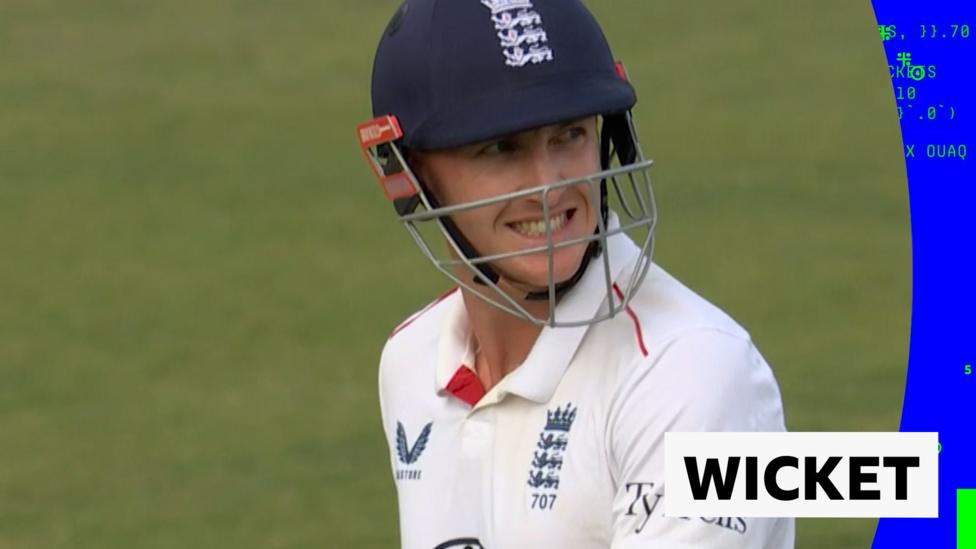
Vaughan Blasts 'Pathetic' Brook as England Crumble in 373 Chase
Michael Vaughan savaged Harry Brook's reckless dismissal as England lurched to 72-3 chasing 373 at Trent Bridge.

The Reluctant Playbook: Inside a Veteran's War with His AI Offensive Coordinator
When a Hall of Fame-bound quarterback rebels against the algorithmic 'play-caller in his pocket,' it's a referendum on sport's soul.

Speedboats, Eggs & National Pride: Inside Scotland's Final Countdown
Three weeks from the Games, Team Scotland's kitting-out day reveals the psychological armor behind the sporting pursuit.