Tonali's Exit Marks Newcastle's PSR Reckoning — And Spurs' Gain
Newcastle's £100m sale of Tonali to Tottenham exposes the brutal cost of PSR compliance in the Premier League.
The Shape of a Surrender
When Newcastle United signed Sandro Tonali from AC Milan in the summer of 2023, the deal was framed as a statement of intent. Here was a dynamic No. 8 who could press in Eddie Howe's preferred 4-3-3, link play between the lines, and offer the kind of progressive ball-carrying that modern midfield units demand. The fee was steep at around £55 million, but Tonali was 23, a Serie A title winner, and a player whose ceiling appeared to match Newcastle's Champions League ambitions.
Less than two years later, he is set to join Tottenham Hotspur for £100 million, and the optics tell a story that cuts far deeper than one player's departure. Newcastle, the club that Saudi Arabia's Public Investment Fund was supposed to transform into perennial contenders, are being systematically dismantled by the very financial regulations they were accused of trying to circumvent. The Tonali sale is not a strategic recalibration. It is a concession.
A Summer of Attrition
The numbers are stark. Over the past 12 months, Newcastle have lost or are losing a significant core of their squad. Tonali's exit follows a pattern that has seen key assets moved on, not because the sporting department wanted to reshape the team, but because the Premier League's Profit and Sustainability Rules (PSR) demanded it. Clubs are permitted to lose a maximum of £105 million over a rolling three-year assessment period. Newcastle's wage bill, transfer amortisation costs, and revenue growth have not kept pace with their spending ambitions.
This is the paradox at the heart of the Saudi-era project. PIF's investment brought extraordinary financial firepower, but PSR operates on an accruals basis. It does not care about future broadcast deals or commercial sponsorship pipelines that are still being built. It cares about the past three years of accounting. And in that window, Newcastle have spent heavily on Tonali, Bruno Guimarães, Alexander Isak, Anthony Gordon, and others, while their matchday and commercial revenue — though growing — remains a tier below the established elite.
The Tonali Calculus
Selling Tonali for £100 million after purchasing him for roughly £55 million yields a book profit of approximately £45 million. In PSR accounting, that gain lands immediately and offsets accumulated losses. It is the fastest, cleanest way to balance the books. But it is also the most painful, because it removes a player who, despite a 10-month betting suspension that wiped out a significant chunk of his Newcastle career, was expected to be a cornerstone of Howe's midfield for years.
The suspension itself complicates the narrative. Tonali was banned by the Italian Football Federation in October 2023 after admitting to placing bets on football matches, including games involving his former club. He did not return to competitive action until August 2024, meaning Newcastle received roughly six months of availability from a player they had committed £55 million to acquire. That is a brutal return on investment, and it forced Howe to reshuffle his midfield options repeatedly, relying on the versatile Sean Longstaff, the industrious Joe Willock, and Bruno Guimarães in a more advanced role than his natural game.
Tactical Consequences for Howe's System
From a coaching perspective, Tonali's departure creates a specific tactical void. Howe has built his Newcastle side around aggressive pressing from the front, with the midfield tasked with winning second balls and recycling possession quickly into wide areas. The system relies on at least one midfielder who can break lines with progressive carries, shifting the point of attack and forcing opposition defences to scramble laterally.
Bruno Guimarães remains elite in this regard, but he is increasingly a player linked with moves to Barcelona and Paris Saint-Germain. If Bruno follows Tonali out of St. James' Park, Howe's entire midfield blueprint collapses. The 4-3-3 that once bristled with dynamism and pressing intensity becomes a formation held together by squad players operating beyond their optimal level.
The recruitment challenge is immense. Replacing a player of Tonali's profile — his ability to cover ground, his tactical intelligence in pressing traps, his comfort receiving under pressure in the first and second phases — requires significant investment. But that investment is precisely what PSR prevents Newcastle from making. They are caught in a feedback loop: sell to comply, then lack the funds to adequately replace what was sold.
Tottenham's Midfield Evolution
For Tottenham, the acquisition represents a different kind of statement. Ange Postecoglou has sought to implement a possession-based 4-2-3-1 that demands technically secure midfielders capable of playing through pressure. Yves Bissouma and Rodrigo Bentancur offer athleticism and defensive coverage, but neither possesses Tonali's combination of ball progression and positional discipline.
Tonali's arrival would give Postecoglou a midfielder who can anchor the double pivot while also stepping forward to connect with the attacking line. His experience in Stefano Pioli's aggressive, high-pressing Milan side makes him tactically compatible with Postecoglou's front-foot philosophy. The £100 million price tag is enormous, but Tottenham's financial position under ENIC ownership has been quietly strengthened by disciplined wage management and the revenue uplift from their new stadium.
The Broader PSR Landscape
Tonali's transfer is the latest in a series of mega-deals driven by PSR compliance. Chelsea's fire sale of academy graduates, Aston Villa's late-window scramble in 2024, Everton's repeated points deductions, and Leicester City's struggles all point to a regulatory framework that, while well-intentioned, creates perverse incentives. Clubs are forced to sell their best players to remain compliant, which undermines the competitive balance the rules were supposed to protect.
Newcastle's situation is particularly instructive because it reveals the gap between ambition and financial reality in modern football. PIF can afford to spend billions. The regulations ensure they cannot do so quickly enough to challenge Manchester City, Arsenal, and Liverpool in the short term. Whether that is fair depends entirely on your perspective. For established clubs, PSR protects the ecosystem. For ambitious newcomers, it feels like a gatekeeper dressed up as a safeguard.
What Comes Next at St. James' Park
The immediate question is whether Newcastle can reinvest the Tonali fee intelligently. Under PSR, the sale proceeds provide breathing room, but they do not create unlimited spending power. Howe and sporting director Paul Mitchell will need to identify value in a market where every selling club knows Newcastle have just banked £100 million. Prices inflate accordingly.
The deeper concern is strategic identity. Newcastle's project was supposed to be about building a squad capable of sustained Champions League qualification and, eventually, a title challenge. Selling a 24-year-old midfielder to a domestic rival does not advance that goal. It delays it. And in the Premier League, where the margins between fourth and eighth are razor-thin, delay can be fatal.
The next transfer window will reveal whether this is a painful but necessary reset or the beginning of a prolonged regression. Howe's coaching has consistently maximised the talent available to him, but even the most astute tactical mind cannot compensate indefinitely for the systematic removal of quality. Newcastle's board must decide whether PSR compliance is a temporary obstacle or a permanent ceiling. The answer will define the club's trajectory for the next decade.
"The rules exist to ensure sustainability. We will operate within them and continue to build a competitive squad." — A sentiment echoed by Newcastle's hierarchy in recent months, though the gap between rhetoric and reality grows wider with every sale.
Editorial Integrity
This is an original SportPulse article written by our editorial team. All content is independently researched, written, and reviewed by our writers and editors before publication. We do not publish copied, aggregated, or syndicated content.
SportPulse is committed to original sports journalism. Read our editorial policy or contact us with any questions.
More Like This
All football
The Artist France Didn't Know It Needed: Michael Olise Steals the Show
Bayern Munich's Michael Olise hasn't scored at the World Cup yet — and France couldn't care less.
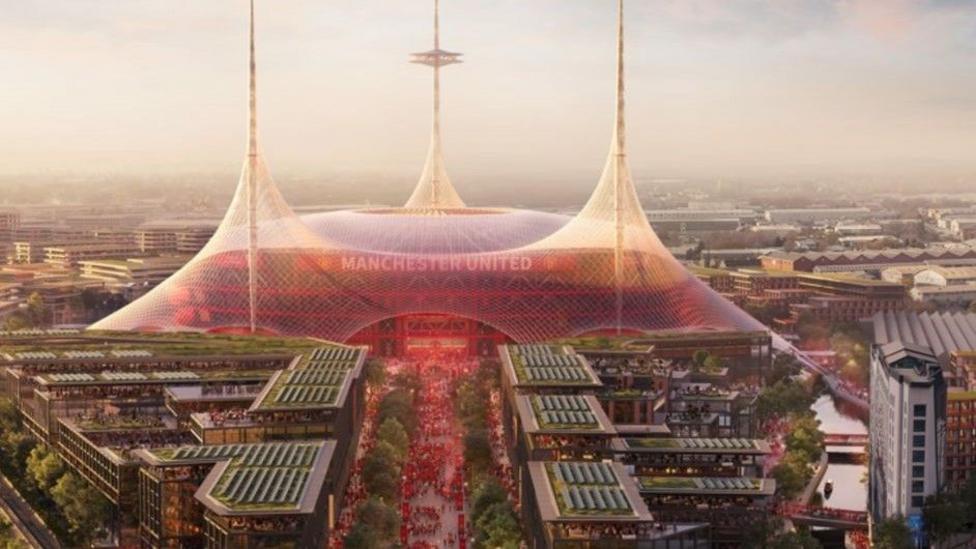
United's 100,000-Seat Vision Takes Shape as Land Deal Closes
Manchester United's stadium project gains real momentum with a 25-acre land acquisition near Old Trafford.

Pimblett's 52-Second Destruction Rewrites the Lightweight Title Script
Paddy Pimblett submitted Benoit Saint-Denis in 52 seconds at UFC 329, transforming from polarizing prospect to undeniable title contender.