Sinner Conquers Wimbledon, But Zverev Looms Over His Throne
Jannik Sinner's Wimbledon triumph confirms his dominance, yet Alexander Zverev's four-set fight signals an imminent threat to the world number one.
4-6, 6-4, 6-4, 6-4. That is the scoreboard folklore that will define the 2025 Gentlemen's Singles Final. It is a tapestry of sets that reveals two realities: Sinner's grasp on the summit is tightening, but Zverev is stepping onto the highest mountain with branches of fire.
For the first time in his career, Jannik Sinner is the Wimbledon champion. The script in this final was a cinematic slow burn: Sinner losing the opening set but then engineering three consecutive sets of relentless, metronomic baseline terror to deflate Alexander Zverev's challenge.
It was a match that began with the German's explosive demolition. Zverev struck 31 aces in the match, serving at speeds that rattled the Centre Court rafters. Sinner, however, found the solution where none seemed to exist: returning those missiles just deep enough to neutralize the German's court position. Sinner won 76% of his second serve points, a staggering number on grass against a player of Zverev's caliber.
"It takes two to make a great match. He pushed me to the very limit. This was an amazing final, and I had to play my best tennis to survive."
With that sentence, delivered to the Centre Court crowd with theспокойствие of a man who had just strengthened his physical dominance, Sinner continued a season that is rapidly becoming a historical anomaly. This was not just a win; it was the extraction of a fourth Grand Slam title, a testament to a player who has erased the membrane between potential and reality.
The narrative of the first set
Zverev started with a ferocity that recalled his back-to-back ATP Finals titles. He held serve with a mechanic's precision, landing 78% of his first serves in the opening set. Sinner, usually a picture of Italian composure, looked briefly human. The German's backhand, a shot that has dissected the game's best for a decade, was dropping dead on the baseline. Sinner was two sets from a championship loss.
But grass rewards those who adapt. Sinner had to change, and he did. He started standing three meters behind the baseline to receive, a tactical adjustment straight out of the Novak Djokovic playbook. He eliminated Zverev's rhythm by refusing to engage in flat exchanges from inside the court. Sinner generated 15 break point opportunities across the match, converting six. In the pivotal moments of sets two and three, Sinner became—young as the word sounds—the wall.
For Sinner is not young in the way peers are. His maturity on court mirrors the early trajectories of the game's immortals. He is now the youngest man to win 44 matches in a calendar year since Roger Federer in 2006. That statistic mattered more Sunday than a brittle ATP ranking point allocation.
Career by Numbers
- 4 Grand Slam singles titles (Australian Open 2024, US Open 2024, Australian Open 2025, Wimbledon 2025)
- 23 years old at the time of his Wimbledon triumph
- 44 match wins in a single calendar year, the most by any player on tour this season
- 7 break points saved out of 9 faced in the final three sets of the Wimbledon final
- Ranking: World No. 1, holding the position for *23 consecutive weeks
The man who didn't blink
Sinner's career has been a slow-bleed investment. Coached by Simone Vagnozzi and Darren Cahill, he has evolved from a one-dimensional power baseliner into a player of frightening versatility. The serve, once a liability, is now a weapon. Against Zverev, he won 88% of his first serve points, a number that suffocates an opponent's hope. The volley, a shot grass demands, was deployed with increasing confidence throughout the fortnight. Sinner approached the net 34 times in the final, winning 25 of those exchanges.
The psychological battle with Zverev was the match's heartbeat. Zverev has spent a decade being the nearly man, the player whose talent has somehow continuously, perplexingly, underperformed at the Grand Slam level. That the German rose to his first Wimbledon final is a story of survival health aside. Zverev's 2022 French Open ankle injury nearly ended his career. His return to the summit is a testament to a tee work ethic that often goes unnoticed beneath the occasional controversy.
"I can see him being a champion here soon. He is playing at an incredible level, and I will be very, very careful with him."
When Sinner says he will be careful, it's not pilot speak. It is the specific alert of a champion who knows his reign is under siege. Zverev's performance in this Wimbledon final was not a cameo; it was a declaration. The German dispatched a who's who of tennis to reach the final, including a straight-set destruction of a top-ten opponent in the semifinals. His backhand is the finest two-hander in the sport today. When the match was on his racquet, he played with a fearlessness that the tennis world has demanded of him for years.
The ATP's brass would have preferred a fifth set, a more dramatic climax. Tennis did not get that narrative luxury. But it got something better: a passing of the torch that felt organic. For the last two years, Sinner and Carlos Alcaraz have engaged in a binary championship pursuit. Zverev's resurgence introduces a third variable, a 6'6" terror whose serve-and-volley game is built for Wimbledon's lawns.
Legacy on the lawn
Sinner's legacy is no longer a paragraph; it is becoming a chapter on tennis history's main page. The victory at Wimbledon Vinci cent allows him to join a fraternity. The All England Club's grass has traditionally been Europe's most exclusive real estate. Sinner's path from the mountains of Sexton to the SW19 podium is the realization of a destiny scripted by none other than Riccardo Piatti, the coach who first recognized a skier's coordination could be transferred to a tennis court.
Grass was supposed to be his weakness. The low bounces, the irregular surfaces, the abbreviated points—they were all supposed to be the mountain that Sinner would need years to climb. Instead, he scaled it at 23 years old, his second major of the 2025 season following his successful Australian Open defense.
What comes next is a summer that could determine a generation's pecking order. Sinner will head to the hard courts of North America for the US Open Series, where he will defend his US Open title. Zverev will look to build on this Wimbledon performance and overcome what has been a psychological barrier at the sport's biggest events. The divergent paths will converge again under the lights of Flushing Meadows, and the tennis world will be watching closely.
"He is playing at an incredible level. I will be very, very careful with him."
It takes two to make a great final. Jannik Sinner is the Wimbledon champion today, the undisputed world number one. But the echoes of Zverev's 31 aces will reverberate until these two meet again. The champion has been crowned. The challenger has been announced. The game's newest rivalry is no longer a promise; it is a present reality.
For Sinner, the future includes a prediction of sustained success, but also a challenge to his supremacy. The Italian's dominance is one he will have to fight for. That battle will be remarkable. For now, Sinner can savor the taste of grass and glory, the confirmation that his name belongs alongside the legends who have conquered this sport's most hallowed lawns.
Editorial Integrity
This is an original SportPulse article written by our editorial team. All content is independently researched, written, and reviewed by our writers and editors before publication. We do not publish copied, aggregated, or syndicated content.
SportPulse is committed to original sports journalism. Read our editorial policy or contact us with any questions.
More Like This
All tennis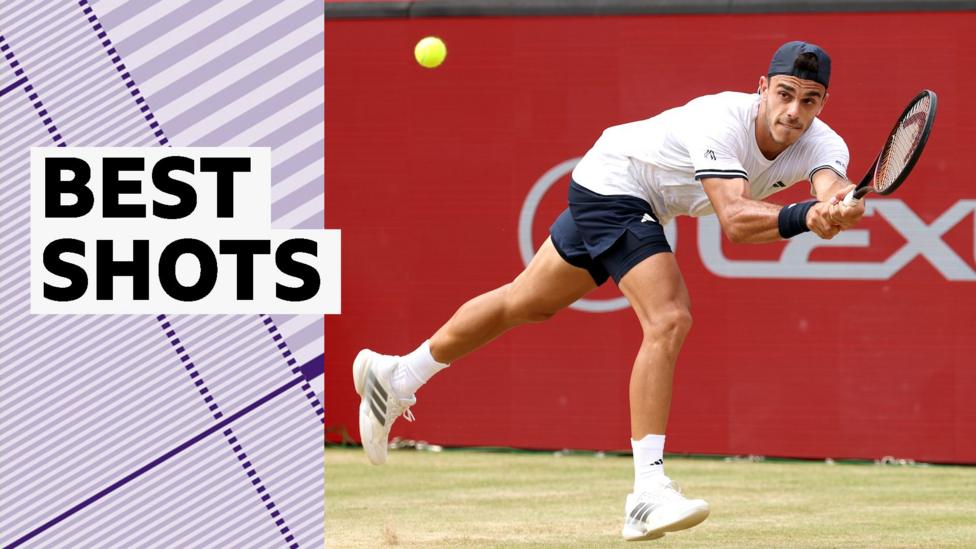
The Argentine Who Learned to Fly on Grass
Francisco Cerundolo's stunning Queen's Club run is rewriting what an Argentine can do on a lawn.
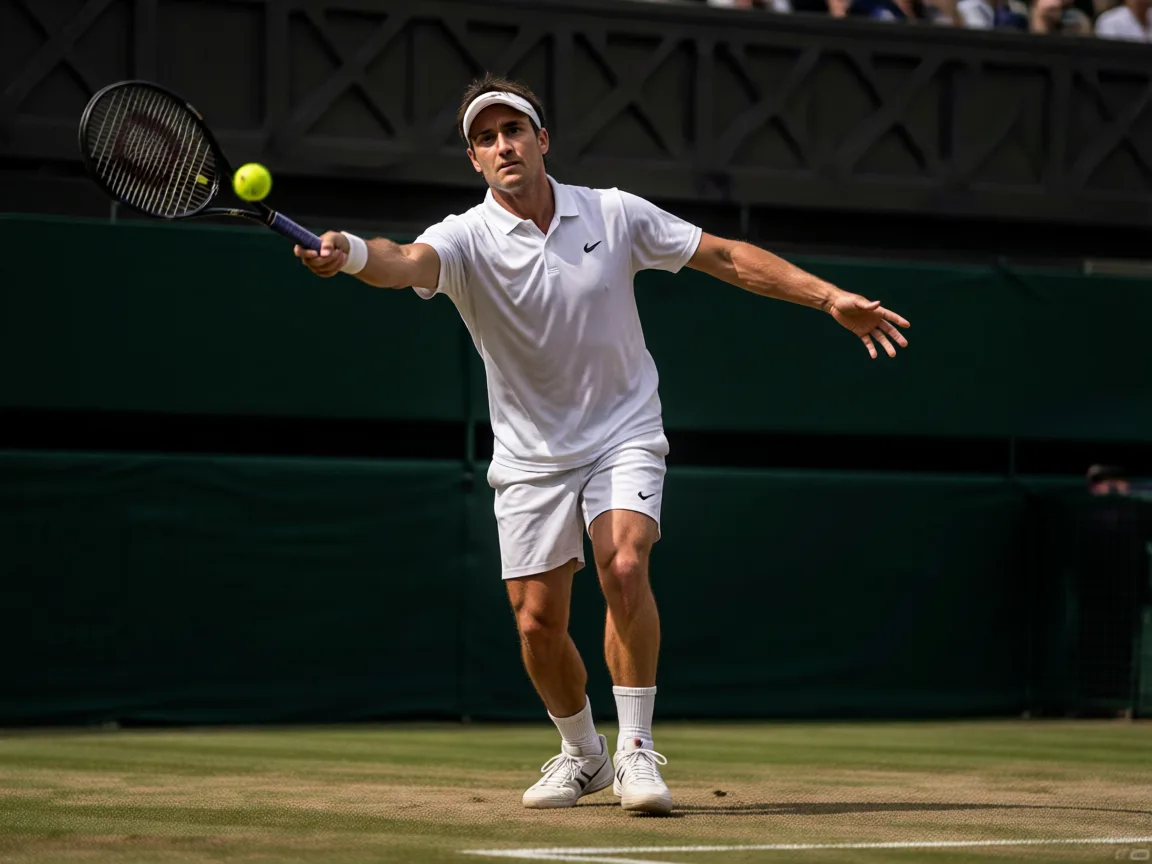
Arthur Fery and the Myth of the Diminutive Tennis Player
A Guardian letter exposing Wimbledon's height bias raises a deeper question: why does tennis still equate greatness with size?
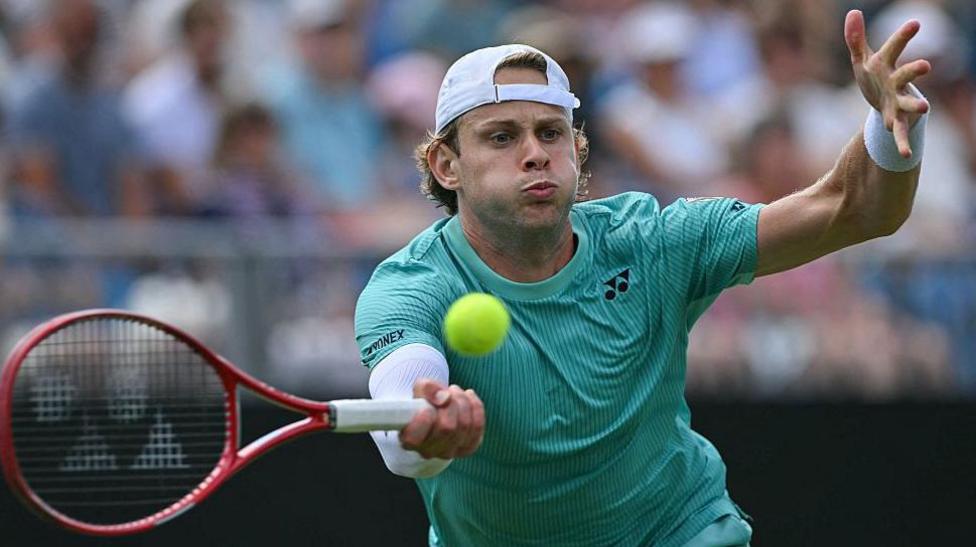
Zizou Bergs Makes Belgian Grass Court History at Eastbourne
Zizou Bergs captured his maiden ATP title in Eastbourne, becoming the first Belgian man to conquer the grass in the sport's history.