Shearer Still Haunted by 98 Argentina Defeat But Sees England Ready
Alan Shearer reveals the agony of England's 1998 World Cup exit still lingers, but believes the current generation can finally rewrite the story.
A Scar That Never Faded
Alan Shearer still feels it. Twenty-seven years after England's World Cup showdown with Argentina in Saint-Étienne, the former captain admits the defeat remains an open wound. That night, with its penalties and heartbreak, refuses to leave him.
Shearer has lived with the consequences of that match since 1998. England arrived in France with genuine belief, and their Round of 16 clash against Argentina delivered one of the tournament's most dramatic encounters. It ended in agony.
"There is not a day that goes by when I don't think about it. I still feel the pain of that night in '98."
The 2-2 draw after extra time, followed by a penalty shootout loss, became one of England's most iconic tournament exits. For Shearer, who led the line that night, it represents unfinished business.
The Ghost of Saint-Étienne
England's 1998 campaign carried immense weight. Glen Hoddle's squad featured a blend of established stars and emerging talents, including a young David Beckham, whose petulant kick at Diego Simeone defined the narrative.
Beckham's red card in the 47th minute reduced England to ten men and turned the match upside down. Shearer had already converted a fifth-minute penalty, and Michael Owen's sensational solo goal had given England a lead they would relinquish.
Argentina equalized through Javier Zanetti deep into first-half stoppage time. From that point forward, England retreated deeper, exhausted by the numerical disadvantage and the oppressive French heat.
Penalties followed. Paul Ince missed. David Batty missed. Carlos Roa saved. Argentina advanced, and England flew home carrying another tournament scar.
In the visiting dressing room at the Stade Geoffroy-Guichard, players lay on the floor in silence. Some stared at the ceiling. Others wept openly. Coaching staff moved between them, offering quiet words, but nothing could penetrate the fog of loss.
Glenn Hoddle stood stationary near the treatment table, arms folded, expression blank. The air conditioner hummed loudly in the background, clashing with the despair surrounding it. No one spoke for nearly fifteen minutes.
England's Historical Burden
That defeat joined a painful collection of tournament exits that have defined English football for decades. The 1990 World Cup semi-final loss to West Germany, the 1996 European Championship semi-final shootout against Germany, and then 1998 — three consecutive tournaments ending in penalty heartbreak.
Shearer was part of the 1996 squad that came closest on home soil. He finished as the tournament's top scorer with five goals, yet still walked away empty-handed. The pattern became psychological.
England developed a reputation for freezing in critical moments. The weight of history, compounded by media pressure and fan expectation, created a burden each generation inherited. Tournament football became England's recurring nightmare.
Shearer understands this psychology intimately. He lived through the cycle of hope, belief, and crushing disappointment. He scored 30 goals in 63 appearances for his country but never reached a major final.
Why This Time Could Be Different
Despite the enduring pain, Shearer sees something in the current England setup that separates them from previous generations. The mental block that crippled teams of the past appears to have dissolved.
Today's players operate in a different environment. They compete in Champions League finals, win domestic trebles, and face elite opposition weekly. The fear factor that neutralized England in previous decades is now virtually nonexistent.
"This group of players has the talent and mentality to go all the way. They can change their lives forever."
The tactical sophistication of modern English football also plays a role. Players are coached differently, exposed to continental styles from a young age, and developed within systems that prioritize technical excellence alongside physical attributes.
Shearer points to the depth of the current squad as a decisive advantage. Previous England teams relied heavily on a core group; the current generation can call upon multiple match-winners from different positions.
The Weight of Opportunity
Shearer's message carries significance because it comes from someone who experienced the sting of failure firsthand. He knows precisely what it feels like to walk off a pitch knowing an opportunity has evaporated.
The current players face different pressures. Social media scrutiny, relentless analysis, and elevated fan expectations create a complex environment. Yet Shearer believes this generation is better equipped to handle that weight.
Winning a major tournament transforms a player's legacy permanently. Shearer knows the names immortalized by tournament triumph, and those consumed by tournament failure remain separated by a thin margin.
"The chance to change your life is right there in front of you. You have to take it, because if you don't, you'll regret it for the rest of your life."
Tactical Evolution
England's approach has shifted dramatically since 1998. Hoddle's team played a functional system designed around defensive solidity and counter-attacks. The current iteration embraces possession, pressing, and positional flexibility.
Players trained in elite European environments bring tactical nuance that the 1998 squad lacked. The Premier League's evolution into the world's most competitive domestic competition has conditioned English players for high-intensity, high-stakes encounters.
Shearer acknowledges this transformation. He played in an era where English football was still catching up tactically with continental powers. That gap has closed significantly.
What It Means
Shearer's reflections serve as both warning and encouragement. The pain of 1998 illustrates what happens when opportunity slips away. His belief in the current squad suggests that England's cycle of heartbreak is not inevitable.
The current generation has the tools, the mentality, and the tactical foundation to succeed where predecessors failed. The question is whether they can deliver when the moment arrives.
Shearer learned that lesson the hardest way possible. He hopes the players wearing the shirt today never have to carry that same burden.
England's history is written in penalty shootouts, red cards, and what-ifs. The next chapter belongs to players who can finally close the book on decades of hurt and start something entirely new.
Editorial Integrity
This is an original SportPulse article written by our editorial team. All content is independently researched, written, and reviewed by our writers and editors before publication. We do not publish copied, aggregated, or syndicated content.
SportPulse is committed to original sports journalism. Read our editorial policy or contact us with any questions.
More Like This
All football
Written Off As Too Old: How France Broke Spain's Hearts in 2006
France's aging veterans engineered a masterclass against Spain's brilliant youngsters in a World Cup clash that defined two eras.

West Ham Land Swiss International Riesen in Statement Defensive Signing
The Hammers bolster their backline with a proven European talent from Eintracht Frankfurt on a three-year commitment.
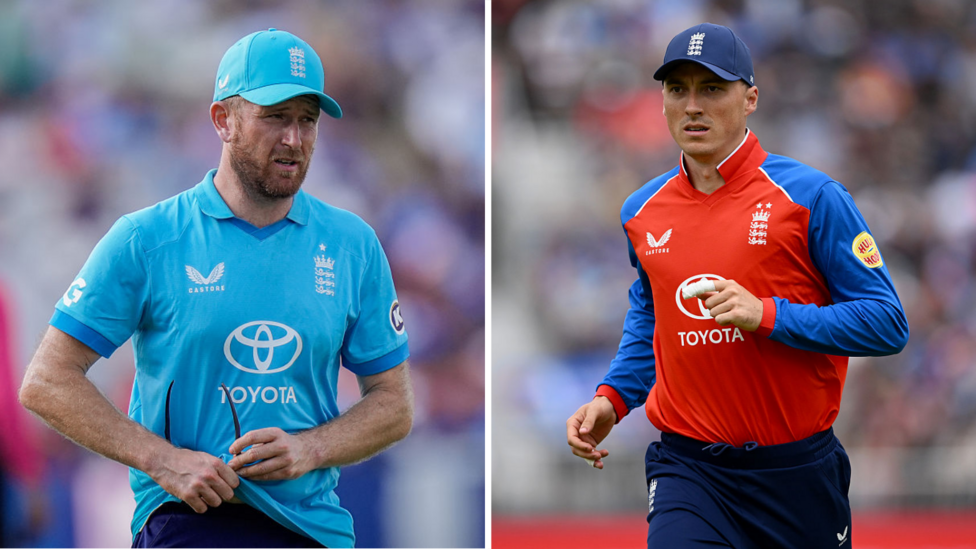
Dawson and Banton Released for T20 Finals Day
England release Liam Dawson and Tom Banton for T20 Finals Day, balancing international duties with domestic cricket's grandest stage.