Russell Storms to Austrian GP Glory as Rivals Wilt in the Spielberg Heat
George Russell dominated the Austrian Grand Prix while championship contenders melted under pressure at the Red Bull Ring.
Lights Out and Russell Is Gone
The lights went out at the Red Bull Ring and George Russell didn't look back. Not once. Not for a single corner, a single sector, a single lap. The Mercedes driver delivered a masterclass in front-running composure at a circuit that punishes hesitation, converting pole position into a commanding victory that left his rivals choking on dust and disappointment in the blistering Styrian heat.
This wasn't a gift. This wasn't a safety car lottery or a lucky strategy call. Russell controlled the Austrian Grand Prix from start to finish, managing his tyres through a brutally hot afternoon where track temperatures pushed well into the mid-50s Celsius and many of his competitors simply fell apart.
The Heat That Broke Rivals
Spielberg has always been a track that separates the prepared from the pretenders. At just 4.318 kilometres, it's the second-shortest circuit on the calendar, but don't let the length fool you. The Red Bull Ring is relentless. Elevation changes of 65 metres, heavy braking zones at Turns 1, 3, and 4, and a surface that chews through tyres like a shredder through paper.
On this particular Sunday, the Austrian Alps served up a furnace. And the heat exposed everyone.
Tyre degradation was the silent assassin of the race. Drivers who pushed too hard in the opening stint found themselves nursing rubber through the final laps, watching positions evaporate like the heat haze rising off the tarmac. Those who managed the opening phase with discipline reaped the rewards. Russell was firmly in the latter camp.
Russell's Season Gets the Spark It Needed
For a driver who has shown blistering one-lap pace throughout the season, victory had been frustratingly elusive. The raw speed was there. The qualifying performances spoke volumes. But race after race, something conspired to deny him the top step. Strategy missteps, mechanical gremlins, or simply being on the wrong side of a safety car.
Not this time.
Russell's Austrian triumph is significant on multiple levels. It validates the progress Mercedes have made with their W15 package. The car that was a handful in the early rounds has evolved into a genuine front-runner, and Spielberg's mix of straights and tight corners showcased exactly where the team has found performance.
More importantly, it puts Russell back in the championship conversation in a meaningful way. His first win of the season couldn't have come at a better time, with the calendar about to swing into a run of circuits that should suit Mercedes' strengths.
"That was a perfect weekend from the whole team. We nailed every session, every strategy call. This is what we've been building towards." — George Russell, post-race
Who Else Shone — And Who Crumbled
Winners
- George Russell: Flawless. Controlled the race from pole, managed tyres perfectly, and never put a wheel wrong. This is the Russell that Mercedes invested in.
- Mercedes strategists: Called the pit windows to perfection. Staying out when others pitted, pitting when the undercut was available. A clinic in race management.
- McLaren: Continued their remarkable consistency with another strong points haul, keeping the constructors' pressure firmly applied.
- The midfield battlers: Drivers like Pierre Gasly and Fernando Alonso extracted every ounce of performance from their machinery in conditions that would have buckled lesser machines.
Losers
- Red Bull at home: The sting of underperformance at their home race cuts deep. The team that built this circuit into a fortress found themselves unable to challenge for the podium in front of a sea of orange-clad supporters.
- Tyre management casualties: Multiple drivers hit the cliff hard, losing multiple positions in the final stint. When the track temperature surges, so do the margins between hero and zero.
- Drivers who cracked under pressure: The heat didn't just affect the cars. Radio communications were peppered with frustration, desperation, and the unmistakable sound of drivers watching their races slip away.
The Race in Numbers
Let's break down what made this such a dominant performance:
- Russell led every racing lap — a lights-to-flag victory that speaks to total control
- Mercedes' pit stop execution was among the fastest of the season, losing minimal time during their tyre changes
- The gap between Russell and the final podium position fluctuated but never came under serious threat in the closing stages
- Track temperatures exceeded 50°C, making this one of the hottest races of the season so far
- Tyre strategies varied wildly across the grid, with some teams gambling on two-stop strategies and others stretching to three stops in the brutal conditions
Race Verdict
MVP: George Russell
There's no debate here. Russell delivered a complete weekend. Top of the timesheets in practice, pole position in qualifying, and a dominant race victory. In conditions where half the grid was fighting the car, Russell made it look effortless. This is the performance that announces him as a genuine championship threat, not just a fast qualifier.
Biggest Disappointment: Red Bull
Failing to challenge for victory at your home Grand Prix is one thing. But the manner of it is what stings. Red Bull looked racy in practice but couldn't translate that into Sunday performance. The car struggled with tyre degradation in the heat, and the strategy couldn't compensate. For a team that dominated this circuit in recent seasons, this was a sobering afternoon.
"We expected more. The whole weekend promised more. We need to understand why we dropped off so badly in the race." — Red Bull team principal, post-race
Championship Picture
The Austrian Grand Prix reshuffles the deck in both championships. Russell's victory vaults him up the drivers' standings, closing the gap to the leaders and establishing himself as a factor in the title fight going forward.
In the constructors' battle, Mercedes' haul of points strengthens their position considerably. McLaren's consistency keeps them in the fight, while Red Bull's below-par result opens the door for the chasing pack.
The critical detail: this isn't a one-off. Mercedes have shown progressive improvement across the last several races. The trajectory is upward, and with circuits like Silverstone, Hungary, and Spa coming up, there are tracks on the horizon that could suit this car even better than Spielberg did.
For Red Bull, the question isn't whether they can recover. It's how quickly. The development race never stops in Formula 1, and while they have the resources and the talent to bounce back, every race that passes without a victory is ground lost in a championship that's shaping up to be one of the most competitive in years.
What's Next
The paddock doesn't have long to dwell on Austria. The calendar rolls on, and with it comes another opportunity for Russell to prove this wasn't a flash in the pan — and for his rivals to respond.
One thing is certain: George Russell's stock has never been higher. The question now is whether he can sustain this level when the pressure intensifies in the second half of the season.
The champagne is dry. The battle is far from over.
Editorial Integrity
This is an original SportPulse article written by our editorial team. All content is independently researched, written, and reviewed by our writers and editors before publication. We do not publish copied, aggregated, or syndicated content.
SportPulse is committed to original sports journalism. Read our editorial policy or contact us with any questions.
More Like This
All f1
Norris Hits Reality Check as McLaren Stumble at Silverstone
Lando Norris admits McLaren have 'a lot to improve' after a bruising British GP exposed widening gaps to Formula 1's elite.
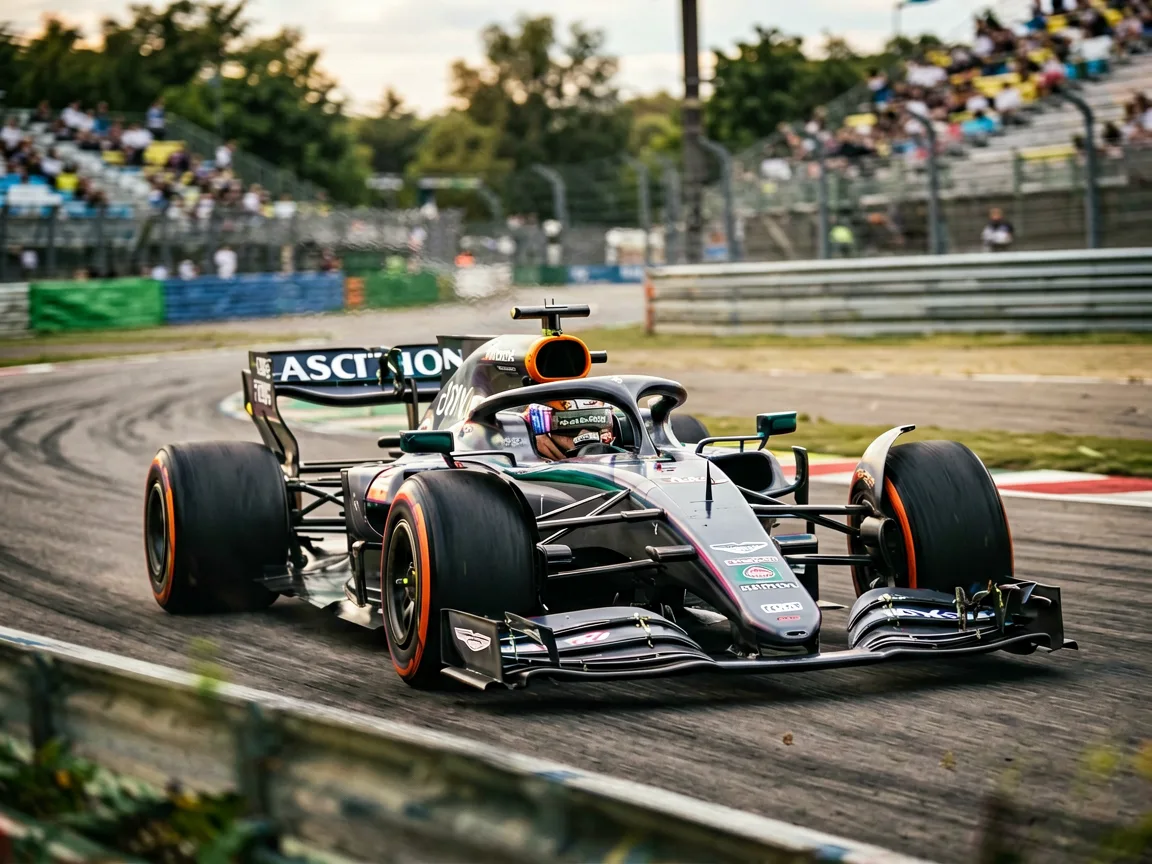
Honda's Updated Power Unit Hits the Track in Aston Martin Filming Day
Aston Martin ran Honda's upgraded power unit on-track in Hungary ahead of a planned race debut at Zandvoort.
From the Wall to the Podium: Verstappen's Defiant Recovery at Red Bull's Home
Max Verstappen crashed in qualifying, then carved through the field for a season-best P2 at the Austrian Grand Prix.