Ronaldo Is Costing Portugal at the Worst Possible Time
At 41, Cristiano Ronaldo's refusal to step aside risks tarnishing the very legacy he spent two decades building.
The Elephant in the Dressing Room
Nobody in Portugal wants to be the one who says it. Not Roberto Martínez, not the Portuguese Football Federation, and certainly not the man himself. But the truth has a nasty habit of becoming undeniable, especially on the world's biggest stage.
Cristiano Ronaldo is no longer a viable starter for Portugal. At 41 years old, the greatest goalscorer in international football history is actively undermining the team's chances at the 2026 World Cup, and the silence surrounding his automatic selection has become louder than any tactical instruction Martínez has ever issued from the touchline.
This is not ageism. This is not disrespect. This is football analysis, and the evidence has been stacking up for the better part of two years.
The Euro 2024 Warning Shot
The warning signs were there for everyone to see at Euro 2024, and they were impossible to miss. Ronaldo went through the entire group stage without scoring from open play, his movement increasingly predictable, his first touch heavier than it had ever been. When Portugal were eliminated by France in the quarterfinals, the broader narrative around the squad was one of unfulfilled potential, of a team carrying a passenger in its most important position.
The images from that tournament remain seared into the collective memory: Ronaldo's face contorted in frustration after missed chances, his arms thrown wide in exasperation at teammates who could no longer find him in the positions he once dominated. It was uncomfortable viewing. Not because Ronaldo was finished as a footballer, but because nobody around him appeared willing to acknowledge what the eyes were telling everyone.
Two years on, nothing has changed except the stakes. This is a World Cup, not a European Championship. The margin for error is thinner, the opponents more varied, and the physical demands exponentially greater. Yet here we are, with the same unresolved question hanging over the Seleção. The contrast was made painfully clear this week: while other superstars delivered for their countries on Tuesday, Ronaldo could not follow suit on Wednesday as Portugal were held to a surprise 1-1 draw by DR Congo.
The Tactical Problem Martínez Won't Solve
Let's be precise about what Ronaldo's presence costs Portugal tactically. Modern pressing systems demand that the centre-forward is the first line of defence. The best teams in the world, from Luis Enrique's PSG to Arne Slot's Liverpool, use their striker as the trigger for coordinated pressing traps. This requires explosive acceleration over short distances, the ability to cover 10-12 kilometres per match, and the tactical discipline to hold specific pressing angles.
Ronaldo can do none of this reliably. His pressing numbers have been in steep decline since his final season at Manchester United, and two and a half years in the Saudi Pro League have done nothing to arrest that slide. The league's lower intensity means his body has been preserved in a competitive vacuum, where the physical benchmarks simply do not compare to elite international football.
The ripple effect is significant. When your striker doesn't press, the midfield has to compensate. When the midfield compensates, gaps open in the half-spaces. When gaps open in the half-spaces, opponents like France, Brazil, or Argentina will punish you ruthlessly. It is a tactical domino chain that begins with one selection decision.
And then there is the supply chain problem. Ronaldo's game has always been predicated on service. At his peak, he could manufacture goals from nothing, but those days are gone. He needs crosses delivered to the right zones, through balls weighted perfectly into his run pattern, and set pieces aimed at his preferred zones. This forces Portugal's creative players, Bruno Bernardo Silva, Rafael Leão, into a narrow tactical straitjacket. They are not playing to their strengths. They are playing to accommodate a system that orbits one man.
What the Alternatives Offer
Portugal are not short of centre-forward options. The squad possesses younger, hungrier players who offer what Ronaldo cannot: defensive work rate, pressing intensity, and tactical flexibility. A mobile forward who can drop deep, link play, and stretch defences with genuine pace would transform this Portugal side from a team that looks disjointed into one that plays with coherent attacking structure.
The comparison is stark. A forward who presses for 90 minutes allows Portugal to win the ball higher up the pitch, creating shorter passing lanes to goal. A forward with genuine pace forces opposition centre-backs to drop deeper, which in turn opens space for Portugal's technically gifted midfielders to operate. This is not complicated tactical theory. It is the fundamental reality of how elite international football works in 2026.
The Bottom Line: Ronaldo's presence does not just remove one attacking dimension. It actively constrains the entire offensive system, forcing world-class players into roles that diminish their effectiveness.
The Silence That Enables This
Roberto Martínez deserves enormous criticism here, but the problem runs deeper than one manager. Martínez inherited the Ronaldo question when he took the job after the 2022 World Cup, and he has never shown the courage to answer it. His public statements have been a masterclass in diplomatic evasion, praising Ronaldo's professionalism, his goal record, his leadership qualities, while carefully avoiding any discussion of whether those things translate into being the best option to start football matches.
The coaching staff is complicit. The federation is complicit. And the Portuguese media, for all its occasional forays into criticism, has largely allowed sentimentality to override analysis. There is a cultural reluctance in Portugal to confront the Ronaldo question head-on, rooted in genuine gratitude for everything he has delivered. 130-plus international goals, a European Championship in 2016, a Nations League trophy, decades of service. The debt is real.
But debts do not win World Cups. Teams do. And right now, Portugal are choosing sentiment over strategy.
Ronaldo himself bears responsibility here, perhaps the greatest responsibility of all. He is intelligent enough to see what the rest of the world sees. He watches the same footage, reads the same data, and surely feels the same decline in his own body during matches. The great ones always know. They feel the half-second of pace they no longer have, the spring in their jump that has diminished by a fraction, the recovery time between sprints that stretches just a little longer each year.
A truly legacy-defining act of greatness would be to walk into Martínez's office and say: "I'll be ready if you need me, but don't start me for my sake. Start whoever gives us the best chance." That conversation, if it happened, would cement Ronaldo's legacy more than any goal at this tournament possibly could. It would demonstrate the kind of self-awareness and team-first mentality that separates transcendent athletes from mere record-holders.
But that conversation has not happened. And with each passing match, the reluctance to have it becomes harder to justify.
The Legacy Paradox
Here is the cruel irony at the heart of this situation. Every match Ronaldo starts and underperforms, every chance he scuffs wide, every pressing action he fails to complete, it chips away at the very legacy he is so clearly desperate to protect. The record books will always show his goal tally. They will always note his longevity. But football memory is selective, and the final images tend to be the ones that linger.
Zinedine Zidane's final act was a headbutt. Andrea Pirlo's last tournament was a penalty miss that haunted him. These are not fair summations of extraordinary careers, but they are the ones that surface first in casual conversation. Ronaldo is sleepwalking toward his own version of this narrative, where his final World Cup contribution is remembered not for a moment of brilliance but for being the problem Portugal could not solve.
At 41 years old, the physical decline is not a failing. It is biology. Every athlete confronts it. What is a failing is the collective refusal to adapt to that reality, to treat a football tournament like a farewell tour rather than a competition with actual consequences for actual teammates.
The Bottom Line: Ronaldo's legacy is already secure. His place in the all-time pantheon is unassailable. But the longer he clings to a starting role he can no longer justify, the more he risks turning a story of triumph into a cautionary tale about ego and the inability to let go.
What Happens Now
Portugal's World Cup campaign continues, and the question grows louder with every match. Martínez has shown no indication that he is prepared to make the change, which means the burden may ultimately fall to results. A shock elimination, a group-stage stumble, a knockout defeat in which Ronaldo's limitations are exposed for the world to see, any of these could force a reckoning that should have happened months ago.
The tragedy is that it did not have to be this way. Ronaldo could have transitioned into an impact substitute role, a 20-minute closer who uses his still-formidable aerial ability and penalty-box instincts to change games from the bench. That narrative would have been celebrated. A legend accepting his twilight with grace, contributing when it matters most, passing the torch while still holding a flame.
Instead, we are watching a slow-motion collision between ego and reality, played out on the grandest stage the sport has to offer. Portugal deserve better. Their fans deserve better. And frankly, Ronaldo's own extraordinary story deserves a better final chapter than the one currently being written.
Updated: 2026-06-28 — Added context of fellow superstars' strong performances on Tuesday and specific match detail (1-1 draw vs DR Congo).
Editorial Integrity
This is an original SportPulse article written by our editorial team. All content is independently researched, written, and reviewed by our writers and editors before publication. We do not publish copied, aggregated, or syndicated content.
SportPulse is committed to original sports journalism. Read our editorial policy or contact us with any questions.
More Like This
All football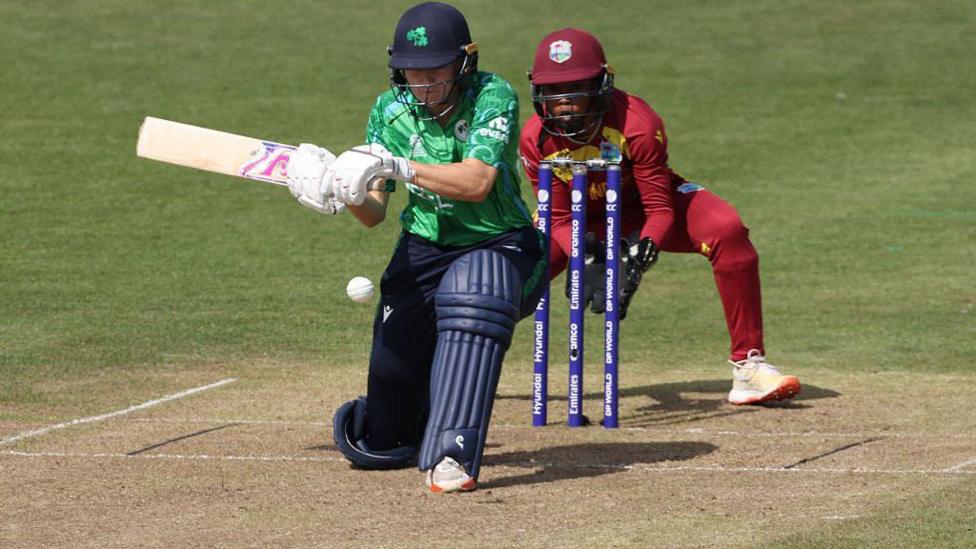
Clinical West Indies Crush Ireland to Complete 3-0 ODI Series Sweep
West Indies demolished Ireland by 64 runs in Bready to secure a 3-0 series whitewash in ruthless fashion.
Kevin Bridges Asks the Question Every Football Fan Fears to Answer
The Scottish comedian's journey to find football's soul strikes a nerve in an era of data-driven pragmatism.
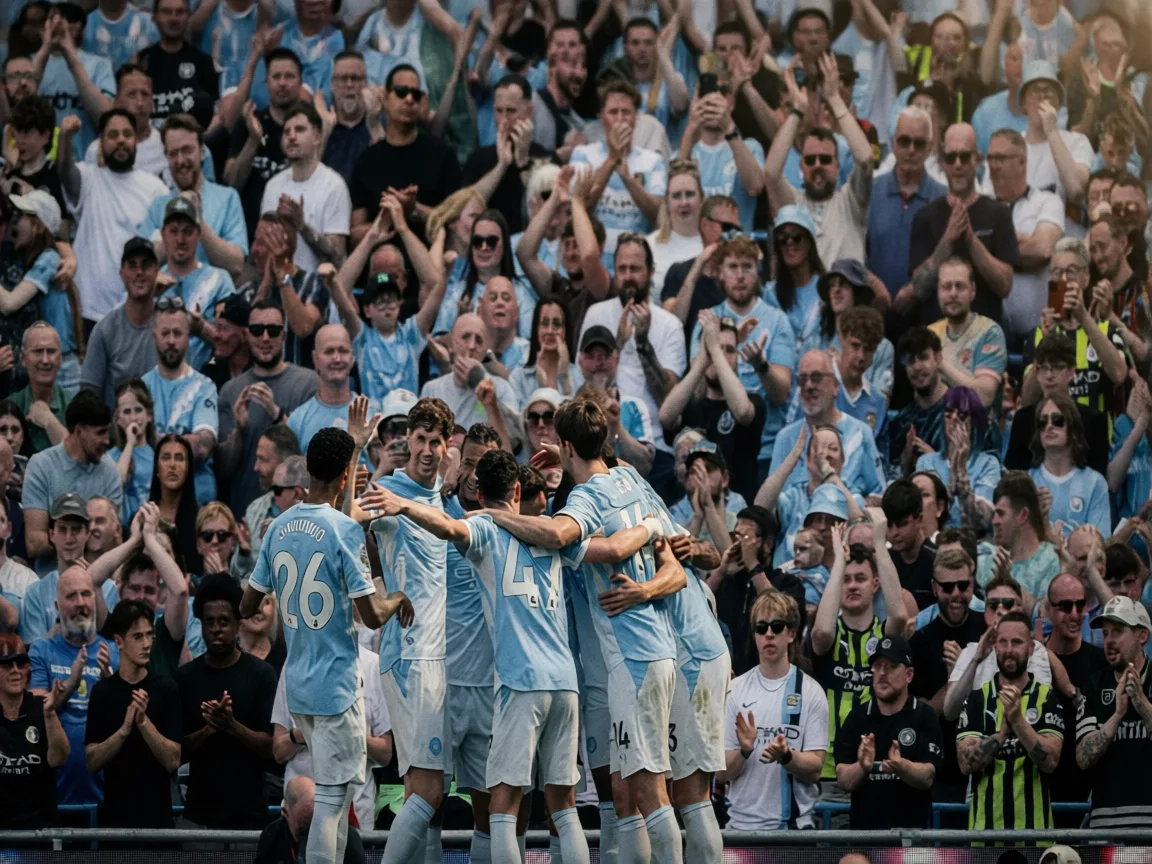
Man City's £10 Gamble: Rewriting the Tactical Economics of Matchday Revenue
Pep Guardiola's side is abandoning the Premier League's inflationary playbook, betting that affordable local tickets secure long-term sporting advantage.