Rico Lewis Finds God and Purpose Beyond the Pitch
Manchester City's teenage midfielder opens up about his spiritual awakening and grassroots crusade to tackle homelessness in Manchester.
Rico Lewis sits in a room at the City Football Academy, fidgeting with his hands. He is not nervous about the cameras. He is not anxious about the tactical briefing awaiting him from Pep Guardiola. He is thinking about something far heavier than a football match.
He is thinking about the people sleeping on the streets of Manchester.
At an age when most elite footballers are fiercely protecting their brand, curating their social media and obsessing over individual accolades, Lewis has chosen a radically different path. He has gone public about finding God. He has thrown himself into charity work aimed at one of Britain's most intractable social crises. And he is doing it all while establishing himself in one of the most demanding football environments on Earth.
It is, by any honest measure, an extraordinary combination.
A Spiritual Foundation
The revelation about his faith caught many off guard.Footballers rarely speak openly about religion in England's top flight. There is a unwritten rule that keeping such convictions private is safer in a sport that can mercilessly mock anything perceived as vulnerability.
Lewis does not care for that rule.
Finding God changed everything for me. It changed how I see the world. It changed how I see people. It gave me a purpose that goes way beyond what happens on a Saturday afternoon.
The Manchester City academy graduate describes a deeply personal journey. It was not a sudden, dramatic conversion. It was a gradual awakening, a questioning of the endless pursuit of prestige and wealth that defines elite sport. He started asking the bigger questions about existence. About what happens when the cheering stops.
For a young man operating inside the most successful football machine in modern English history, that level of introspection is almost countercultural.
The Manchester Reality
Walk through Manchester city centre on any given night and the scale of the homelessness crisis becomes brutally apparent. Tents line doorways. Rough sleepers huddle in shop entrances. The juxtaposition with the wealth generated within the city by its two colossal football clubs is impossible to ignore.
Lewis noticed. He could not unsee it.
The charity work is not a public relations exercise. There are no agents negotiating the optics, no calculated photo opportunities. This is a young professional using his platform, his time and his energy to bring attention to people who have, in many ways, become invisible in the shadows(opposite)of multimillion-pound stadiums.
Football, Lewis believes, has a unique power to bridge impossible divides. A ball at your feet has no social class. The game does not care about your postcode or your bank balance. It is a universal language.
Football gave me everything. It gave me a chance. These people deserve a chance too. If I can use football to help even a few of them, then I am doing something meaningful with my life.
Guardiola's Demands
Let us be absolutely clear about the context. This is a player operating under Pep Guardiola.
The Catalan demands total concentration. He expects tactical perfection. His system is ruthless and leaves no room for players who are not fully committed, both mentally and physically, every single day. The intensity required to even survive at Manchester City, let alone thrive, is suffocating.
Lewis has not just survived. He has flourished.
Breaking into a midfield stocked with world-class internationals was never going to be simple. The competition for minutes at the Etihad is relentless. But Lewis, still a teenager, has shown a maturity and a technical intelligence that belies his years. He has developed into a trusted option, demonstrating versatility and a fierce commitment to Guardiola's demanding principles.
Juggling that pressure with meaningful, hands-on community work requires a level of discipline that sets the young player apart. Where others might lose focus, Lewis seems to find his faith and his charity work are the things that actually keep him grounded.
A Different Kind of Role Model
The modern footballer, particularly in the Premier League, exists inside a protective bubble. A carefully managed existence that shields them from the realities, the struggles and the hardships faced by the people who ultimately pay their wages.
Lewis is actively puncturing that bubble.
He serves as proof that it is possible to perform at the highest level of sport while remaining deeply connected to the community. While staying attuned to social issues. While maintaining a moral compass that points somewhere beyond personal glory.
His approach raises uncomfortable questions for the wider game. If a teenager can dedicate substantial time and genuine emotional energy to tackling homelessness, what is stopping others? The Premier League generates billions in revenue. Clubs invest vast fortunes in their local areas, but the connection between the elite athletes and the streets around their stadiums often feels utterly disconnected.
What Comes Next
The challenge for Lewis will be sustaining everything.
The football calendar is unforgiving. The physical and mental toll of a Premier League campaign, coupled with European commitments and international duty, breaks players down. Guardiola will demand more from him this season following an impressive breakthrough. There will be periods of poor form, there will be inevitable setbacks, and there will be moments when the brutal scrutiny of professional sport feels completely overwhelming.
His faith, he suggests, will be central to navigating all of it.
It provides a perspective that football cannot offer. A bad pass, a defeat, a season-ending injury. These things matter deeply inside the intense pressure of the dressing room. But through the lens of his belief, framed by his genuine work with society's most vulnerable, they shrink back to their proper size.
Football is what I do. It is not who I am. When I finish playing, I want to have made a difference. Not just won trophies.
It is a striking sentiment from a player who has already won the biggest trophies in the domestic game. Lewis lifted the Premier League title before he turned 19. He has a Champions League medal and badges of honour that most professionals spend two decades failing to collect.
Yet the collection of silverware is not what defines his ambition.
The Broader Impact
Stories like Lewis's matter now more than ever. They challenge the relentless cynicism that surrounds the modern game. They demonstrate that there remains genuine humanity, authentic faith and deep social conscience within the sport.
In an era of oil-state ownership, manufactured Super Leagues and endless financial controversies, the individual actions of a thoughtful young man in Manchester can feel like a small gesture. But they are exactly the kind of gestures that cut through the noise. They remind supporters that players are not simply commodities. They are people with belief, conviction and the capacity for genuine compassion.
Lewis could have kept his head down. He could have concentrated solely on cementing his place in a team chasing history. Nobody would have resented him for it. He is 19 years old. His entire professional life is still ahead of him.
Instead, he looked at the streets of Manchester and decided that simply playing football well was not going to be enough. He found a faith that demanded action. He looked at a crisis that most people walk past every day and chose to stop.
In a sport obsessed with legacies built entirely from trophies and statistics, Rico Lewis is quietly constructing something far more enduring. He is building a legacy of impact. And he is only just beginning.
Editorial Integrity
This is an original SportPulse article written by our editorial team. All content is independently researched, written, and reviewed by our writers and editors before publication. We do not publish copied, aggregated, or syndicated content.
SportPulse is committed to original sports journalism. Read our editorial policy or contact us with any questions.
More Like This
All football
Rangers Close In on Atalanta Defender Ben Godfrey in January Loan Push
Rangers are targeting Serie A centre-back Ben Godfrey on loan as Philippe Clement reshapes his defence.

Chelsea to sign Italy's Giulia Dragoni from Barcelona
Chelsea are poised to sign Italian attacking midfielder Giulia Dragoni from Barcelona.
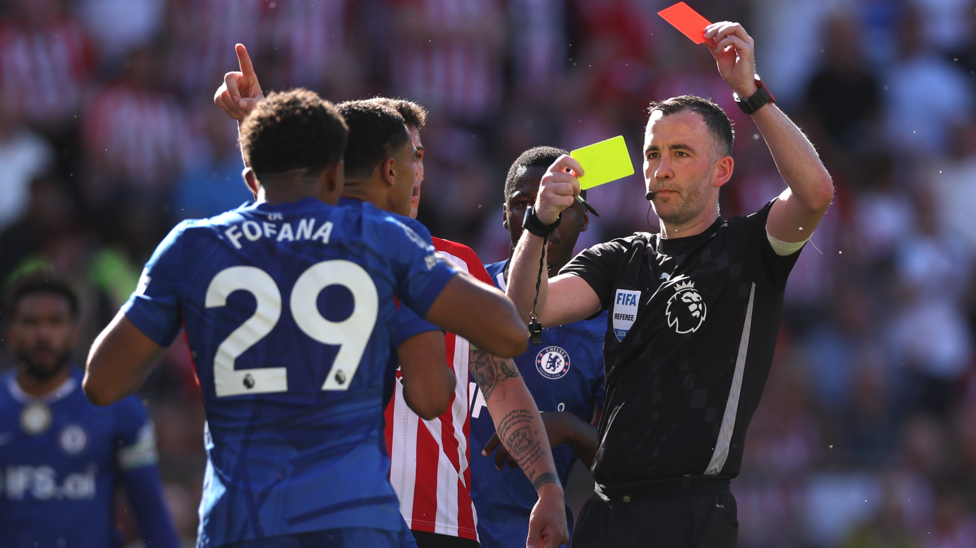
Nine Red Cards, One Double: The Premier League's Wildest Disciplinary Record
Arsenal's nine red cards in 2001-02 remain the Premier League record for a single season — and they still won the Double.