Paisley's Trabzon Odyssey: Liverpool's 1976 European Cup Culture Clash
Fifty years on, Bob Paisley's scathingpostalcode dispatch from Trabzon remains the most vivid away-day report in Liverpool's European archive.
A Bombed-Out Hotel and a Pig's Bladder
This October marks 50 years since Liverpool and Trabzonspor were paired together in the second round of the European Cup in 1976. The tie produced one of the great away-day dispatches in Liverpool's European archive, courtesy of Bob Paisley.
Paisley was a reluctant tourist at the best of times. Confronted with conditions in Trabzon that fell well short of his expectations, the Liverpool manager did not hold back.
He described the team hotel as a "doss house". The match ball was, in his words, "a pig's bladder" that was "not good enough for blow football". He added that "teams in the Durham Mining League would not play with it".
As for the food, Paisley reached for his war service. He had, he said, experienced "better rations in my bivvy in the Western Desert", back when he served with Montgomery's Eighth Army.
Paisley's Eighth Army Standard
Paisley comparing hotel rations unfavourably to his military service under Montgomery was not mere colourful complaint. It reflected the collision between a club that had just begun its European ascent under Bill Shankly's successor and a Trabzonspor side operating in conditions more spartan than anything English football could conceive.
By 1976, Liverpool had won the UEFA Cup in 1973 and were beginning to assemble the squad that would dominate the European Cup. They had structure, medical infrastructure and conditioned athletes. Trabzonspor were not a traditional powerhouse. Founded only a decade earlier in 1967, the club had won their first Süper Lig title in 1975-76 by ten points under coach Ahmet Suat Özyazici. As champions they entered the European Cup and were drawn against Liverpool.
The Black Sea Gate and English Football's Resource Shocks
Trabzon occupies a thin coastal strip hemmed between the Pontic Mountains and the Black Sea. For English clubs accustomed to municipal stadiums and council pitches, the terrain was alien. And Trabzonspor in the 1970s had begun to weaponise that geography to their advantage.
They had no modern facilities. They had Özyazici, a coach who understood how to build a winning side from limited resources. His 4-3-3 system, with forward workers like Cemil Turan pressing from the front, was remarkably progressive for the era. Turkey finished third at the 1976 European Championship on the back of a Trabzon contingent, which hints at why they won the league so convincingly.
Liverpool carried the day, in the first leg away and then the return leg at Anfield. Trabzonspor lost 1-0 at home and 3-0 at Anfield in the return fixture that season.
For Trabzonspor, the run established the club's continental identity. Özyazici and his players would go on to dominate the Süper Lig through the late 1970s, winning six titles between 1976 and 1984.
Infrastructure as Tactics
Paisley's grouchiness was a manager calculating how much energy his squad would burn adapting to a bad pitch and a worse ball. If the ball was substandard, his players could not execute the passing-and-moving philosophy that had already brought Liverpool the 1973 UEFA Cup. If the pitch was uneven, the short angles of the 4-4-2 he preferred would break down. The margin of error was thin enough without it. That instinct to control every variable would deliver Liverpool three European Cups under Paisley between 1977 and 1981.
A Shared Anniversary
Fifty years later, the contrast between Liverpool and Trabzonspor is narrower. Trabzonspor have a modern stadium, the Şenol Güneş Stadium, and continue to compete in European competition. Liverpool have won six European Cups and continue to operate at the elite end of the continental game.
The 1976 tie remains the moment the two clubs' histories briefly converged. Paisley's words immortalised the encounter more vividly than any match report. A wartime veteran-turned-manager standing in a Black Sea hotel, pronouncing it unfit for a Durham mining team, is the image that endures.
Editorial Integrity
This is an original SportPulse article written by our editorial team. All content is independently researched, written, and reviewed by our writers and editors before publication. We do not publish copied, aggregated, or syndicated content.
SportPulse is committed to original sports journalism. Read our editorial policy or contact us with any questions.
More Like This
All long-reads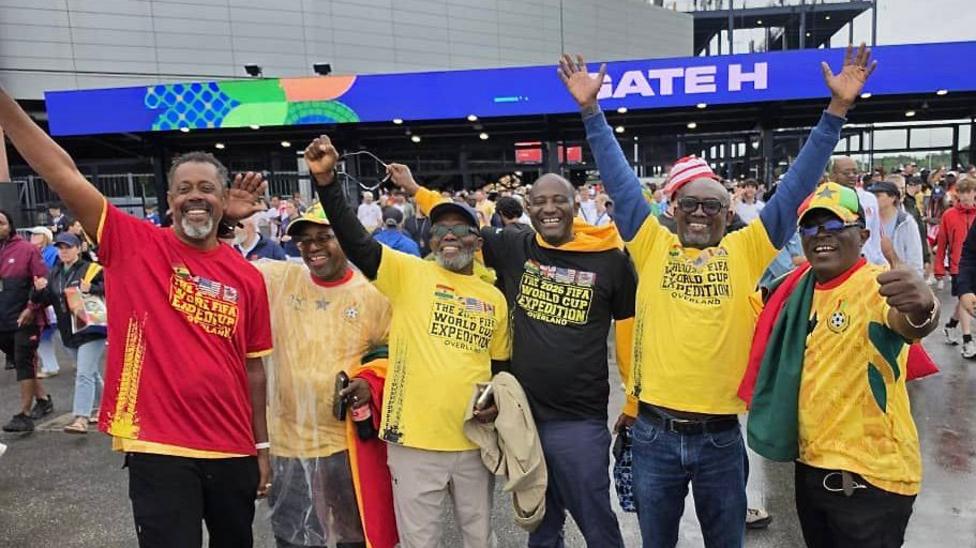
Ghana's Road Warriors: Driving Across Two Continents for the World Cup
Six Black Stars fans drove across Africa in a convoy, chasing World Cup dreams through deserts, checkpoints, and pure delusion.
FIFA Survived Blatter and Warner. Infantino Is No Different.
Former Concacaf insider Mel Brennan exposes how FIFA's corruption architecture remains intact beneath superficial reforms.
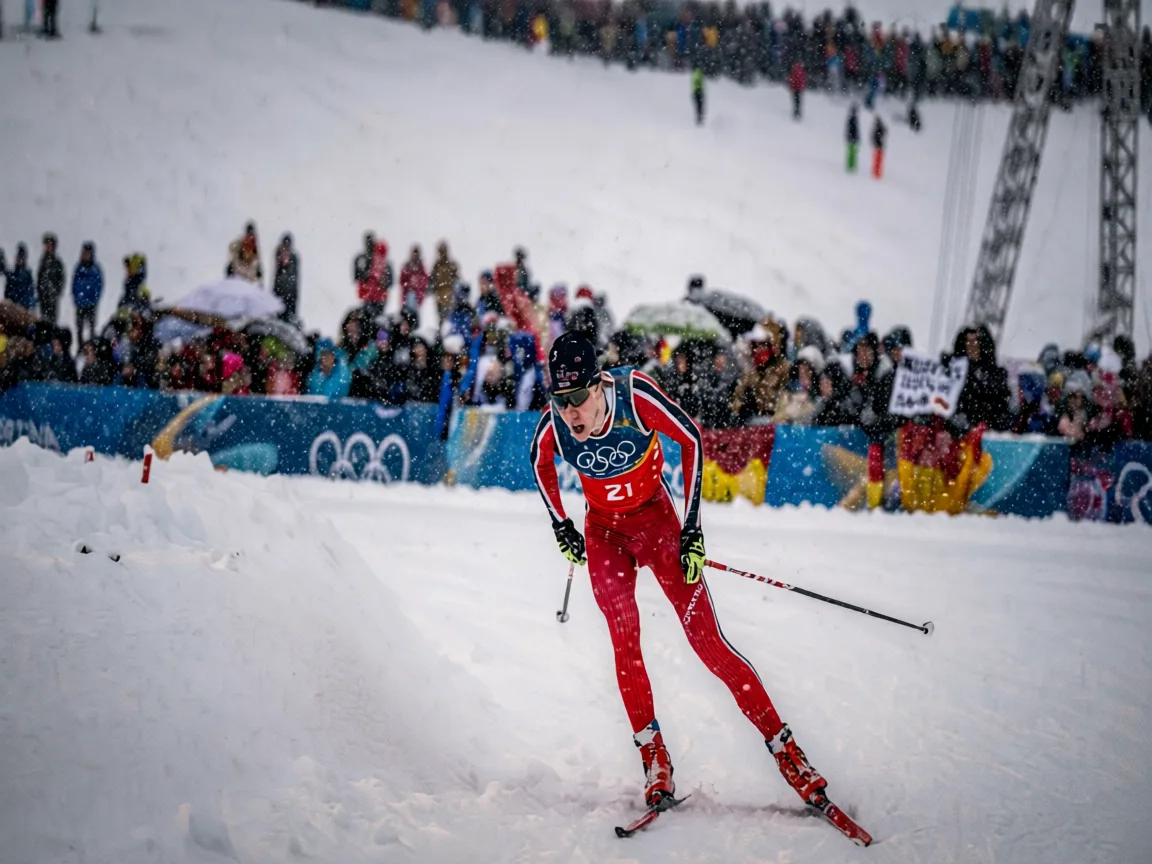
Nordic Combined Axed From 2030 Winter Olympics: A Century-Old Sport Cut Down
Nordic Combined will be absent from the 2030 Winter Olympics for the first time in history, killed by apathy and inaction.