Fifth Winner, Third Team: Norris Cracks F1's Podium Rotations Wide Open
A third constructor and fifth driver stood on the top step in Budapest, scrambling the competitive order and the markets tracking it.
Lando Norris won the Hungarian Grand Prix for McLaren. Five rounds, five different winners, three constructors on the top step.
The Hungaroring rewarded patience on Sunday. Norris managed his tyres, cleared traffic and arrived at the front with enough laps to make the position stick.
Max Verstappen and Red Bull set the early season running. Charles Leclerc broke through for Ferrari. Carlos Sainz followed his teammate across the line. Lewis Hamilton reasserted Mercedes' resurgence. Now Norris delivers for McLaren.
Five winners from five rounds
The gap between the top three teams has narrowed to a margin where a clean Saturday, a sharp Sunday strategy call and a driver in rhythm can flip the result.
It was about staying calm in the first stint. We knew the pace was there. It was just about not making mistakes when the pressure was on.
Norris has spent most of the season watching Verstappen rack up wins. The standings gap between Red Bull and the chasing pack was closing only in theoretical increments. Budapest collapses the theory.
Where Norris won it
The Hungaroring does not forgive underprepared strategy. Overtaking is difficult in dry conditions, track position is king and the race is dictated by who holds clean air in the first stint.
Norris and the McLaren pit wall earned the win across three phases: the start, the first pit window and the management phase to the flag.
The launch off the line was clean enough to protect the inside into Turn 1. The car underneath had shown genuine long-run pace across Friday practice, and that data translated on Sunday. Norris stayed within the DRS detection window of the cars ahead and waited for the race to come back toward him.
The first stop was the pivot. McLaren undercut a rival, the overcut window closed, and Norris was released into clean air with the gap maturing in his direction. Each sector reinforced the front-running pace the car had threatened all weekend.
The final third was management mode. Short shifting, lifecoaching the tyres through the final sector. Norris did not lose it.
Red Bull beaten on pace
For Red Bull this is the most uncomfortable type of loss. Verstappen did not throw the weekend away with a mistake. The team did not botch a pit stop. The car underneath was beaten. Upgraded. Overtaken.
The competitive order entering the second half has three teams capable of winning on merit depending on track characteristics. Ferrari's high-downforce package suits tight and twisting circuits. Mercedes has found operating windows that eluded them in the first five rounds. McLaren have a car that performs across the phases of a grand Prix weekend rather than across a single flying lap.
That triangle at the front changes the clock on team principals. With three squads running at the front, the cost of a bad Saturday compounds. A lockout of the second row by two rival teams leaves a championship contender fighting through traffic on Sunday rather than managing a gap.
The outright market repriced
A third team and a fifth different driver on the top step signals genuine competitive spread, and the betting markets reflect that shift.
Through the opening stretch, single-team dominance kept weekend outright pricing thin. One contender at short odds. Everyone else trading at implied probabilities that barely merited a second look. The value was squeezed out of the board before the weekend began.
Norris winning in Budapest forces a repricing. When three teams can produce a race winner on a given Sunday, the outright market has to spread its risk across more names. Shorter prices on six drivers rather than two. Each-way value shifting further down the board. The numbers react, or they get beaten.
Hungary is the round where the boards stopped pricing one team and started pricing three. For anyone holding outright positions at longer odds on secondary contenders, this is the weekend the math moved.
Norris takes the first
MVP: Lando Norris. Clean when it mattered. Fast when the car was capable. The first win from a chassis that has threatened wins all season without converting. The pressure shifted off the driver and onto the field.
Biggest disappointment: Red Bull Racing. Not because they ran poorly. Because they ran cleanly and still trailed. A gap set by outright pace is harder to close than a gap opened by a bad afternoon.
Standings tightening
Verstappen still holds the lead and the lead is still substantial. The margins do not need to collapse overnight for the race to change. They need to keep narrowing.
Ferrari and McLaren have both shown they can produce a winning car on a specific circuit type. Mercedes have shown they can win on pace alone when the operating window holds. Three constructors, five race winners and a championship lead measured in race wins rather than race weekends.
The summer break arrives with the field bunched closer than the opening rounds suggested. The second half starts with the board tighter than it has been all year.
Editorial Integrity
This is an original SportPulse article written by our editorial team. All content is independently researched, written, and reviewed by our writers and editors before publication. We do not publish copied, aggregated, or syndicated content.
SportPulse is committed to original sports journalism. Read our editorial policy or contact us with any questions.
More Like This
All f1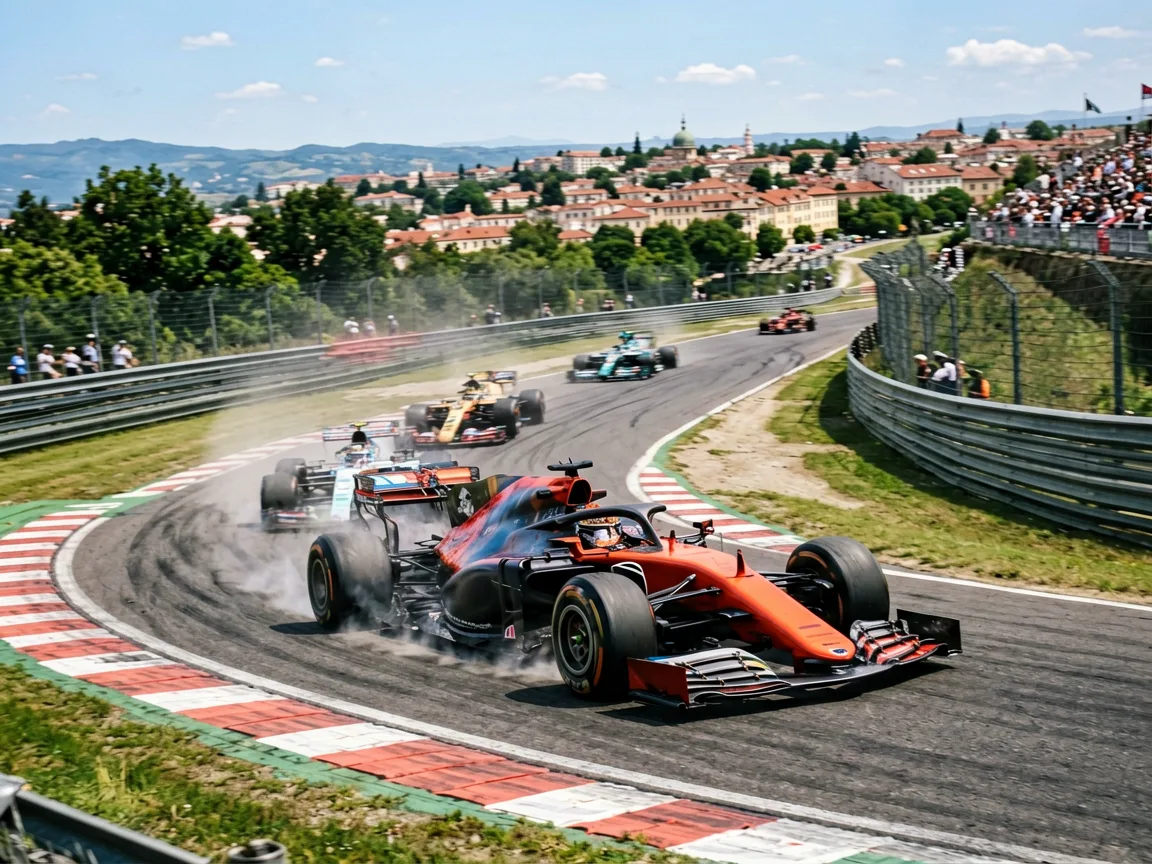
Hungarian GP 2026: Budapest Heat and the Tyre Strategy That Decides It
The Hungaroring returns with its tight layout and brutal summer temperatures, placing tyre management and qualifying position above raw straight-line speed.
Red Bull's Citadel Awaits: Austrian Grand Prix Preview
The F1 circus descends on Spielberg for the Austrian Grand Prix, and here is your complete tactical briefing and BBC coverage guide.

Austria and Silverstone: A Technical Blueprint for the Ultimate Double-Header
The Red Bull Ring and Silverstone demand radically different setups — here's the engineering logic behind fantasy picks.