Norris Hit With Grid Penalty as McLaren Rolls the Dice at Spa
Lando Norris takes new power unit elements at Spa, triggering a grid penalty that reshuffles McLaren's Belgian GP strategy.
Spa Sets the Stage
Spa-Francorchamps in late July is a crucible. Ambient temperatures hover around 18°C but the microclimate at Eau Rouge can shift without warning, throwing a damp curveball into tire preparation and aero balance. The 7.004km circuit remains the longest on the current Formula 1 calendar and demands a medium-downforce configuration that trades outright cornering grip for straight-line efficiency. The Kemmel Straight after Eau Rouge provides a tow and a DRS activation point that can decide a race. Now one key contender will start from the back.
Lando Norris will start on the back foot at this weekend's Belgian Grand Prix after taking on new power unit elements. The penalty sends him to the rear of the grid at a venue that rewards overtaking but punishes anything less than a perfectly executed recovery drive.
Why Take the Hit Now?
Teams typically introduce power unit changes when they want to stockpile fresh components for the remainder of the season, preferring to absorb a penalty at a circuit where overtaking is feasible. Spa fits that profile. The layout has long straights, heavy braking zones at the Bus Stop chicane, and a DRS train effect that can compress the field.
McLaren has clearly looked at the mathematics. If Norris completes the full race distance without another component failure, the team banks a fresh internal combustion engine, turbocharger, MGU-H, MGU-K, control electronics, and energy store for the remaining rounds. At circuits where passing is nearly impossible, that same penalty could cost 15 to 20 seconds of racing time and turn a potential podium into a point-scoring finish.
Norris has now shed light on the reasoning behind the call. The reigning World Champion explained that the decision was a collaborative one between him and the team, rooted in the belief that Spa's overtaking-friendly layout makes it the ideal place to absorb the hit. With the championship battle intensifying in the second half of the season, banking fresh components now gives McLaren the best chance to fight at the front when the margins get tighter at circuits where overtaking is far more difficult.
Spa's Overtaking DNA
The Belgian Grand Prix has a history of back-of-grid heroics. The long run from La Source through Eau Rouge and up the Kemmel Straight gives drivers a chance to draft past slower cars. The descent to Pouhon and the braking zone at Les Combes offer additional overtaking landmarks. A well-drilled team can negate much of the starting deficit, but only with a chassis that manages tire temperatures across the full lap.

Strategy Breakdown: The Pit Wall Calculus
The timing of this component swap reveals McLaren's internal calculations.
The Two-Stop Blueprint
At Spa, race strategy is shaped by tire degradation and the timing of safety car interventions. The hard tire is the preferred race compound because the abrasive surface chews through soft rubber within 10 to 12 laps at race pace. The medium tire offers a bridge stint, but degradation at Pouhon and Blanchimont limits its effective window.
McLaren's likely approach for Norris involves a two-stop strategy starting on mediums or hards, depending on a Phase 1 qualifying position from the back of the pack. The team will target a long first stint to clear traffic, then switch to faster rubber for the final push. The risk lies in getting stuck behind a DRS train. Mixing into the midfield quickly is essential.
The Fuel-Adjusted Window
Here is where the power unit elements become relevant. A fresh engine provides a measurable performance step. The crew will want to exploit the early laps before the field is single file.
The strategic sweet spot at Spa is to avoid the temptation of an aggressive one-stopper. With fresh power, Norris maintains pace through Sector 2.
What Recovery Looks Like
History at Spa offers a realistic benchmark for what a back-of-grid recovery can yield. Drivers starting from the rear have previously fought through to score points, but crossing the line inside the top 6 requires every variable to break the right way. Norris needs pace in clean air, a chassis that protects its tires through the high-speed corners, and a strategy wall willing to split from the cars ahead when the running order settles.
The challenge grows if rain arrives. Spa in wet conditions magnifies car balance and driver confidence. A damp patch at Rivage or a sudden downpour at the top of the hill can reset the entire field. McLaren will have contingency plans for intermediate and wet tires ready.
The radio traffic between Norris and his engineer will reveal the team's strategic intent. As Norris navigates through the backmarkers, the tone of the messages will shift from information to encouragement to anxious calculation.
The Championship Implications
Norris's penalty arrives at a pivotal moment in the season. Every position lost at Haute, Grand, and Blanchimont has long-term implications for the standings. If team-mate Oscar Piastri starts near the front and capitalizes on the clean air, the points swing within McLaren colors could reshape the intra-team dynamic.
The Broader Picture
The 2024 power unit regulations have penalized teams that push component longevity. All manufacturers have built regarding the tight cost dynamics.
What to Watch
If he advances through Q1 on medium tires, a one-stop becomes viable and the team can play the long game.
Key Battles to Monitor
The midfield cars will sense an opportunity. A train forms quickly at Spa, and the DRS detection line at the top of the hill).
Track Conditions Atlas
- Turn 1 (La Source): Heavy braking, prime overtaking zone, inside line critical
- Eau Rouge/Radillon: Flat out, wet weather risk, car balance essential
- Kemmel Straight: DRS activation, second overtaking zone, tow dependent
- Les Combes: Braking zone, third overtaking spot, tire temperatures critical part
- Bus Stop Chicane: Final overtaking zone, late braking, tire preparation critical
Tire Strategy Nuances
Pirelli's selection for Belgium typically runs one step harder than Hungary due to the high energy loads. The front-left tire carries the brunt of the workload through the long corners. Teams will monitor surface temperatures closely, as the abrasive track surface can push tire temperatures beyond the optimal operating window.
The Final Calculation
Fresh power unit elements provide a buffer for Norris, but Spa demands respect. The circuit's length and variety mean a single mistake at Stavelot can unravel a recovery. McLaren has chosen this battleground carefully. The configuration rewards horsepower and aero efficiency, two areas where the team has made strides. The garage will be a hive of calculation, with engineers running degradation models.
The pecking order at Spa has always favored the bold. Norris has the pace to recover, but the margin between a heroic drive and a frustrating afternoon is measured in seconds.
Updated: 2026-07-16 — Added Norris's own explanation of the decision to take a 10-place grid penalty at Spa, including the championship-driven reasoning behind it.
Editorial Integrity
This is an original SportPulse article written by our editorial team. All content is independently researched, written, and reviewed by our writers and editors before publication. We do not publish copied, aggregated, or syndicated content.
SportPulse is committed to original sports journalism. Read our editorial policy or contact us with any questions.
More Like This
All f1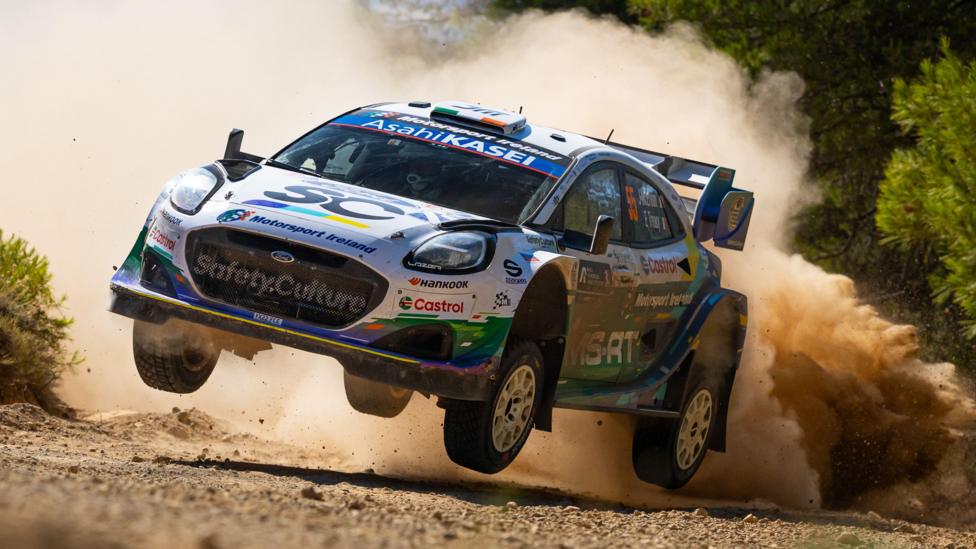
McErlean's Fourth-Place Breakthrough Signals a New Force in WRC
Irish driver Josh McErlean delivers a career-best WRC fourth in Greece as Ogier reigns supreme once more.
Albert Park Turns Six Into Senna: The Geometry of a Tribute
Turn Six at Albert Park is now the Ayrton Senna Chicane, but renaming a corner reshapes more than just the map.

Norris Hits Reality Check as McLaren Stumble at Silverstone
Lando Norris admits McLaren have 'a lot to improve' after a bruising British GP exposed widening gaps to Formula 1's elite.