The Long Fade: Norrie's Wimbledon Dream Dies in a Tie-Break He'll Never Forget
Cameron Norrie's turbulent relationship with Wimbledon takes its darkest turn as qualifier Michael Zheng ends his campaign in a brutal fifth-set decider.
The Moment the Crowd Went Quiet
There is a particular silence that descends on the grass courts of the All England Club when the unthinkable happens. Not the stunned gasp of a spectacular winner, but something heavier, something that lingers. On the opening day of Wimbledon 2026, that silence fell across Court 12 as Michael Zheng, an American qualifier ranked outside the top 200, struck a clean forehand return to seal a fifth-set tie-break 10-4 and send Cameron Norrie packing in the first round.
For Norrie, this was not just another early exit. This was Wimbledon. This was the tournament where, four summers ago, he had stood on Centre Court in a semi-final against Novak Djokovic and dared to believe he belonged among the game's elite. Now, in 2026, he finds himself on the wrong side of the sport's cruelest divide: the gap between what you once were and what the scoreboard says you are today.
A Life Between Flags
To understand Cameron Norrie's relationship with pressure, you first have to understand the strange geography of his identity. Born in Johannesburg to a Welsh mother and Scottish father, raised in Auckland, and educated at Texas Christian University in Fort Worth, Norrie has always existed between worlds. He chose to represent Great Britain, a decision that earned him the affection of a tennis nation perpetually desperate for heroes, but one that also came with a weight few outsiders appreciate.
British tennis does not produce many players capable of winning matches at Wimbledon. When one emerges, the expectations metastasize quickly. Norrie learned this the hard way. After his run to the 2022 semi-finals, where he took a set off Djovic before falling in four, he became the face of British men's tennis almost by default. Andy Murray was fading. The next generation had not yet arrived. Norrie, with his grinding baseline game and relentless fitness, was the man left holding the torch.
He held it well, for a time. He climbed to a career-high ranking of No. 8 in the world. He won the Indian Wells Masters 1000 title in 2021, a breakthrough victory that announced him as more than a solid tour player. He beat Daniil Medvedev and Grigor Dimitrov en route to that title, proving he could dismantle elite opposition when his game was humming.
But tennis is a sport with a brutally short memory.
The Decline Nobody Talks About
The numbers tell a story Norrie would rather not read. Since that magical 2022 Wimbledon run, his ranking has been on a slow, grinding descent. Injuries have played their part, a nagging hamstring issue sidelining him for chunks of 2024 and early 2025. But the deeper problem has been more existential. His game, built on consistency and court coverage, requires a physical foundation that, once cracked, is extraordinarily difficult to rebuild.
At his best, Norrie was a wall. He absorbed pace, redirected it with flat, penetrating groundstrokes, and forced opponents into errors through sheer persistence. His left-handed serve, while never a weapon of devastating power, found awkward angles that troubled right-handers on the ad court. He was the kind of player who could lose the first set 6-3 and still believe, with genuine conviction, that he would win the match.
That belief, however, requires fuel. It requires the muscle memory of winning, the quiet confidence that comes from seeing your name on the right side of the draw sheet week after week. When the losses accumulate, when the ranking drops outside the top 50, then outside the top 70, that belief begins to flicker.
Enter Michael Zheng
Michael Zheng arrived at Wimbledon the way hundreds of players do every June: through the qualifying rounds, three matches played on the unforgiving grass of Roehampton, each one a career crossroads disguised as a tennis match. He won those three matches, which meant he earned the right to step onto the hallowed lawns of SW19 as a main-draw competitor.
Little is written about qualifiers in the previews. They are the footnotes, the names attached to the word "upset" if things go wrong for the established player. Zheng, though, played with the particular fearlessness that comes from having nothing to lose and everything to prove.
The match itself was a five-set war of attrition, the kind of encounter that grass-court tennis produces more often than casual fans realize. Norrie, drawing on every ounce of his experience, fought back from deficits and clawed his way into a deciding set. The crowd willed him forward. This was, after all, a British player on British grass, and the opening day of Wimbledon carries a romanticism that transcends rankings and form.
But Zheng would not break. When the fifth set reached 6-6 and the tie-break began under the old-format first-to-ten rules, the American played with startling composure. He served big, moved forward, and refused to give Norrie the rhythm he so desperately needed. The tie-break read 10-4 when it was done. Four points. That was all Norrie managed in the moment that mattered most.
The Weight of a Nation's Expectations
Norrie's loss was the headline, but it was not the only wound British tennis suffered on Day One. Across both singles draws, home players struggled, a pattern that has become grimly familiar at Wimbledon in recent years. The depth of talent in British tennis remains shallow, and the reliance on individual players to carry the flag creates a pressure cooker that few can survive indefinitely.
For Norrie specifically, the question now is existential. At 30 years old, with his ranking slipping and his body no longer capable of the relentless physicality that defined his peak, how much longer can he compete at this level? The British tennis establishment will not say it publicly, but the pipeline is already looking elsewhere. Jack Draper has emerged as the new standard-bearer. Younger players are coming through the LTA system with bigger games and higher ceilings.
"I've always believed that my best tennis is good enough to beat anyone. I still believe that. But believing it and proving it are two different things, and right now I need to find a way to close that gap."
Norrie spoke those words after a similar early exit last season. They resonate even more painfully now.
Career by Numbers
- Career-high ranking: No. 8 (October 2022)
- ATP titles: 5
- Wimbledon best result: Semi-finals (2022)
- Indian Wells Masters 1000 champion: 2021
- 2022 Wimbledon semi-final opponent: Novak Djokovic (lost 6-4, 3-6, 6-4, 3-6, 4-6)
- College career: Texas Christian University (TCU), turned professional in 2017
- First-round Grand Slam losses since 2023: Multiple, a stark contrast to his peak years
The Qualifier's Reward
For Michael Zheng, the victory is transformative. A qualifier beating a former top-ten player at Wimbledon is the kind of result that can launch a career, or at the very least, rewrite a season. He will move into the second round with genuine belief and the knowledge that his game translates to the biggest stage. Qualifiers who make deep runs at Wimbledon have a special place in the tournament's folklore, and Zheng has earned the right to dream.
The American's next opponent will offer a clearer measure of how far he can go. But for now, the story belongs to him: the kid who came through qualifying and knocked out Britain's one-time great hope on the sport's most famous court.
What Norrie Leaves Behind
Tennis history is littered with players who touched greatness briefly and spent the rest of their careers chasing the echo. Norrie's 2022 semi-final run was not a fluke; it was the product of years of disciplined, intelligent development under coach Facundo Lugones, who helped transform a college player into a top-ten force. That coaching partnership, that physical commitment, that tactical evolution, all of it was real.
But legacies in tennis are measured by sustained excellence, not isolated peaks. Norrie's Indian Wells title remains a genuine landmark, a moment where British tennis produced something unexpected and thrilling. His semi-final at Wimbledon, taking a set off Djovic on Centre Court, was a moment of pure sporting drama.
The question is whether those moments will be remembered as the peaks of a solid career or as the tantalizing hints of what might have been. Right now, with the taste of a 10-4 tie-break defeat still raw, it feels like the latter.
Wimbledon moves on. The tournament always does. The grass does not care about yesterday's dreams. But somewhere in the quiet of the locker room, Cameron Norrie will replay that tie-break one more time, searching for the four or five points that might have changed everything, knowing that the margin between glory and heartbreak at this tournament has never felt thinner.
Editorial Integrity
This is an original SportPulse article written by our editorial team. All content is independently researched, written, and reviewed by our writers and editors before publication. We do not publish copied, aggregated, or syndicated content.
SportPulse is committed to original sports journalism. Read our editorial policy or contact us with any questions.
More Like This
All tennis
Norrie's Queen's Run Cut Short as Davidovich Fokina Silences the Home Crowd
Britain's Cameron Norrie falls early at Queen's, raising questions about his Wimbledon readiness.

Hull fires 62 to break Centurion record and join lead
Charley Hull shot a historic 62 at the PIF London Championship, breaking the Centurion Club course record.
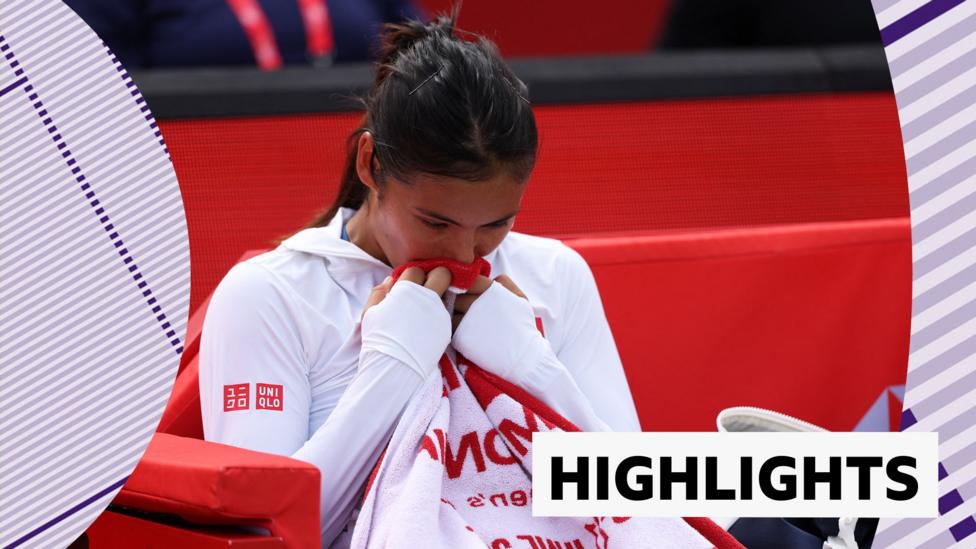
Vekić Punishes Raducanu with Ruthless Opening, Holds Nerve in Queen’s Final
Donna Vekić outclasses Emma Raducanu 6-0, 7-6 to win the Queen’s Club title.