Ireland beef up security ahead of Afghanistan ODI series over protest fears
Cricket Ireland confirms robust security plans for the Afghanistan ODI series amid expected protests over Taliban rule.
Cricket is rarely a sport that requires security briefings before a bilateral series, but the forthcoming men's ODIs between Ireland and Afghanistan are not routine. Cricket Ireland confirmed that "appropriate" security measures are "in place" for the matches, a carefully worded acknowledgment that the governing body expects disruption beyond the boundary rope.
Ireland-Afghanistan ODIs arrive under protest pressure
Since the Taliban retook control of Afghanistan in August 2021, every international fixture involving the country's men's team has drawn scrutiny. The core grievance: the Taliban has effectively banned women and girls from playing sport and severely curtailed their participation in public life. The ICC stripped Afghanistan of its full member hosting rights for women's cricket, and the country has no functioning women's programme.
Yet Afghanistan's men continue to play full international cricket. They are a competitive white-ball side with players spread across major T20 franchise leagues worldwide. That tension, a men's team thriving while women are locked out of the game entirely, brings protesters to the gates. Ireland, with its own progressive self-image and a growing women's programme, sits in an uncomfortable position. Hosting Afghanistan means endorsing the fixture through the ICC's bilateral framework while knowing that activists and advocacy groups view the series as a platform.
Cricket Ireland's event management challenge goes beyond crowd control
Cricket Ireland's statement used the word "appropriate" without detailing specific measures. That phrasing is standard in event security communications, but it also signals awareness that the threat is reputational as much as physical. Protest activity at cricket grounds in Ireland and the UK has historically been low-key: banners, chanting, occasional pitch invasions. The Afghanistan issue, though, has drawn sustained attention from human rights organisations and women's rights groups who see sport as complicit in normalising the Taliban regime.
Stewards and ground staff will need protocols not just for crowd control, but for protest zones, media management, and the optics of security personnel removing demonstrators from a sporting venue.
No Full Member has refused to host Afghanistan
Every Full Member that hosts Afghanistan faces the same calculus: play the fixtures as mandated by the ICC's Future Tours Programme, or risk sanctions and scheduling chaos by refusing. No board has taken the latter step. The ECB hosted Afghanistan during the 2023 Cricket World Cup in India and at various bilateral and multi-nation events since. Boards quietly accept the fixtures while hoping the political dimension stays confined to a handful of placards.
Cricket Ireland's decision to acknowledge the protest risk publicly, rather than hoping it would not materialise, is a more transparent approach than most boards have taken. The statement was brief, but it confirmed the board has treated the series as something other than business as usual.
Rashid Khan, ranking points, and what Ireland are playing for
Away from the politics, Ireland versus Afghanistan is a competitive fixture. Afghanistan's white-ball squad has matured significantly, with Rashid Khan and Mohammad Nabi established globally. Ireland have been working to prove they belong at the top table after years of near-misses in World Cup qualification cycles. These ODIs carry ranking points and developmental value for both sides.
Afghanistan's men's team now competes in a geopolitical context that other teams do not face. Every host board must decide how visibly it wants to acknowledge that reality. Cricket Ireland chose visibility.
Editorial Integrity
This is an original SportPulse article written by our editorial team. All content is independently researched, written, and reviewed by our writers and editors before publication. We do not publish copied, aggregated, or syndicated content.
SportPulse is committed to original sports journalism. Read our editorial policy or contact us with any questions.
More Like This
All long-reads
Race Against the Tide: Kiribati's Fight for Football Identity Before It's Gone
A disappearing Pacific nation is chasing World Cup qualifying entry, hoping football can preserve its spirit before the ocean claims everything.
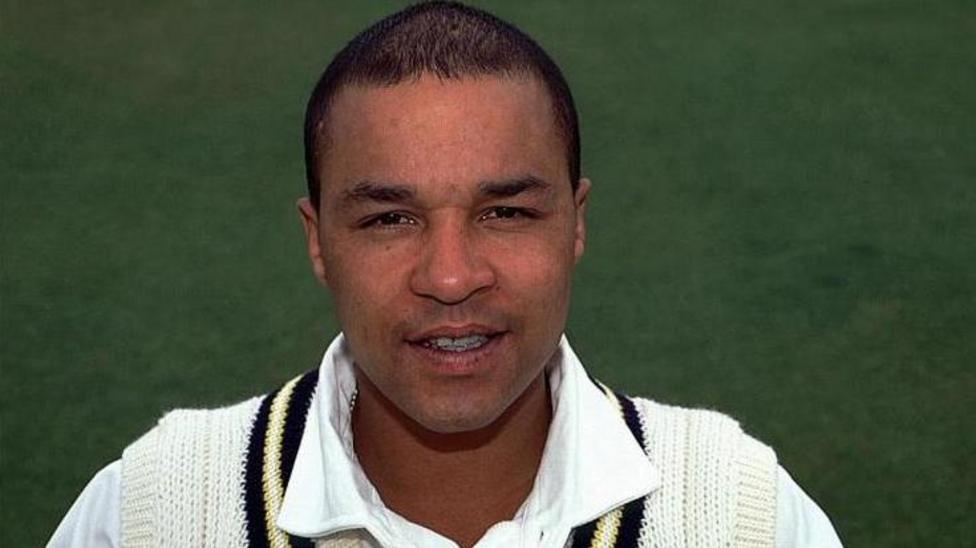
Keith Piper Dies at 56: Warwickshire Lose Their Soul
Keith Piper, the wicketkeeper who defined Warwickshire's golden era across nearly 500 appearances, has passed away at 56.

World Cup's Hidden Scandal: Atlanta's Homeless Sweeps Expose a Cruel Pattern
As the football world parties in Atlanta, unhoused people are being silently cleared out in defiance of a tragedy that should have changed everything.