Hungarian GP Technical Takeaways: McLaren's Pit Call and Intermediate Tyre Mechanics
McLaren's 1-2 in Budapest was defined by a tyres-to-intermediates switch that exposed how early rubber swaps reshape grip windows.
The Hungarian Grand Prix delivered a McLaren one-two, but the result was less about raw pace and more about how tyre temperature and track evolution reward teams that commit early. Budapest's tight, dusty layout generates limited lateral load, which means the thermal window of each compound operates on a knife edge. Get the intermediates switched on a lap too early, and the car slides on a damp surface that cannot support the rubber. Get it right, and the extra grip compounds every section of the lap.
The defining moment came when Lando Norris pitted from the lead and rejoined behind Oscar Piastri. The undercut worked because the intermediate tyre, once exposed to a drying track, gains surface temperature rapidly through deformation. Unlike dry tyres, the intermediate's tread pattern sheds water but also traps air in its sipes, which means it relies on a narrow temperature band to deliver consistent lateral grip. On a drying Hungaroring surface, each lap brought the track closer to the crossover point where intermediates outperform extremes. McLaren's pit wall was already mapping that curve before the race began.
Pierre Gasly's defensive work against Sergio Perez illustrated the second key concept of the afternoon: aero wash and how it breaks down in dirty air at low speeds. Perez closed through the middle sector but could not position the Red Bull for a clean pass into Turn 1. The Hungaroring rewards high-downforce configurations, but dirty air degrades the front wing's ability to generate yaw stability when following another car closely. Gasly's Alpine was running a trimmed rear wing to balance drag on the main straight, which meant Perez had a straight-line advantage but lost front-end bite through the slow-speed corners that define the layout.
Tyre Crossover and the Lap Times That Exposed It
The gap between extreme wets and intermediates is not linear. As the track dries, the extreme tyre overheats because its softer compound and deeper tread generate more rolling resistance than the surface can dissipate. The crossover point is the exact moment where intermediate lap times drop below extremes, and at Budapest that window opened for roughly three to five laps before the track was fully ready for dry tyres. Teams that timed the switch perfectly banked time. Those that waited lost seconds per lap. Norris lost time in traffic, but his pace on intermediates after the switch was the fastest anyone managed in those conditions.
Pit Stop Mechanics and the Cost of Pre-empting
McLaren chose to pre-empt the crossover by pitting early, which meant the car returned to the track on intermediates while the surface was still marginal for that compound. The risk is graining, where the tyre surface tears and re-adheres to itself, creating irregular lumps that break contact with the track. That did not happen for Norris, which suggests the track temperature and the car's mechanical platform were coping with the tyre load better than expected. McLaren's slower-speed suspension geometry, which favours front-end compliance over sharp turn-in, let the intermediate tyre build heat gradually through the corner phases rather than locking the surface in one violent transition.
The front axle took the heaviest load in those opening laps on intermediates. The brake ducts were configured for wet conditions, which means they were running smaller brake duct apertures to keep the discs at their optimum operating window. In the dry, those same ducts would be opened up to increase airflow. Running them tight on a drying track risks brake fade and glazing, where the disc surface hardens and loses friction. Red Bull ran larger ducts, which gave Perez more consistent braking but cost him time on the straights.
The stop itself was not the fastest, which tells us McLaren's mechanics were focused on tyre preparation rather than raw speed. The crew blanketed the intermediates longer to maximise core temperature before the car arrived. A colder tyre would have meant two laps of understeer while the front axle warmed up. On a circuit where overtaking is difficult, those two laps would have cost track position that might never have been recovered.
Front Suspension Kinematics and the Budapest Surface
The standout technical detail was the front suspension kinematics. McLaren's anti-dive geometry, which controls how the front end responds under braking, was tuned to keep the front wing's ride height stable as the car decelerated into the tight Budapest corners. When a car squats under braking, the front wing loses ground effect and the airflow detaches from the underfloor. That makes the car nervous on entry and unstable through the apex. McLaren's platform kept the wing in its optimum window, which gave the drivers the confidence to carry speed through the low-speed sections that dominate this circuit. Most teams struggled with this balance. McLaren nailed it before the race even started.
The intermediate tyre's contact patch behaves differently at the Hungaroring than at other venues because the surface is relatively low-grip even in the dry. The track is used infrequently, which means rubber laydown is sparse and the surface stays abrasive. When intermediate rubber exchanges with that surface, the car benefits from a softer compound working into the micro-texture of the asphalt rather than sliding over a polished, high-grip layer. This is why early adopters gained more than they might at a track like Monza, where the surface is smoother and the crossover window is shorter.
Engine Mapping and the Wet Mode Workload
The McLaren Mercedes power unit was running an aggressive wet torque map off the corners, which means the engine delivers power in a smoother curve rather than the sharp step that characterises dry mapping. The trade-off is outright acceleration, but the benefit is traction control, managed through the torque curve rather than the physical electronics. On a drying Budapest surface, the rear tyres were at their limit of adhesion, so smoothing the torque delivery kept the rear end stable enough to power out of the slow-speed exits.
On a circuit where the power sensitivity is low compared to Monza or Spa, this trade-off cost very little lap time. The Hungaroring's layout is dominated by medium and slow-speed corners, and the main straight is not long enough for raw power to overcome aero efficiency gains from a stable platform. This is why the headline lap times do not show the full picture. The car that can deploy its torque smoothly through the traction phase gains time where it matters most.
Budapest's Technical DNA
The Hungaroring is a circuit that exposes a car's mechanical platform more than its aerodynamic efficiency. With few long straights and a high density of slow corners, downforce levels are high, but the track asks different questions than a venue like Suzuka or Silverstone. The layout rewards cars that can rotate through low-speed corners without wearing the front tyres, a balance that is notoriously difficult to strike.
With the F1 circus moving to Spa-Francorchamps next, the technical challenge flips. Spa's long straights and high-speed turns ask the tyres to manage thermal loads over a much longer lap, and the run from La Source to Eau Rouge will test whether McLaren's suspension philosophy holds up when the downforce loads are much higher. The intermediate tyre is unlikely to be a factor unless conditions change, but the lesson of Budapest stands: the team that maps the crossover window most accurately will bank the most time.
The Belgian GP weekend will also give us a read on whether McLaren's brake duct strategy, which was tailored for Budapest's low-speed layout, will need to be revised for a circuit where the cooling loads are much higher. Spa's long straights give the brakes time to recover, but the heavy braking zones into Les Combes and the Bus Stop chicane demand a different duct configuration. Expect the team to open up the brake duct apertures to keep disc temperatures in check, which will cost some straight-line speed but should pay dividends through the high-speed sections.
Editorial Integrity
This is an original SportPulse article written by our editorial team. All content is independently researched, written, and reviewed by our writers and editors before publication. We do not publish copied, aggregated, or syndicated content.
SportPulse is committed to original sports journalism. Read our editorial policy or contact us with any questions.
More Like This
All f1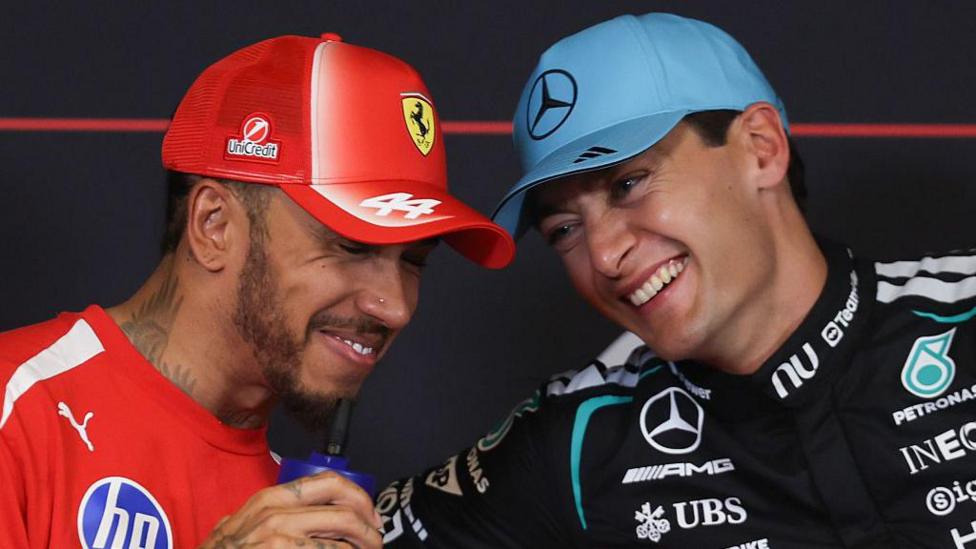
Mercedes Locks Out Barcelona Front Row — The Engineering Behind the Resurgence
Hamilton and Russell at the front signals a genuine Mercedes aerodynamic reset, not just a one-off qualifying anomaly.

Spa Delivers Another Classic As 2026 Belgian GP Rewrites The Script
The 2026 Belgian Grand Prix at Spa-Francorchamps produced drama, strategy chaos, and a race verdict nobody predicted.
Silence Before Zandvoort: How F1's Grid Spent Its August Shutdown
Factory doors sealed, sim rigs cold, and twenty drivers scattered across continents as F1's mandatory shutdown reshuffles who returns sharp and who returns rusty.