Hungaroring FP2: Budapest's Furnace Sets the 2026 Race Weekend Blueprint
FP2 in Budapest carries outsized weight at a track where qualifying position and tire management decide everything.
Budapest's Natural Bowl Sets the Stage
The Hungaroring sits in a natural amphitheater east of Budapest, a basin that traps heat and humidity by mid-afternoon on a July Friday. Track temperatures routinely push past 50°C, turning the asphalt into a surface that chews through rubber and punishes every setup miscalculation.
The circuit is the shortest on the calendar at just 4.381 km, a tight, serpentine layout with 14 corners and almost no straight worth the name. After the downhill braking zone into Turn 1, the lap is a relentless sequence of medium-speed direction changes that reward mechanical grip and aerodynamic consistency over raw power unit output.
Downforce runs high, often at or near Monaco levels. Teams bolt on their largest rear wings and trim out the beam wing for maximum load. The tradeoff is drag, and the DRS zone on the main straight is the only genuine overtaking opportunity, though even that requires a significant pace delta thanks to the narrow track width and defensive positioning through the final corner.
FP2: The Session That Shapes the Weekend
FP2 is the only practice session that runs at race-representative time and temperature. That makes it the single most valuable 60 minutes of the practice weekend. The morning's FP1 data, gathered in cooler and often greener conditions, is useful for systems checks and baseline correlation, but FP2 is where the race weekend begins in earnest.
The long runs during FP2 give engineers their primary dataset for tire degradation modeling. Fuel-corrected lap times from these runs feed directly into race strategy simulations that pit wall staff will reference for the next 48 hours. A car that looks competitive on single-lap pace but falls apart on a ten-lap stint in FP2 will struggle on Sunday regardless of where it qualifies.
The surface is abrasive but the layout is low-energy on tires in isolation. The paradox is that track temperature inflates degradation anyway. Soft compound tires, usually the C4 or C3 allocation here, can overheat in the thermal blanket of the basin air. Mediums become the sensible race tire, and the battle to extract a one-stop strategy from a dataset pointing toward two stops is one of the recurring tactical puzzles of this Grand Prix.
Engineers also use FP2 to validate cooling configurations. Ambient and track temperatures in Budapest are among the highest of the season, and power unit cooling demand is acute. Run too much cooling and you sacrifice aerodynamic efficiency on a track that rewards every fraction of downforce. Run too little and you face thermal management interventions during the race that cost lap time in invisible but compounding ways.
2026 Regulations Meet Budapest's Edge Cases
The 2026 technical regulations introduced revised aerodynamic frameworks and adjusted power unit energy recovery parameters. At a track where full-throttle time per lap is among the lowest on the calendar, energy deployment maps become a significant variable. Teams harvesting aggressively through the corner sequences carry more deployment energy onto the short straights, but the balance between harvesting intrusion and deployment release is circuit-specific, and Budapest's layout stress-tests calibration choices.
The ground-effect aero philosophy carrying into 2026 also plays into the Hungaroring's character. Cars relying on floor-generated downforce perform well in steady-state corners, but the direction changes from Turns 4 through 8 demand that the floor stays loaded during transient maneuvers. Any porpoising or floor stall through these transitions is magnified by the frequency with which a driver encounters them on a sub-70-second lap.
Why Qualifying Order Fossilizes on Sunday
At circuits with long straights and heavy braking zones, teams can afford to be slightly off on setup because DRS-assisted overtaking and braking performance offer recovery avenues. The Hungaroring does not forgive. A car that qualifies eighth here tends to finish eighth, because overtaking is genuinely difficult and the lap is too short for undercut windows to offer clean strategic separation.
Qualifying remains paramount. The leading car controls the pace and the trailing car overheats its tires in dirty air through corners that demand clean airflow. FP2 results at the Hungaroring carry heavier predictive weight than at almost any other venue: the correlation between Friday long-run pace and Sunday finishing order is historically tight because the track limits strategic options and punishes cars outside their performance window.
The 2026 championship standings will not be redrawn by one race in Hungary, but the competitive order FP2 helps establish here carries forward through the calendar.
Editorial Integrity
This is an original SportPulse article written by our editorial team. All content is independently researched, written, and reviewed by our writers and editors before publication. We do not publish copied, aggregated, or syndicated content.
SportPulse is committed to original sports journalism. Read our editorial policy or contact us with any questions.
More Like This
All f1
Ferrari's Silverstone Aero Surge Denies Antonelli Sprint Pole
Hamilton edges Mercedes rookie Antonelli for Sprint pole as Ferrari unleash a major Silverstone aero upgrade package.
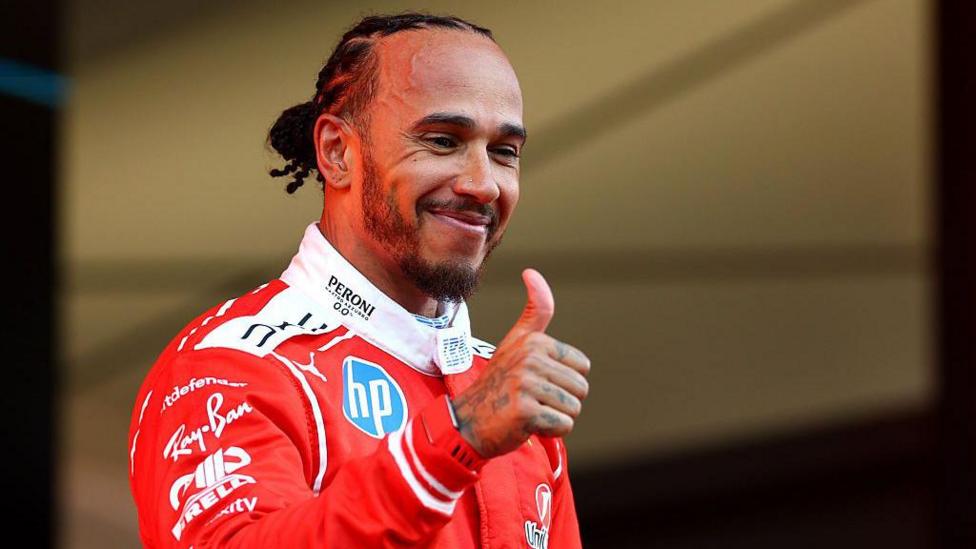
Hamilton's Monaco P2 Wasn't Luck — It Was Engineering Revenge
A second-place finish in Monaco reveals a Hamilton and Ferrari package finally clicking where it matters most.
Câmara Conquers Chaos in Spa-Francorchamps F2 Thriller
Rafael Câmara fought back through red flag chaos to claim a dramatic F2 Feature Race victory at Spa-Francorchamps.