Kane's Five-Day Window: Ballon d'Or or Beautiful Anonymity
Seventy-three goals mean nothing without the moments that define eras. Kane's career verdict arrives in five days.
The Arithmetic of Legacy
Football's greatest individual prize has never been about raw accumulation. It is about timing, opposition, and the choreography of narrative. Harry Kane understands this better than anyone, which is both his advantage and his burden.
In five days, Kane can settle the argument. Not the domestic one, which he has answered with 73 goals in 64 appearances across all competitions this season. Not the Bundesliga argument, where his trophy cabinet at Bayern Munich already glows. The argument that matters is the one that determines whether he is merely England's greatest striker or a player whose name echoes beyond the white cliffs of Dover.
To win the Ballon d'Or, Kane must do two things. He must outshine Lionel Messi in Atlanta on Wednesday. Then, on Sunday, he must see off either Kylian Mbappé or Lamine Yamal. It is a gauntlet so steep it borders on cinematic absurdity. Yet here we are.
The Numbers Behind the Narrative
- 73 goals in 64 appearances for club and country this season
- Domestic trophies won with Bayern Munich in the current campaign
- Aiming to lead England to a first World Cup final on foreign soil
- Faces Argentina's Messi directly in a semi-final eliminator
Kane has produced the statistical season of any forward in Europe. Goals per ninety, conversion rates, involvement in build-up, the volume of touches in the box. The metrics confirm what the eye suspects: this is a striker at the absolute zenith of his powers.
The problem is that Ballon d'Or voting is not conducted in spreadsheets. It is conducted in the imaginations of journalists, captains, and coaches who remember what they saw when the lights burned brightest. And there, the ledger remains unresolved.
The Messy Business of Definition
England has always loved Harry Kane with a kind of protective, slightly defensive affection. He is the kid who was nearly released from Tottenham's academy, the one youth coaches debated keeping before grudgingly allowing another season. That story of quiet perseverance has become mythology now, a foundational text for Kane's public persona.
But the international cognoscenti do not care about academy survival stories in north London. They care about what happens on pitches like the one in Atlanta, where Messi waits with the relaxed menace of a man who has played these games a dozen times before.
Kane's task is not merely to score. It is to outperform the player widely regarded as the greatest in football history. He must be the axis around which England turns, the cold-eyed finisher who dispatches chances with the clinical indifference of a surgeon, and the leader who drags a frequently dysfunctional team into a World Cup final abroad for the first time.
No Englishman has done that. No Englishman has won the Ballon d'Or in the modern era either. The two achievements are converging on the same five-day stretch, and that is what makes this week the most consequential of Kane's entire career.
Destiny is the word Kane keeps reaching for in interviews. It sounds like the refuge of a man who does not know what else to call it.
What the Metrics Cannot Measure
The tactical case for Kane as the best striker in the world is already compelling and probably settled. His movement into the half-spaces, the intelligence of his pressing triggers, the way he drops to receive and then immediately plays the line-breaking pass that breaks defensive shape. He is a complete footballer operating as a number nine.
Yet completeness is boring to voters. Completeness does what is technically sufficient but rarely stirs the soul. What wins Ballons d'Or is a moment of transcendence against impossible odds. Messi has a portfolio full of them. Mbappé has his own gallery, built largely at World Cups. Yamal is assembling one at seventeen.
Kane has been excellent consistently but has occasionally been brilliant in exactly the way the award requires. The Champions League quarter-final demolition of Arsenal. The hat-tricks that stacked up like dominoes during Bayern's relentless domestic run. These were performances that reminded you that strikers are still the foremost acts in football's hierarchy of positions. But none of them were the moment.
Wednesday in Atlanta is the moment.
The Bottom Line: Kane does not need a good game against Argentina. He needs a game that people describe twenty years from now to their children who did not see it.
The Opponent Problem
Lionel Messi, at this stage of his career, operates primarily as an event rather than as a footballer. He drifts through matches in a kind of competitive slumber and then produces ten seconds that change everything. Punishing that pattern requires something more sophisticated than tactical planning. It requires the obsessiveness of a striker who has been preparing for this specific scenario since the draw was made.
Kane has never beaten Messi in a meaningful sense. He scored against Argentina at the 2022 World Cup in a group stage match that England won but which Messi effectively sat out. Later Argentines acknowledged that was not the real Messi.
This is the real one. The one wearing the armband, chasing the legacy of a second consecutive World Cup, backed by a squad that believes it has a divine right to lift trophies. Kane must outplay that version. That is the exact size of the task.
The Alternative Scenario
Suppose Kane does it. Suppose he produces a semifinal performance for the ages in Atlanta, scores twice, assists once, leads his team to a win over Argentina, and then arrives in the final against either Mbappé or Yamal with the Ballon d'Or effectively his to lose.
Even then, the job is not finished. He must win the final. The Ballon d'Or is not awarded for losing finalists. Just ask Antoine Griezmann, who watched his hopes evaporate in 2016 despite a tournament more statistically dominant than most winners ever produce.
If the opponent is Mbappé, Kane is facing the heir apparent, a player already operating at a global celebrity tier Kane has never quite reached despite scoring more goals. If it is Yamal, he is facing the future itself, a talent so precocious that footage of his performances thus far at this tournament provokes a particular kind of despair.
Both scenarios require Kane to be not just the best striker in the world but a better version of himself than he has ever been.
Verdict: The mathematics are straightforward. Two more wins. Two more transcendent performances. And a legacy rewritten in five days.
The Stakes Beyond the Individual
England has waited sixty years for this. Kane has waited his whole career for a window this open. His body has held up, his finishing remains preternaturally reliable, and he leads a squad that finally looks more like a coherent tactical unit than the experimental collections of previous tournaments.
If he fails, he will still retire as England's greatest goalscorer, a player who generated statistics that may never be matched. But outside England, in the conversations that determine global standing, he will remain what he has always been: the best striker many casual football observers never quite got around to affectionately remembering.
Five days.
Two matches.
No room for a good game. Only room for the kind of performances that become permanent landmarks in football's shared global memory.
Kane has earned the right to attempt this. The season he has produced, the goals he has scored, the trophies he has won at Bayern, the way he has carried England through this tournament when the alternatives around him have flickered. He has positioned himself perfectly.
Now he must finish the job.
If he does, we will look back on this week as the moment the Ballon d'Or finally took up residence somewhere other than Paris or Barcelona or Buenos Aires. If he does not, it remains where it has always been, and Kane's extraordinary season becomes another addition to the catalog of achievements that were very nearly enough.
The Bottom Line: Greatness is not a destination. It is a series of moments, and Kane has precisely two remaining to stake his claim on football immortality. Everything else has been rehearsal.
Editorial Integrity
This is an original SportPulse article written by our editorial team. All content is independently researched, written, and reviewed by our writers and editors before publication. We do not publish copied, aggregated, or syndicated content.
SportPulse is committed to original sports journalism. Read our editorial policy or contact us with any questions.
More Like This
All football
Volpato Flips From Italy to Australia — and Heals a 20-Year Wound
Cristian Volpato's Socceroos defection is poetic justice for a nation still haunted by 2006.

Fifa Clears Balogun For USA-Belgium World Cup Clash
Fifa suspends Folarin Balogun's one-game ban, giving the USMNT their deadliest finisher for a brutal World Cup last-16 showdown against Belgium.
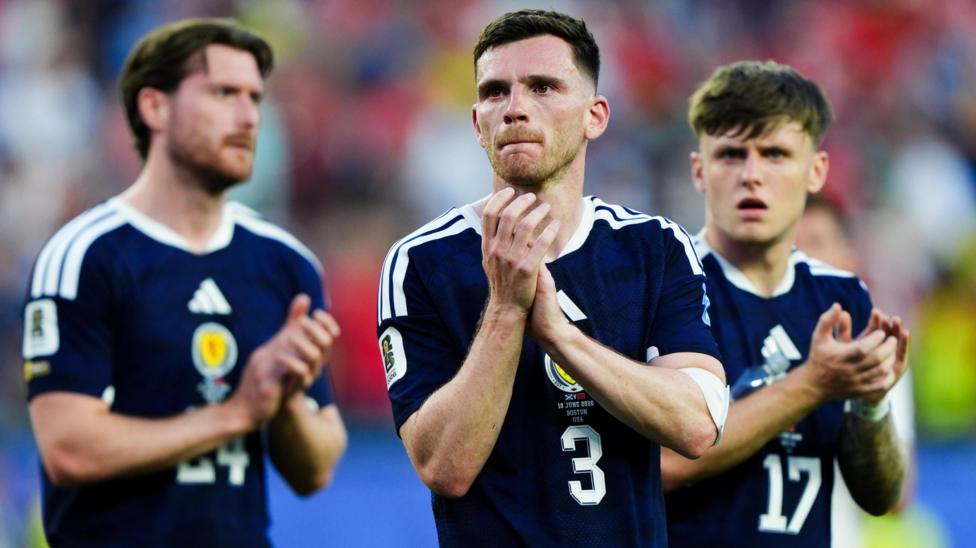
The Paralysis of Pragmatism: Scotland's Tactical Trap Against Brazil
Scotland face Brazil needing only a draw, but tactical history shows playing not to lose often guarantees exactly that.