Ferguson's Bologna Future Hinges on World Cup Shifts
Lewis Ferguson will evaluate his Bologna future after the World Cup, as tactical evolution and market dynamics reshape his Serie A trajectory.
The architecture of a footballer's career is rarely defined by a single transfer window; rather, it is shaped by the intersection of tactical evolution and personal ambition. At Bologna, Lewis Ferguson finds himself at precisely such a crossroads. The Scotland international has reportedly informed the Emilian club that he will assess his future only after the upcoming World Cup, a calculated pause that speaks volumes about both his maturity and the shifting tactical landscape at the Stadio Renato Dall'Ara.
For a player whose 2023-24 campaign was derailed by a severe knee injury, this refusal to rush into a long-term commitment is rooted in pragmatism. Ferguson is acutely aware that his standing in the market, and indeed within Scotland's national team setup, will be dictated by his performances on the grandest stage. However, beneath the surface of this standard contractual caution lies a deeper tactical negotiation. The midfielder must weigh whether his skill set remains optimally deployed within the framework currently being constructed on the Bologna bench.
The Thiago Motta Legacy and the Positional Dilemma
Under Thiago Motta, Bologna executed one of the most captivating structural metamorphoses in European football. Motta's 2-7-2 attacking shape and aggressive man-oriented pressing transformed the club from relegation candidates to Champions League qualifiers. Within this fluid system, Ferguson initially thrived. Operating as a mezz'ala, the Scot was granted the freedom to exploit the half-spaces, arriving late into the penalty area with a timing that yielded 9 goals in all competitions before his injury struck in April.
The rotational dynamics of Motta's midfield demanded that the wide central players oscillate between covering the wide corridors and pinning the opposition's double pivot. Ferguson's physicality and relentless vertical running made him an ideal executor of these demands. He was not merely a ball carrier; he was a spatial disruptor, stretching defensive blocks to create operating room for the likes of Joshua Zirkzee and Riccardo Orsolini.
Yet the departure of Motta to Juventus has introduced a variable that Ferguson must now seriously evaluate. The transition from one coach to another in Italian football is rarely seamless; it often demands a complete rewiring of a player's cognitive and mechanical habits on the pitch.
Adapting to the Italiano Blueprint
Vincenzo Italiano has arrived at Bologna with a distinct philosophical DNA. Where Motta sought asymmetry and positional ambiguity, Italiano prefers structured 4-2-3-1 and 4-3-3 alignments. The new manager's system prioritizes aggressive vertical pressing and the immediate occupation of the opposition half following ball recoveries. The build-up phase is more direct, bypassing the opposition's first line of pressure with longer passing sequences rather than the intricate, staggered overloads favoured by the previous regime.
For Ferguson, this tactical pivot presents both an opportunity and a threat. In Italiano's 4-3-3, the requirement for the central midfielders to cover 12 to 14 kilometers per match remains, but the geometry of that running has altered. The mezz'ala role is more constrained, focused on aggressive forward bursts in transition rather than the positional interplay of the Motta era. The question Ferguson must answer is whether his post-injury physical profile can sustain the explosive, high-repetition sprints demanded by the new structure.
Tactical Shift
The turning point in Ferguson's Bologna trajectory was not his ACL injury, but rather the structural shift that occurred on the tactical board. Under Motta, Ferguson was a tactical cheat code, a midfielder who effectively operated as a second striker in the half-spaces. Under Italiano, the offensive burden is distributed wider, with the wider triangles expected to generate the majority of chances. If Ferguson is asked to operate deeper, as part of a double pivot shielding the defence, his market value and his influence on Scotland's World Cup campaign diminish significantly. His post-World Cup assessment will hinge entirely on how much creative freedom Italiano is willing to grant him in the final third.
The statistics underline the delicacy of his situation. Prior to his injury, Ferguson was registering 1.4 key passes per 90 minutes and boasted a non-penalty expected goals figure of 0.18, elite numbers for a central midfielder. If the new system suppresses these metrics by redeploying him as a purely functional covering midfielder, the interest from the Premier League and the wider Serie A elite will inevitably cool.
"I need to feel that I am central to the project, not just a component in the machine. The World Cup will show where I belong." — Lewis Ferguson's reported stance to the Bologna hierarchy.
The Ernst Proposition and Parallel Market Dynamics
While Ferguson deliberates his positional future, Bologna's ecosystem is also subject to broader market forces that actively influence the club's financial flexibility. The apparent acceleration of Wolfsburg's pursuit of goalkeeper Tjark Ernst is a peripheral but instructive detail in this narrative.
Ernst, a highly rated young goalkeeper previously linked with Celtic, represents the archetype of the modern sweeper-keeper. Wolfsburg's interest signifies their desire to rebuild a defensive unit capable of playing a high line with compression. For Bologna, the potential movement of goalkeeping assets, either outgoing or incoming, impacts the wage bill and the resources available to renew, or replace, key outfield players. If the club secures a lucrative sale elsewhere, the urgency to extend Ferguson's deal on favorable terms increases exponentially. Conversely, financial stagnation could force a sale regardless of his tactical fit.
The intersection of the Bundesliga's structural needs and Serie A's financial realities highlights how interlinked these transfer ecosystems remain. Celtic's prior interest in Ernst also reveals the ever-widening gap between Scottish and European market realities, a gap Ferguson himself has successfully bridged.
The Scottish Dimension and the World Cup Catalyst
For the Scotland national team, Ferguson's club uncertainty is a matter of significant strategic importance. Steve Clarke has built his tactical foundation on a solid midfield block, often deploying a 3-4-2-1 or 3-4-3 shape that demands its central players to be disciplined coverers and explosive transition runners. Ferguson offers a rare vertical thrust from the inside channels that the Scottish midfield frequently lacks when relying solely on the likes of Scott McTominay or John McGinn.
A strong World Cup in a system that maximizes his offensive output could elevate Ferguson from a respected Serie A performer to a coveted asset for clubs competing in the Champions League knockout phases. A subdued tournament, or one where he is forced into a restrictive role, could leave him marooned in a mid-table project.
The Outlook for Bologna's Midfield Architect
The coming months represent a high-stakes tactical audition for Lewis Ferguson. He must prove that his body can withstand the stresses of Italiano's vertical pressing, while simultaneously demonstrating that his tactical intelligence can adapt to a less chaotic, more structured possession game. The decision to delay his contract resolution until after the World Cup is a masterstroke of leverage, placing the onus on Bologna to provide the environment that maximizes his value.
For Vincenzo Italiano, the challenge is equally profound. He must find a way to integrate a player who thrives on controlled chaos into a system that prizes organized verticality. If he can sculpt a role that allows Ferguson to retain his half-space dominance, the Scot could be the decisive factor in Bologna's push for back-to-back European qualifications. If not, the post-World Cup assessment will likely conclude that the tactical marriage has run its course, opening the door for a Premier League return or a move to one of Italy's northern giants.
The next tactical adjustment on the training ground at Casteldebole may very well determine the next five years of Lewis Ferguson's career.
Editorial Integrity
This is an original SportPulse article written by our editorial team. All content is independently researched, written, and reviewed by our writers and editors before publication. We do not publish copied, aggregated, or syndicated content.
SportPulse is committed to original sports journalism. Read our editorial policy or contact us with any questions.
More Like This
All football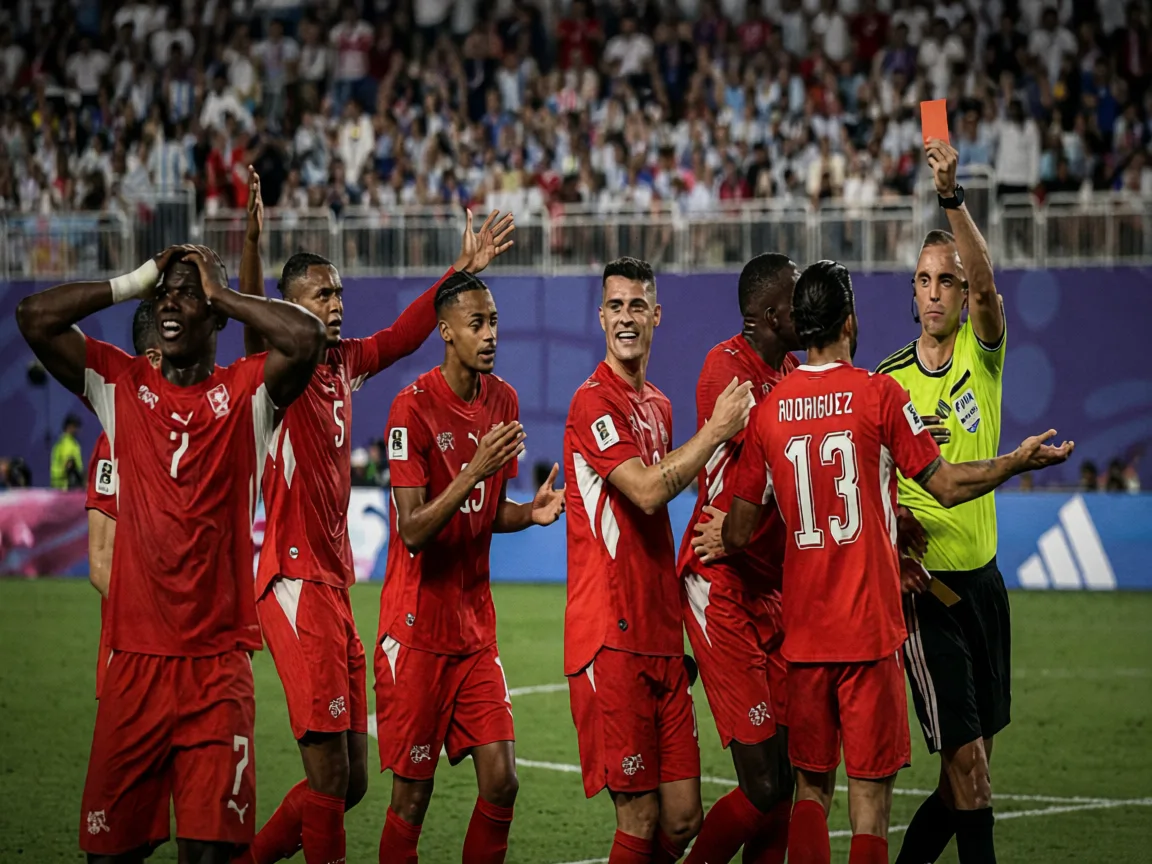
UEFA Draws Line on VAR Diving Crackdown After World Cup Chaos
UEFA instructs VARs to stop penalizing simulation as mistaken identity, backing away from FIFA's controversial 2026 World Cup protocol.
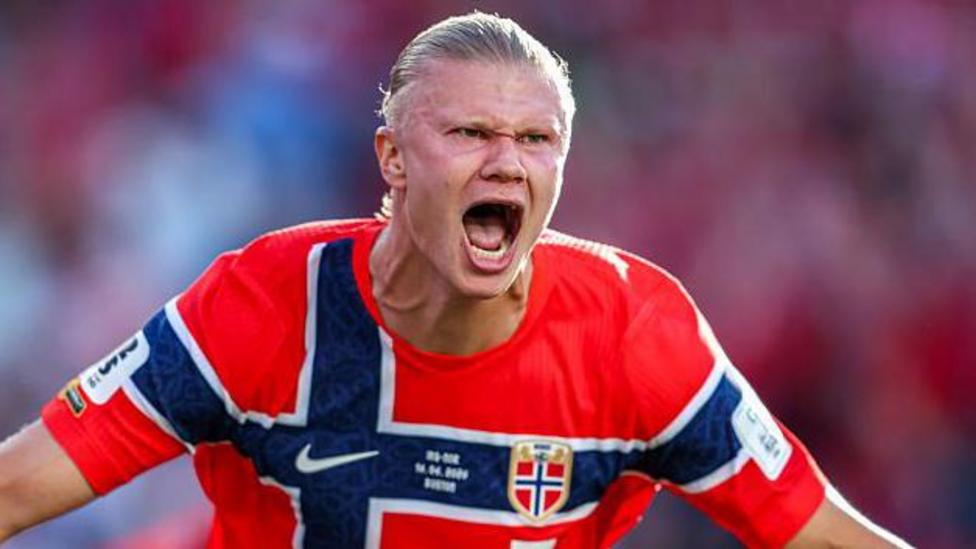
The Defensive Blueprint: How to Contain the World Cup's Four Lethal Forwards
Elite strikers are terrorising defences at this World Cup — but every attack has a tactical solution.
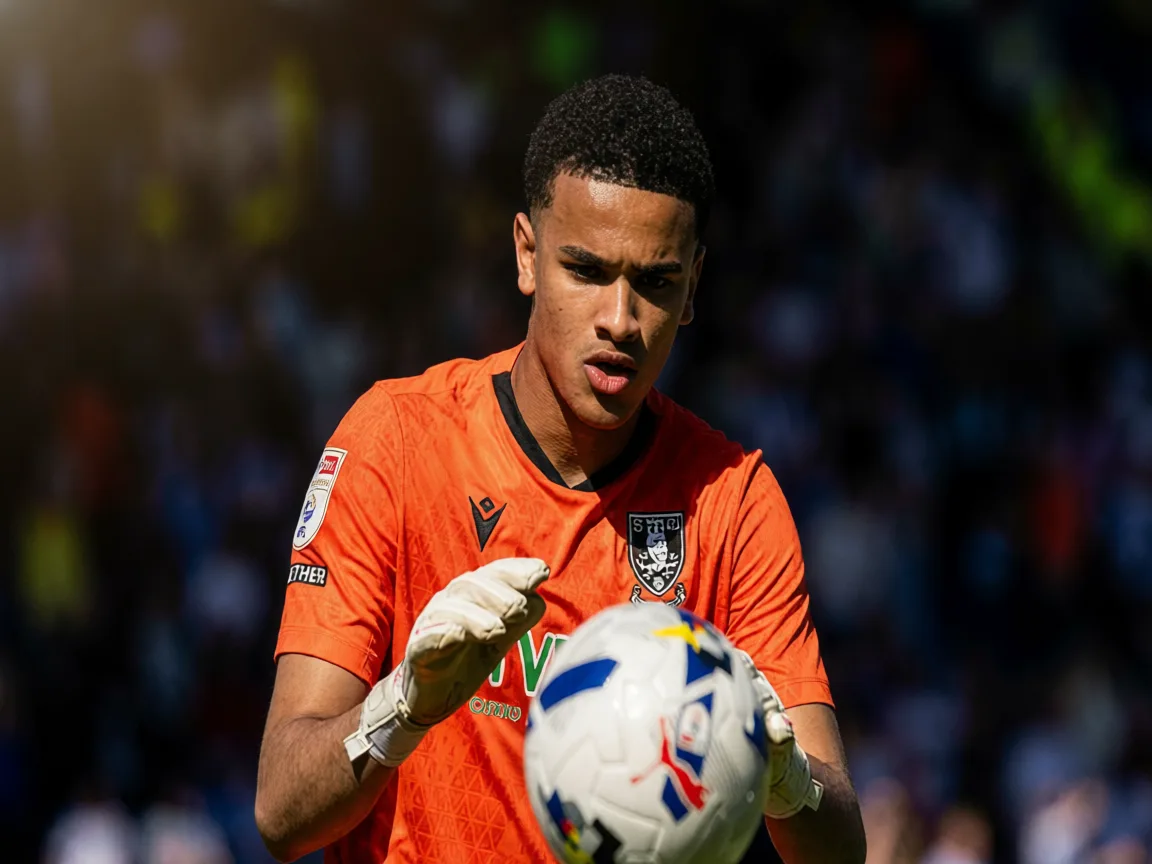
Man City Goalkeeper Charles Joins QPR on Loan for Championship Crucible
Pierce Charles swaps City Football Group luxury for Championship grit at QPR, betting on weekly minutes to accelerate his development.