F1's Summer Shutdown Is a Factory Freeze, Not Just a Holiday
The mandatory two-week shutdown halts development work and forces teams to freeze CAD screens, resetting the technical Arms race before Spa.
Formula 1's summer break is often framed as a chance for drivers to hit a beach and switch off from the media cycle. The mechanical reality is different. The mandatory factory shutdown is a regulatory freeze that stops development cold, forcing engineers to lock away CAD workstations and wind tunnel models until the lockout lifts.
The FIA Sporting Regulations stipulate a 14-day consecutive shutdown during August. During this window, teams cannot run simulations, submit CFD modelling jobs, or manufacture upgrades. The governing body restricts any design or development activity related to the car, pausing the entire aerodynamic research pipeline. Teams cannot queue up data to process once the freeze lifts.
Drivers, Penalties, and the 50-Degree Cockpit
The drivers' recharge is a direct byproduct of the regulatory lockdown. Mechanics and trackside engineers operate at the edge of human endurance during the first half of the season. By the time the checkered flag falls at the final race before the break, most teams have stacked up grid penalties for exceeding power unit component limits. The internal combustion engine, the turbocharger, the MGU-H and the MGU-K all carry strict allocation numbers. Engine mapping and hardware fatigue shape the physical championship as much as any weekend result.
During the shutdown, drivers and their human performance teams address physiological deficits. Cockpit temperatures regularly exceed 50 degrees Celsius during races, and the resulting dehydration cannot be fixed overnight. Biometric data harvested from fireproof underwear across the first dozen races goes under analysis. The break allows human metabolisms to recover from chronic thermal stress. Drivers use the period to normalise their sleep patterns, repairing central nervous system strain accumulated from constant travel and high-G loads.
Bottlenecks and Seven-Post Rigs
The freeze creates a development bottleneck. Teams often spend the two weeks before shutdown completing finite element analysis runs. They can deposit results onto the internal server, but cannot actively interpret the data to map new aerodynamic geometry.
That delay impacts the deployment of major floor and diffuser upgrades. Suspension geometry adjustments planned to cure mid-corner understeer cannot be tested on the seven-post rig. When factories reopen, engineering departments face a compressed flurry of machining and additive manufacturing runs. They condense three weeks of development work into the days before freight departs for the next grand prix.
Ferrari, Mercedes, Renault, and the Frozen Data
The break is prime time for telemetry digestion. Power unit suppliers Ferrari, Mercedes and Renault accumulate large data sets across the opening rounds, logging thousands of combustion cycles, exhaust gas temperatures and kinetic energy recovery events. The pause is not for running new simulations. It is for engineering the next phase of combustion mapping based on data already logged.
Engineers work from existing data caches. A refinery specialist can design a fuel map that alters ignition timing to extract thermal efficiency. That is software tuning for the hardware already in the pool, without changing the physical architecture of the unit. A driver relies on that incremental gain to overtake on the straights.
Spa's Kerbs, Low Drag, and Pouhon Degradation
When the grid resumes, the technical challenge is Circuit de Spa-Francorchamps. The Belgian track requires a different aero specification. The long Kemmel Straight and the drag to Raidillon demand low-drag configurations. Teams dig out their thinnest rear wing options from storage. The compromise is the middle sector. A car set up to minimise straight-line drag from Eau Rouge to Les Combes will struggle for downforce through the slow, high-load corners.
Spa punishes suspension kinematics. Compression at the bottom of Eau Rouge tests the bump rubbers and the hydraulic heave spring to their limits. Engineers treat Pirelli tyre carcass pressures differently here. They must predict thermal degradation from the heavy lateral loads through Pouhon.
Post-break freight cannot be late. Machinists must prioritise which carbon fibre moulds go into the autoclave first. A new front wing flap for Spa's low-drag balance, or a floor fence update for slower tracks. Technical directors weigh those options before the shutdown even begins, mapping the build priority order on paper because the servers are off.
Every bolt that arrives in the Spa paddock is the result of a post-shutdown scramble. When factories reopen, engineers have days, not weeks, to turn frozen data into physical parts. The development freeze limits what can be done, and the second half rewards whoever does the most with the weeks they are allowed to work.
Editorial Integrity
This is an original SportPulse article written by our editorial team. All content is independently researched, written, and reviewed by our writers and editors before publication. We do not publish copied, aggregated, or syndicated content.
SportPulse is committed to original sports journalism. Read our editorial policy or contact us with any questions.
More Like This
All f1
Wolff: Mercedes stuck in catch-up mode after bruising Hungarian weekend
Toto Wolff conceded Mercedes never had the pace to challenge at the Hungaroring as rivals continue to pull ahead.
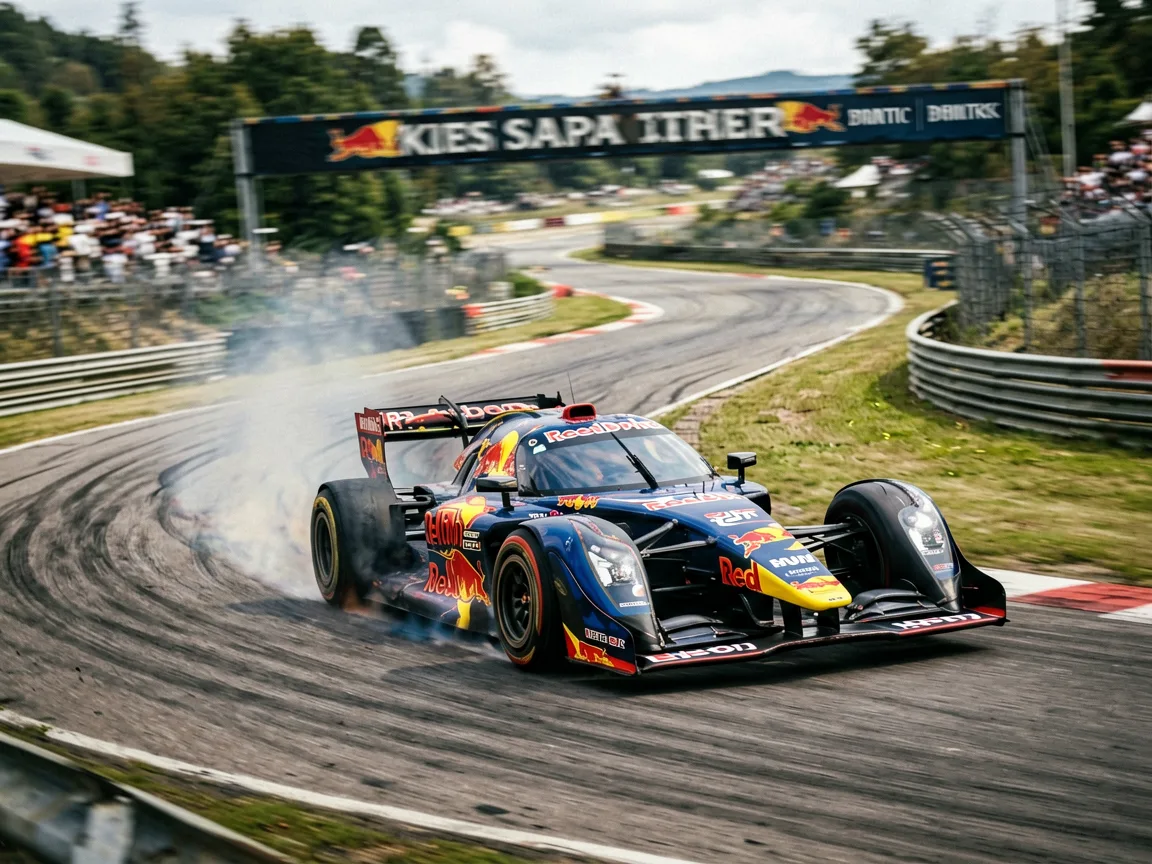
Red Bull Surge Back at Spa as Hadjar Stuns From Back of Grid
Mekies hails a rapidly improving Red Bull package after Verstappen's podium and Hadjar's blistering charge from last to sixth at Spa.
Prost Signs Off With Fourth World Title
Alain Prost bows out of Formula 1 with a fourth world championship, cementing his legacy as the sport's supreme tactical thinker.