Tuchel's Cold Calculus Rescues England From DR Congo Upset
England survived a DR Congo masterclass after half-time tactical adjustments silenced fears of a historic collapse at the World Cup.
A Half-Time Reckoning at the Edge of Elimination
When Anthony Barry addressed the England dressing room at half-time with his side trailing 1-0 to a buoyant Democratic Republic of Congo, his message carried the weight of a tournament hanging in the balance. "For us now, it's absolutely not a time to panic," Barry told his players, channelling the composed analytical voice that has made him Thomas Tuchel's most trusted tactical lieutenant. His instruction was precise: this was "not a time to play gung-ho football."
It was a revealing window into England's half-time recalibration. Barry's phrasing told you everything about how the coaching staff read the situation. DR Congo had been organized, aggressive, and tactically coherent in the first half, pressing England's build-up play with an intensity that disrupted the Three Lions' preferred rhythm of controlled possession and methodical progression. The African side were not merely defending deep and counter-attacking; they were actively dictating the terms of engagement, compressing the pitch, and forcing England into uncomfortable positions.
The temptation in such moments, particularly for a side with England's attacking firepower, is precisely what Barry cautioned against: emotional, reactive football. Bombing full-backs forward, overloading the penalty area, launching hopeful crosses. Tuchel's coaching staff understood that approach would only amplify DR Congo's strengths, giving them the transitional chaos they thrived in.
The Statistical Ghost of 1966
As Barry spoke, the BBC's graphics department delivered a gut punch to every England supporter watching. The last time England had won a World Cup match in which they conceded first? The 1966 final against West Germany. Sixty years of tournament history screaming that falling behind was, statistically speaking, a death sentence.
That statistic, while dramatic, deserves contextual unpacking. England's tournament exits in which they conceded first include some of the most painful chapters in their footballing history: the 1970 quarter-final against West Germany (2-0 up, lost 3-2), the 2002 quarter-final against Brazil, and various group-stage failures where early concessions triggered psychological collapses. The pattern was not accidental. For decades, England's tournament identity was defined by a brittleness when plans went awry early, a cultural and tactical rigidity that prevented in-game adaptation.
What Tuchel and Barry have attempted to install is something fundamentally different: a systematic framework for problem-solving under pressure. This is not about motivation or passion or any of the vague concepts English football traditionally leans on in crisis moments. It is about structure, positional discipline, and trusting the process of controlled escalation rather than panicked assault.
How the Second Half Shifted
Without access to the full tactical breakdown, the contours of England's second-half response can be inferred from the coaching staff's messaging and the eventual result. Barry's instruction against "gung-ho football" implies a deliberate approach: controlled tempo, positional patience, and calculated risk in the final third.
England likely sought to regain territorial dominance through sustained possession in DR Congo's half, pulling their defensive block apart with horizontal circulation before exploiting gaps created by fatigue or positional lapses. This is consistent with Tuchel's broader coaching philosophy, honed across his tenures at Borussia Dortmund, Chelsea, and Paris Saint-Germain, where his teams are built on compact defensive shapes that transition into precise, rehearsed attacking patterns.
The key tactical adjustment likely involved England's central midfield structure. If DR Congo's first-half pressing had disrupted England's build-up, the response would have been to either bypass the press entirely with longer distribution or to create numerical superiority in deeper zones, drawing the Congolese press forward and exploiting the space behind it. Either way, the message was clear: patience over panic, structure over spontaneity.
Kane: The Decisive Intervention
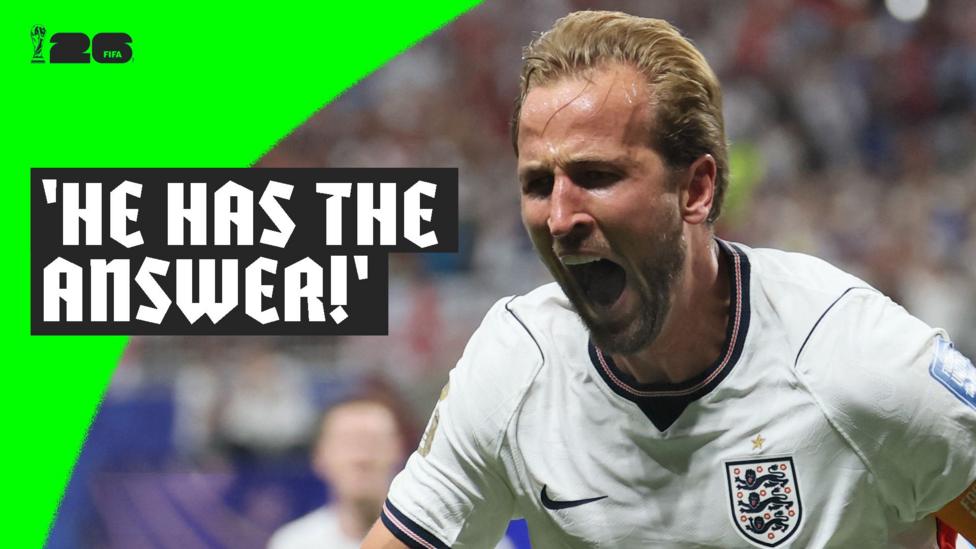
Harry Kane proved once again why he remains indispensable to England's tournament ambitions. His involvement in the comeback underscores a point that tactical purists sometimes overlook: at the highest level, individual brilliance within a collective system is what separates contenders from pretenders.
Kane's importance to Tuchel's England extends beyond goals. His ability to drop deep, link play, and drag centre-backs out of position creates the spatial dynamics that unlock compact defensive setups. Against a DR Congo side that defended with discipline and aggression, Kane's movement between the lines would have been critical to England's second-half resurgence.
There is a broader narrative here about Kane's international legacy. At 32 years old, this World Cup represents what may be his final realistic opportunity to lead England to the summit. His record in knockout football has been scrutinized throughout his career, and delivering in a moment of genuine peril, against a side that genuinely troubled England, adds another layer to his tournament story.
Tactical Shift: England's Mid-Game Evolution
The turning point of this match was not a single moment of brilliance but a collective tactical recalibration at half-time. Barry's directive against reactive chaos forced England to trust their positional structure rather than abandon it.
Several factors likely contributed to the shift. First, tempo control: England almost certainly slowed the game's rhythm in the second half, reducing the transitional opportunities that DR Congo exploited in the first 45 minutes. Second, positional rest discipline: rather than having players chase the game individually, Tuchel's system demands that each player maintains their zone of responsibility, creating the compactness that enables controlled attacks. Third, set-piece and restart management: England's coaching staff, renowned for their set-piece preparation, would have identified opportunities from dead-ball situations as a reliable route back into the match.
DR Congo's first-half performance deserves enormous credit. They arrived with a clear plan and executed it with conviction, exploiting England's early sloppiness and demonstrating the tactical sophistication that African football has increasingly produced at the highest level. Their eventual defeat should not diminish the quality of their approach.
The Geopolitical Subtext
This World Cup is being played against a uniquely charged geopolitical backdrop. The North American tournament has brought football into direct conversation with broader cultural and political currents, and England's matches carry weight beyond the purely sporting. The references to national identity woven through the coverage reflect how this tournament has become a vehicle for broader expression, with supporters and media alike attaching significance that transcends the pitch.
England navigating this environment while managing the tactical demands of knockout football adds a psychological dimension that Tuchel's staff must manage carefully. The margins at this stage are razor-thin, and external noise can infiltrate preparation in ways that are difficult to quantify but impossible to ignore.
The Azteca Awaits
England's reward for surviving this scare is a trip to the Estadio Azteca in Mexico City, one of football's most hallowed and demanding venues. The altitude of 2,240 metres above sea level presents a physiological challenge that will fundamentally shape tactical preparation.
At that altitude, the thinner air affects ball flight, player endurance, and recovery times between sprints. Teams that press high and sustain intense periods of possession face a stark choice: either reduce pressing intensity to conserve energy or accept a significant fitness deficit in the latter stages. Tuchel, a coach who prizes physical data and load management as much as tactical structure, will have been planning for Azteca conditions well before this match.
The tactical implications are substantial. England may need to adopt a more conservative pressing trigger, sitting deeper and allowing opponents to advance before engaging, rather than pressing aggressively in the opponent's half. Alternatively, Tuchel could deploy a rotational squad model, using substitutions strategically to maintain intensity across the full 90 minutes.
For Kane, the altitude presents both a challenge and an opportunity. His game has never been built on explosive pace; his spatial intelligence, finishing precision, and ability to find pockets of space remain effective regardless of atmospheric conditions. If anything, the Azteca's unique environment may reward the kind of economy of movement that defines his best performances.
England survived DR Congo. The question now is whether Tuchel's tactical architecture can withstand the next examination under conditions that will test every aspect of preparation, fitness, and game management. The 1966 stat is dead. The Azteca is alive.
Elena Rossi is a senior football analyst at SportPulse, covering tactical trends and continental European coaching philosophies across international tournaments.
Editorial Integrity
This is an original SportPulse article written by our editorial team. All content is independently researched, written, and reviewed by our writers and editors before publication. We do not publish copied, aggregated, or syndicated content.
SportPulse is committed to original sports journalism. Read our editorial policy or contact us with any questions.
More Like This
All football
Gijón's Ghost: Algeria's 44-Year Wait for an Austrian Reckoning
Algeria face Austria with a last-32 place at stake, haunted by the 1982 scandal that denied them their finest hour.
Kane's Thunderbolt Saves England's Blushes Against DR Congo in Atlanta
Harry Kane's late rocket spared England from embarrassment against a spirited DR Congo side in Atlanta.
Bezos and Liverpool: billionaire fantasy or genuine prospect?
Amazon founder Jeff Bezos has been linked with a Liverpool investment. We separate signal from noise.