Djokovic Survives Rinderknech Test to Keep 25th Major Dream Alive
Seven-time champion digs deep into his reserves to survive a Centre Court thriller and advance at Wimbledon.
A Dive Through Time
There is a photograph the newspapers will run tomorrow, and it will tell you everything about the eternal disconnect between Novak Djokovic and the championship he has made his own. The Serb is suspended in mid-air, horizontal and defying gravity, his racket extended to meet a backhand lob volley at match point. Beneath him, Arthur Rinderknech has slipped at the net, undone by the very turf that bore the dive. And all around them, 15,000 souls on Centre Court stand as one.
It was a moment that summoned the ghost of a young Boris Becker, another man who treated grass as a canvas for flight. Djokovic has never possessed the German's natural inclination to throw his body across the baseline, yet when the match demanded it, when the very pursuit of history teetered on a single point, he morphed into a player five years his junior. This was not merely survival. It was a statement, authored in flesh and flight.
That the point concluded with both men on the floor felt cartoonish, a Hollywood script rewritten by a tennis romantic. The diving backhand lob volley is the game's rarest beast, appearing perhaps twice in a decade on this stage. That it arrived at the climax of a first-week match, with the result still genuinely in doubt, elevated routine theatre into something closer to opera.
The Unlikely Antagonist
Rinderknech's Defiance Defies the Record Book
There was little in the dossier to suggest this would happen. Arthur Rinderknech arrived with a grass-court record of 15 wins and 18 defeats, a mediocre ledger that invited no mythology. His career trajectory, until this evening, had been defined by competence rather than chaos. He was meant to be a body, a name, a notation in the draw. An opponent.
Yet tennis is a sport sculpted by the intangible, and the intangible blessed Rinderknech with a 6ft 5in frame, a booming serve that detonated against the London sky, and surprisingly soft hands that belied his angular build. He had one prior credential of note on this lawns, a victory over Alexander Zverev at last year's Championships, and he carried it like a lucky charm.
The scoreline will read 7-5, 6-4, 1-6, 7-6 (4) and suggest a reasonably comfortable afternoon for the seventh seed. The truth was far more tangled. Djokovic needed four sets but he also needed everything, every reserve, every memory of how to win when the body protests and the confidence wobbles.
The Anatomy of a Struggle
When the Machine Sputters
For two sets, the Djokovic machinery hummed with familiar efficiency. He broke late in the first, again in the second, and the course seemed set. One expected Rinderknech to fold, to acknowledge the hierarchy and depart with grace. Instead, the Frenchman did the opposite. He grew bolder. His serve found the corners with greater regularity. The soft hands at the net produced volleys of increasing delicacy and daring.
The third set was a humiliation, 1-6, a scoreline that embarrassed the script. Rinderknech was not merely competing, he was dominating, stripping Djokovic of rhythm and time, and planting doubt.
Djokovic has spoken often about the psychological weight of the number 25, the eternal quest to surpass Margaret Court. He admits it lingers in quiet moments, on the practice court, in the tunnel before he walks out. Against Rinderknech, you could see the weight manifest, not in brilliance or collapse, but in intensity. Something was off.
The Number That Haunts
Sport has always been governed by numbers, but few athletes have stared so directly at the precipice of history for so long. Djokovic sits on 24 Grand Slam singles titles, tied with Margaret Court atop the all-time list. The 25th has become a quest bordering on obsession, a pursuit he celebrated by winning Olympic gold in Paris last summer, yet the specific tally of major trophies has remained stubbornly, agonisingly static.
"It took a bit of luck and skill in the end."
Djokovic said this afterward, and it was the most honest admission a champion can make. He did not say he was the better player. He did not claim tactical mastery. He acknowledged the two forces that conspired to save him against a player ranked far below him, and in that acknowledgment, there was respect.
Centre Court as Arbiter
The Crowd Finds Its Voice
The relationship between Djokovic and the Wimbledon crowd has been a complex symphony for over a decade. He is respected here, deeply so, but he has rarely been adored. Centre Court has its darlings, and they have rarely worn Serbian colours.
Yet something shifted in the fourth set and in that decisive tiebreak. As Rinderknech pushed and Djokovic responded, as the quality deepened and the stakes sharpened, the crowd began to roar not for the underdog but for the survival of greatness. They wanted to witness history, notIts disruption. By the time match point arrived, the stands had given themselves over entirely to the drama of the moment, partisan only in their thirst for the spectacle to continue.
Wimbledon has always understood its role in the broader theatre of tennis. It is not merely a venue, it is a custodian of legacy. The crowd knew what they were seeing, a champion refusing to yield, an underdog refusing to disappear. The standing ovation that followed was not for Djokovic alone. It was for the sport itself, for the rare afternoon when the script is discarded and raw competition writes its own ending.
What Survives, What Lurks
The draw does not care about narrative. It does not pause to reward grit or honour surviving champions. It advances, and what lies ahead for Djokovic is a gauntlet that will test every facet of this survival.
He advanced, but the match revealed something. The margin is thinner. The reactions are a half-beat slower. The aura that once preceded him onto court, that invisible force that won matches before they began, has been diminished by time and by the exploits of younger rivals. He has to find a way now, as he admitted. The old magic is still there, but it requires excavation rather than spontaneous combustion.
The diving volley will be replayed, dissected, immortalised. But the deeper story of this match is not the moment of brilliance. It is the four sets of attrition that preceded it. It is the knowledge that Rinderknech, a player with a losing record on grass, pushed the greatest player in history to the brink and needed both luck and skill, in Djokovic's own words, to finally fall.
The quest for 25 is alive, but it breathes heavily. It carries the weight of years and the residue of battles. Djokovic has survived, and in survival, there is its own kind of glory. But the road ahead is long, and the young wolves are circling. Centre Court will demand more dives. It remains to be seen how many more the body can give.
Update:
两条报道讲述的是同一场比赛结果,事实内容几乎完全相同,均提到德约科维奇四盘战胜林德尔克内奇晋级温网第四轮。
Editorial Integrity
This is an original SportPulse article written by our editorial team. All content is independently researched, written, and reviewed by our writers and editors before publication. We do not publish copied, aggregated, or syndicated content.
SportPulse is committed to original sports journalism. Read our editorial policy or contact us with any questions.
More Like This
All tennis
The Underdog Summer: Fery and Chwalinska Rewrote the Grand Slam Script
Arthur Fery and Maja Chwalinska proved that tennis still belongs to the unknown, climbing from nowhere to reshape what a Grand Slam deep run means.
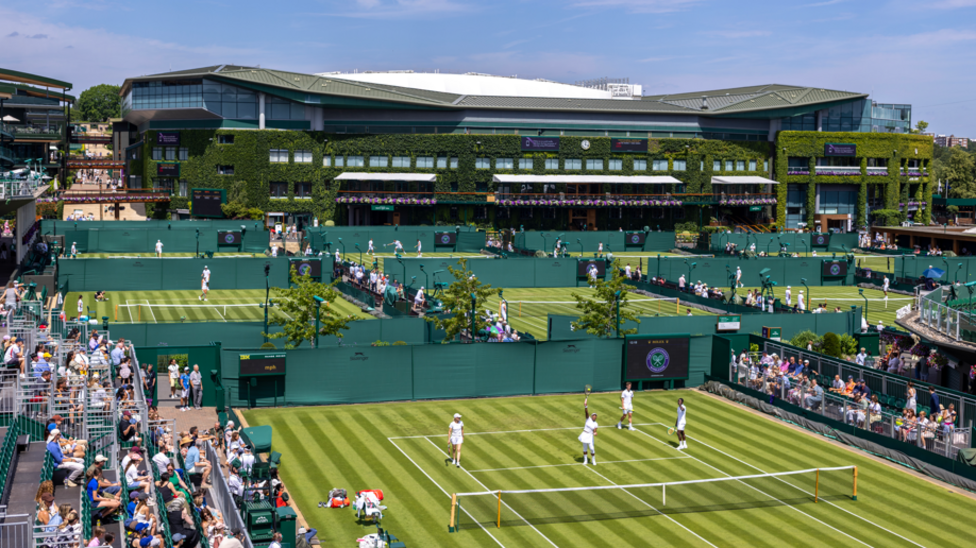
Summer Comfort: How Wimbledon's Week One Weather Could Shape the Draw
Warm but manageable conditions are forecast for the opening week, and that matters more than casual fans realize.

The Pineapple Crown: Wimbledon's Golden Secret of Prestige and Pageantry
A curious pineapple tops the men's trophy, revealing Wimbledon's deep ties to colonial-era symbolism and rare status.