Djokovic Outlasts Auger-Aliassime in Five-Hour Wimbledon Epic
Five hours, fifteen minutes, three tie-breaks, and one indomitable will. Djokovic survived a Centre Court war to reach the semis.
There is a particular kind of silence that swallows Centre Court in the moments before a fifth set. It is not the hush of anticipation but the held breath of exhaustion. Fifteen thousand spectators who have spent the better part of an afternoon and evening gripping the edges of their seats lean forward, collectively suspended between witnessing a coronation and a collapse. On Tuesday, that silence lasted five hours and fifteen minutes before it finally shattered into a roar. Novak Djokovic stood with his arms aloft, the survivor of a Wimbledon quarterfinal that felt less like a tennis match than a three-hour Christopher Nolan epic staged in SW19.
It is worth remembering that what you are watching is not normal — but Novak Djokovic is anything but ordinary in another thrilling Wimbledon match.
The parallels to The Odyssey, which had premiered in London the night before, were almost too neat. A rugged hero embarked on a mighty quest. There was an injury scare. There were seismic shifts in momentum. There were moments when the crowd rose as one, punching the air at the sheer audacity of what they were watching. And in the end, after 7-6 (10), 3-6, 6-3, 6-7 (4), 7-6 (4), it was the 24-time Grand Slam champion left standing, peering over the wreckage at a semifinal date with Jannik Sinner.
The Anatomy of a Marathon
To understand the magnitude of this match, one must first appreciate its rhythm. This was not a match dominated by a single narrative thread. It was a contest of constantly shifting weight, a tug-of-war where neither side could establish a permanent foothold. The first set alone lasted long enough to be a novel's opening chapter, with Djokovic needing a tie-break to clinch it 10-8 after refusing to yield his serve under immense pressure. That opening salvo set the tone for the four hours that followed: uncompromising, brutal, and breathtakingly close.
Felix Auger-Aliassime did not come to Centre Court to play a supporting role in someone else's epic. The young Canadian, armed with one of the most destructive serves in the men's game, played the match of his life. When he took the second set 6-3, breaking the Djokovic serve with a ferocity that startled the arena, it became clear that this was not a ritual. It was a fight.
The Danger of the Doubles
The match pivoted, as so many of Djokovic's great performances do, on his ability to absorb punishment and return it with interest. He took the third set 6-3, reestablishing his authority with the surgical precision that has defined his career. But Auger-Aliassime refused to bend. The fourth set was a masterpiece of tension, neither player giving an inch on serve. When it reached another tie-break, the Canadian raised his game to extraordinary heights, taking it 7-4 and pulling the match level.
Two sets all. Two and a half sets of tennis already played. The prospect of a fifth set between a seven-time Wimbledon champion chasing history and a 21-year-old chasing the breakout win of his career was box office of the highest order. And then came the moment that threatened to turn epic into tragedy.
Midway through the fifth set, Djokovic called for the trainer. A wrap was applied to his upper leg. He moved stiffly between points, his face a mask of controlled discomfort. For a player who has built his legend on physical indestructibility, the sight of him grimacing was jarring. The crowd sensed vulnerability. Auger-Aliassime sensed opportunity.
But this is where the story diverged from the script everyone expected. The injury did not slow Djokovic; it concentrated him. If anything, his movement in the critical moments sharpened. He was not going to lose by retreating. He was going to win by advancing.
The Final Tie-Break
The fifth set raced toward its own tie-break with both players holding serve in a series of games that felt like they would never end. When the final tie-break commenced, the score was tied at 6-6. Everything came down to ten points, maybe fewer, to separate two men who had already given everything.
Djokovic won it 7-4. In the context of five hours and fifteen minutes of tennis, a three-point margin feels both decisive and impossibly thin. It was the third tie-break of the match, and Djokovic had won two of them. This is what he does. When the margin for error shrinks to nothing, when every point carries the weight of an entire afternoon's effort, he finds a way to be better than the player across the net. It is not magic. It is a relentless, almost terrifying will to win.
"One of the best matches in my career."
That was Djokovic's assessment afterward, and it was not hyperbole. He has played 353 Grand Slam matches. He has won more majors than any man in history. For him to place this encounter among the very best speaks to the quality of the opposition and the drama of the occasion.
The Sinner Semifinal: Powers of Recovery Face Stern Test
And so the quest continues. On Friday, Djokovic faces Jannik Sinner in the semifinals, with both players carrying questions about their fitness and form into the showdown. The Italian is the story of the season, a player who has risen through the rankings with a game that seems designed to challenge everything Djokovic does well. Sinner is young, powerful, and fearless. He will not be overawed by the occasion.
But he will have to deal with a man who has just spent five hours proving, once again, that he is the most resilient competitor tennis has ever seen. Djokovic will be favorites. He is always the favorite on Centre Court. But after Tuesday, we know something more about him. We know that even when his body threatens to betray him, even when the opponent across the net plays the match of his life, even when the fifth set stretches into the evening and the crowd holds its breath, Novak Djokovic finds a way.
What makes this semifinal so tantalising is the uncertainty surrounding Djokovic's recovery. He has conducted about as many press conferences in his career as any other tennis player in history. He knows the deal: after a victory, particularly a big one, he will usually be asked by a journalist to preview his next match. He is always ready with a long, expansive response summarising his opponent and his anticipation for the next encounter. He has mastered the art of doing so while keeping his cards close to his chest and not giving away a single important detail.
And so, as the clock ticked into the early hours of Wednesday morning in the aftermath of that breathless, impossible-to-believe five-hour, 15-minute marathon, his next response was telling. Asked how he might physically recover and what the future might hold in his match against Jannik Sinner, for once he had nothing to say: "Let’s see. Let’s see. I have an extra day, which is good … Future will tell."
For a man who always has an answer, the silence spoke volumes. The extra day of rest is a luxury, but whether it will be enough to restore a body that has just endured five hours and fifteen minutes of Centre Court warfare remains the question that will define this semifinal. Sinner, too, has his own questions to answer about his form, making this a clash where neither great can be certain of what version of themselves will take the court.
The hunt for the 25th Grand Slam title goes on. The epic continues.
Beyond the Box Score
The numbers from this quarterfinal tell only part of the story, but they are staggering nonetheless.
- 5 hours, 15 minutes: The match duration, making it one of the longest Wimbledon quarterfinals in the Open Era.
- 3 tie-breaks: Djokovic won the first 10-8 and the fifth 7-4, while Auger-Aliassime took the fourth 7-4.
- 24 Grand Slam titles: Djokovic's current record, with the 25th now just two wins away.
- 7 Wimbledon titles: His chase of an eighth, which would tie Roger Federer's All England Club record, remains alive.
What This Means for Auger-Aliassime
For Felix Auger-Aliassime, this match will sting for a long time. He played well enough to win. He pushed the greatest player of his generation to the absolute limit. But there is no moral victory in a sport decided by numbers on a scoreboard. He will leave Wimbledon knowing that the gap between him and the very top is closable. He served brilliantly, competed ferociously, and showed that his game translates to grass in a way that should worry his rivals for years to come.
But the gap is still there. Closing it requires more than talent. It requires the kind of will that Djokovic displayed in that final tie-break. That is the lesson Auger-Aliassime will take from Centre Court. It is a harsh one, but it is the only one that matters.
The Road Ahead
Djokovic's path to a 25th major now runs through Sinner and, potentially, the winner of the other semifinal. The physical toll of five hours cannot be dismissed, even for a player as meticulous in his recovery as Djokovic. He will have a day off, but the question of how much he has left in the tank will linger over the buildup. His leg was taped. His movement was compromised. And Sinner will have noticed.
But betting against Djokovic at Wimbledon has proven to be a fool's errand. He has now won 27 consecutive Wimbledon matches on Centre Court. He has not lost here since the 2013 final against Andy Murray. The streak is a monument to his dominance on grass and his ability to raise his game when the stakes are highest.
The semifinal against Sinner is not just a match. It is another chapter in a story that may never be replicated. A quest for a 25th Grand Slam, played out on the most famous tennis court in the world, against the player who represents the future of the sport. It is, to borrow a phrase, pure box office.
And if Tuesday was any indication, we should all buckle in for another epic.
Updated: 2026-07-10 — Added semifinal preview details and Djokovic's telling post-match comments on his recovery ahead of the Sinner clash.
Editorial Integrity
This is an original SportPulse article written by our editorial team. All content is independently researched, written, and reviewed by our writers and editors before publication. We do not publish copied, aggregated, or syndicated content.
SportPulse is committed to original sports journalism. Read our editorial policy or contact us with any questions.
More Like This
All tennis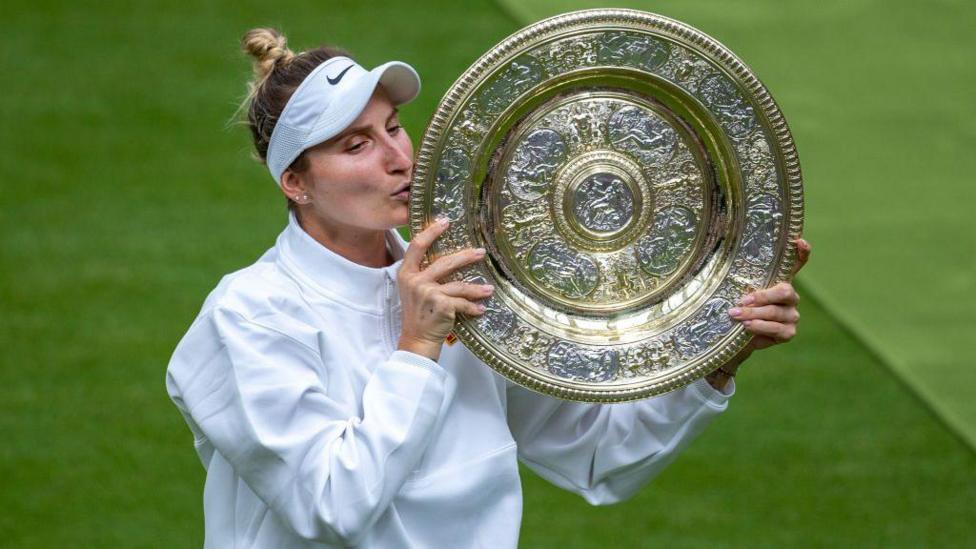
Vondrousova Banned Four Years for Doping Test Refusal
Marketa Vondrousova's career faces ruin after a four-year ban for refusing an anti-doping test in December 2025.
Sneezing, Serving, Surviving: Zverev's Tortured Romance with Wimbledon
Alexander Zverev beat Blockx in four tie-break sets, but his war with grass courts is far from over.
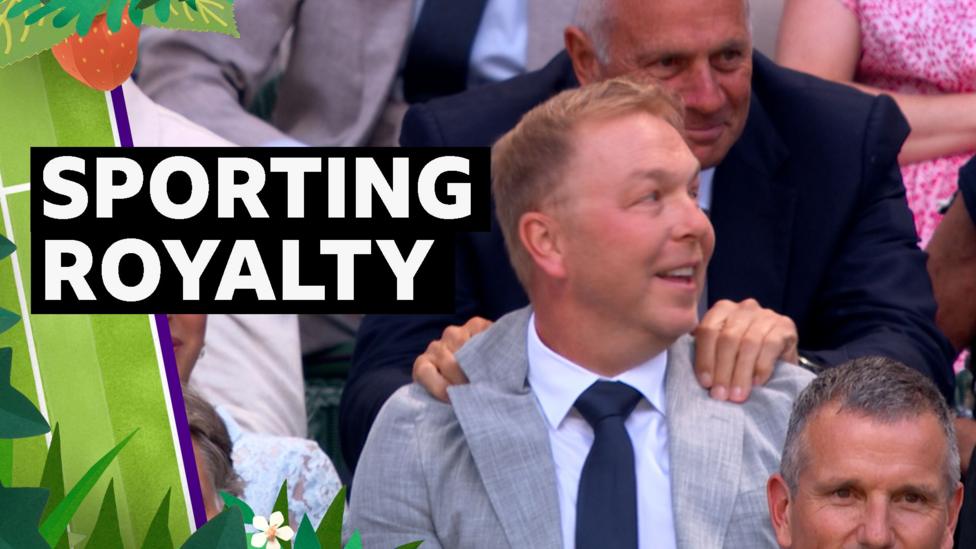
Wimbledon's Royal Box Becomes Sport's Greatest Living Room
Middle Saturday at Wimbledon 2026 turned Centre Court's royal box into a convergence of global sporting royalty beyond tennis itself.