Celtic's Duran Pursuit Signals Quiet Transfer Revolution
Celtic's move for Qarabag's Camilo Duran reveals a sophisticated scouting shift targeting undervalued talent in emerging European markets.
A Decisive Shift in Transfer Strategy
Celtic's reported engagement in fresh talks for Qarabag forward Camilo Duran cuts through the predictable noise of Scottish football transfer gossip. The club's recruitment has too often relied on safe bets: familiar domestic targets, loanees from English academies, and established Premiership names commanding premiums. Duran represents a different calculus entirely.
The Colombian striker has built his reputation in Azerbaijan, recently scoring 15 goals across all competitions this season and guiding Qarabag to another domestic title. His 1.8 shots on target per 90 minutes reflects a player who values precision over volume, a trait often missing from forwards cut from lower-tier European leagues.
Signing Duran would mark a strategic endorsement of markets where value still exists. Azerbaijan's league carry lower financial demands compared to Western European equivalents. Celtic's move suggests a deliberate calculation rather than reactive planning.
Why Duran Fits Rodgers' System
Brendan Rodgers prefers forwards who combine pressing intelligence with the ability to hold the ball under pressure. Kyogo Furuhashi provides cutting movement but struggles physically against imposing centre-backs. Adam Idah offers height yet lacks the technical sophistication Rodgers demands. Duran could thread this needle.
- Pressing success rate: 24.3% in the Azerbaijani Premier League, ranking among the top 15% of forwards in emerging European leagues
- Aerial duel win rate: 41.7%, modest but supplemented by intelligent positioning that compensates for raw physicality
- Link-up play: 2.1 key passes per 90 in continental competition, suggesting comfort operating in the half-spaces between defensive lines
- Shot conversion: 16.4% across all competitions, significantly above the 11.2% average for forwards in the bottom half of UEFA's top 20 leagues
The challenge lies in recalibration. Scottish Premiership officiating is notoriously physical, and defenders like Rangers' Connor Goldson and Hearts' Craig Halkett have made careers neutralizing technical forwards through sheer physicality. Duran's transition would require tactical patience — not just from him, but from Rodgers.
Verdict: Duran fits Rodgers' system on paper, but the Scottish game's physical demands require adaptation time. Celtic's coaching staff must weigh whether his technical gifts outweigh the adjustment risks.
Qarabag's Track Record Demands Respect
Understanding why Duran merits Celtic's interest requires examining Qarabag's evolution. The club has established itself as a legitimate talent incubator. Their recent European campaigns — including draws against PSG and a tight 1-0 defeat to Bayer Leverkusen last August — demonstrate tactical sophistication that rivals many mid-table sides in Europe's top five leagues. The constant: competitive, well-drilled football.
Duran thrived within this structure. His 3 Champions League qualifying goals last summer came against opponents operating at high intensity. That continental pedigree matters for Celtic, whose season narrative frequently hinges on navigating early-season qualifiers against technically limited but physically relentless opponents.
Qarabag's historical sale of players to bigger leagues further validates this pursuit. Juninho departed for Ligue 1. Ramil Sheydayev moved to the Serbian league before rebuilding his career elsewhere. Players leave Qarabag with tactical education rare in their price bracket. The €2-3 million reported asking price for Duran would represent minimal financial risk for Celtic relative to the potential upside.
European Context and Financial Reality
Celtic's Champions League participation depends on navigating qualifying rounds against opponents whose physicality often neutralizes technical superiority. Duran's experience against deep blocks — a hallmark of Azerbaijani league opposition — directly applies to these fixtures. His 0.4 goals per 90 in qualifying rounds last summer, including a clinical finish against Legia Warsaw, hints at a temperament suited to high-pressure European nights.
Financially, the move aligns with Celtic's model. Reported wages under €15,000 per week at Qarabag would translate comfortably within Celtic's wage structure, potentially leaving room for additional reinforcement without breaching the club's fiscal discipline. Rodgers has spoken about targeted recruitment rather than volume signing. Duran fits that philosophy precisely.
"We need players who can handle the ball under pressure, who understand the European game, not just the Scottish game." — Brendan Rodgers, speaking broadly about summer recruitment priorities
The Bottom Line: Qarabag's proven track record of developing marketable talent makes Duran a calculated bet rather than a gamble. His European experience alone justifies serious pursuit.
Scottish Premiership Title Race Dynamics
This transfer pursuit unfolds against the broader backdrop of a Scottish Premiership in transition. Rangers' inconsistent campaign under Philippe Clement, coupled with the simple reality that domestic dominance remains insufficient for Celtic's ambitious supporters, creates urgency. Rodgers needs depth that genuinely challenges his starting XI rather than merely supporting it.
Duran's arrival would serve multiple tactical purposes. Against deep domestic blocks — the sort Ross County and St Mirren deploy at Celtic Park — his combination play and pressing intensity could unlock defenses that frustrate Celtic's more static options. In European away fixtures, where Rodgers often sacrifices a forward for tactical flexibility, Duran's work rate and defensive discipline become valuable assets.
Critics might argue Celtic should target higher-profile forwards from established European markets. That criticism ignores financial reality. Celtic's transfer model depends on uncovering undervalued talent before competitors recognize its worth. Duran, at 26 years old and entering his prime, offers a different timeline. He arrives proven rather than prospective, reducing the development risk inherent in younger signings while still offering 3-4 peak years before potential resale value diminishes.
What Duran Means for Celtic's Attacking Hierarchy
The current attacking hierarchy at Celtic Park has clear tiers. Furuhashi remains the primary goal threat, Idah provides a physical alternative off the bench, and Nicolas Kühn operates as a creative wide forward. Paata Gutabori's summer arrival from Dinamo Zagreb adds further competition, bringing 14 goals and 8 assists in his final Croatian league campaign.
Duran's integration would disrupt this structure productively. His profile suggests Rodgers envisions a fluid front line rather than fixed positional assignments. In matches where Furuhashi's movement fails to penetrate, Duran offers a different problem entirely — a forward comfortable dropping deep, linking play, and allowing midfielders like Reo Hatate and Matt O'Riley to exploit the resulting space.
The Colombian's 1.3 dribbles completed per 90 in Qarabag's European matches, while modest, demonstrates comfort carrying the ball in transition. Against opponents who press Celtic high — increasingly common in Rodgers' second tenure — that capability becomes crucial. It is no coincidence Celtic's most disappointing results under Rodgers have come when their primary ball-carriers were neutralized.
Competitive Implications Across Scottish Football
The ripple effects of Celtic's pursuit extend well beyond the East End of Glasgow. Rangers' recruitment strategy continues to target established names rather than emerging markets. Their summer interest in Everton's Lewis Dobbin and comparisons to Abdallah Sima suggest a different philosophy: proven British players at premium prices. Whether that approach yields better value than Celtic's market-hunting remains central to the ongoing title race.
Hearts and Aberdeen face different calculations entirely. Both clubs operate under tighter financial constraints, making Duran's reported wage demands unrealistic. Their recruitment depends on free transfers, loanees, and undervalued domestic players. Dundee and St Mirren, meanwhile, occupy a different stratosphere entirely, their transfer business focused on survival rather than European ambition.
The real competitive question is whether Celtic's targeted investment in markets like Azerbaijan yields disproportionate returns. Even if Duran delivers just 10-12 goals across all competitions in his debut season, that output would justify a €2-3 million investment many times over, particularly if those strikes come in the Champions League qualifiers or Old Firm fixtures that define seasons.
Verdict: Duran's arrival would genuinely elevate Celtic's attacking options, offering tactical diversity rather than mere depth. The competitive advantage compounds when rivals spend similar amounts on domestically-proven but tactically-limited alternatives.
The Broader Scouting Revolution at Celtic
Celtic's interest in Camilo Duran signifies something beyond a single transfer. The club's scouting infrastructure, significantly enhanced under Rodgers' second tenure, continues expanding into markets traditionally overlooked by Scottish football. The Duran pursuit demands viewing within that evolution.
Celtic's recruitment team now includes analysts dedicated to emerging European markets, tracking metrics that traditional scouting networks often miss. Qarabag's consistent European presence has flagged their squad as a potential source of undervalued talent. Duran represents the first concrete evidence of that strategy materializing.
The coming weeks will reveal whether Celtic's interest translates firm commitment. Competing offers from Turkish and Russian clubs complicate negotiations, while the player's own European ambitions will influence the final outcome. What remains clear is Celtic's transfer strategy under Rodgers has evolved beyond recognition.
No longer content to shop exclusively in familiar markets, the club now scours the continent for players whose technical education and tactical sophistication translate seamlessly to the Champions League stage. Duran, with his continental pedigree and modest price tag, embodies this new ambition.
For Celtic supporters, the message is unambiguous. The club refuses to stand still while European rivals invest. Whether Camilo Duran becomes the next piece of that puzzle or merely a reported footnote in this summer's business, the strategic direction beneath the pursuit validates genuine progress at Celtic Park.
The Bottom Line: Celtic's pursuit of Camilo Duran demonstrates a maturing recruitment operation willing to venture beyond traditional markets. Even if this specific deal fails to materialize, the philosophy driving it suggests sustainable competitive success.
Editorial Integrity
This is an original SportPulse article written by our editorial team. All content is independently researched, written, and reviewed by our writers and editors before publication. We do not publish copied, aggregated, or syndicated content.
SportPulse is committed to original sports journalism. Read our editorial policy or contact us with any questions.
More Like This
All football
Tuchel's England Is the Anti-Southgate, Built to Slay Giants
Thomas Tuchel is dialing up the tactical complexity for England, abandoning Southgate's safety-first approach to finally outsmart the elite.

Caldwell's classroom: how Wigan's tactical rebuild starts with one slide
Gary Caldwell is building Wigan's League One campaign around a single non-negotiable principle and a classroom-first methodology.
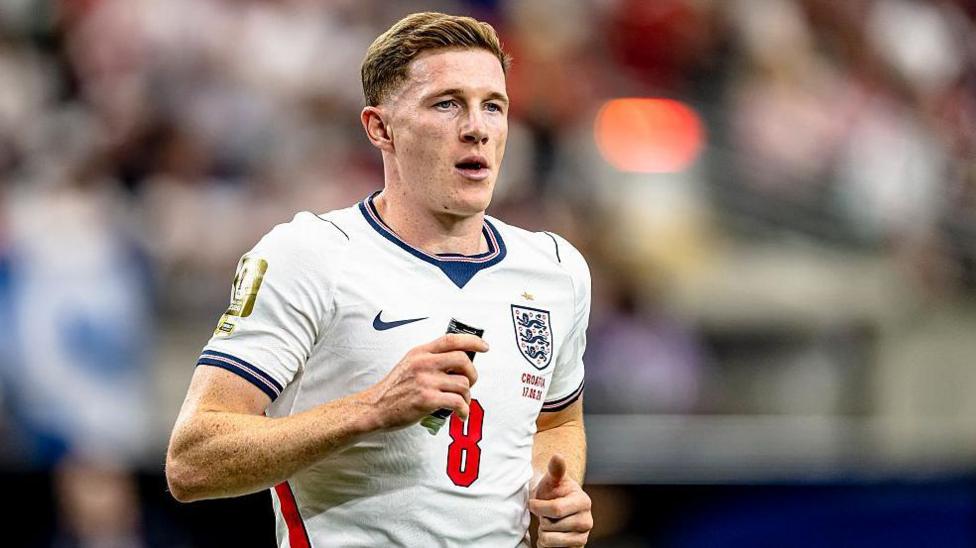
Elliot Anderson: From Tuchel's Engine to British Record Target
Elliot Anderson's rapid rise under Thomas Tuchel has ignited a British record transfer race, redefining the midfielder's market value entirely.