The Day Ben Stokes Made Cricket Immortal: Inside His Greatest Innings
Ben Stokes retires from Test cricket, but his 2019 World Cup final heroics will echo forever in sporting folklore.
title: "The Day Ben Stokes Made Cricket Immortal: Inside His Greatest Innings"
category: long-reads
badge: Feature
badgeType: category
author: Sarah Martinez
authorRole: Transfer Correspondent
authorInitials: SM
date: 2026-06-28
readTime: 7 min read
image: https://ichef.bbci.co.uk/ace/standard/976/cpsprodpb/c119/live/c5444d80-7303-11f1-8e1d-bbbb1017d210.jpg
imageAlt: Ben Stokes celebrating after England's 2019 Cricket World Cup victory at Lord's
tags: ICC Cricket World Cup, Test Cricket, England Cricket
excerpt: "Ben Stokes retires from Test cricket, but his 2019 World Cup final heroics will echo forever in sporting folklore."

The Weight of a Nation, the Swing of a Bat
There is a single image that defines Ben Stokes better than any stat sheet ever could. Lord's, July 14, 2019. The sun slicing across the famous old ground. Stokes on his knees, arms spread wide, face twisted somewhere between agony and ecstasy, the entire cricketing world suspended in that one frozen heartbeat.
England had never won a 50-over World Cup. Not once in 44 years of trying. And there, in the final against New Zealand, everything was falling apart again. Until it wasn't.
"I didn't know where I was for a moment. I didn't know if we'd won or lost. Everything just went white." — Ben Stokes, post-match interview, 2019
Now, as Stokes announces his retirement from Test cricket, that afternoon at Lord's takes on a different kind of glow. The firebrand all-rounder, the man who thrived on chaos, is stepping away from the longest format. And while his Test legacy is monumental in its own right, it is that World Cup final that will be etched into eternity.
How It Unfolded: From Desperation to Destiny
England entered the 2019 World Cup as overwhelming favourites on home soil. They had spent four years rebuilding their white-ball identity under Eoin Morgan, transforming from the embarrassment of the 2015 group-stage exit into the most destructive ODI side the game had ever seen. They posted 481 for 6 against Australia in 2018. They held the record for the highest ODI total. They had Jason Roy, Jos Buttler, Jonny Bairstow, Joe Root, and Stokes himself.
But finals have a way of ignoring reputations.
New Zealand, led by the calm, unflappable Kane Williamson, batted first and posted 241 for 8. Not a daunting total. Not a straightforward one either. The Lord's pitch was slow, holding up, offering seam movement. It was a surface that demanded patience, not pyrotechnics.
England's chase began catastrophically. Henry Nichollslbwd Chris Woakes early, but it was the middle-order collapse that sent shivers through the crowd. At 86 for 4, then 118 for 5, England were sinking. The ghosts of every failed knockout campaign, every semi-final heartbreak, every English sporting capitulation were circling Lord's like vultures.
Stokes Refuses to Die
What happened next was not normal cricket. It was not even normal sport. It was something closer to myth.
Stokes walked in at 71 for 3 and immediately looked different. Not panicked. Not reckless. He played himself in with a discipline that belied his reputation as a destroyer. He worked singles. He blocked. He watched partners fall around him.
When Buttler was dismissed for 59 with England still needing 46 from 31 balls, Stokes was running out of allies. The tail was exposed. The equation was slipping.
But here is what separated Stokes from every other cricketer on the planet that day: he never panicked. Not once. His eyes stayed locked. His movements stayed measured. Even as the required rate climbed, even as wickets tumbled at the other end, Stokes kept finding the boundary.
- 84 not out off 98 balls — his highest score in a World Cup match
- 5 fours and 2 sixes in the innings, none bigger than the one that sailed over long-on in the 49th over
- A deflection off his bat for four overthrows in the final over that became the most controversial moment of the match
The Overthrow: Controversy That Won't Fade
No recounting of Stokes' innings is complete without addressing the moment that still divides cricket.
With 9 needed from 3 balls, Stokes dived to complete a second run. The throw from Martin Guptill struck his outstretched bat and deflected to the boundary. Umpire Kumar Dharmasena awarded six runs — two completed by the batsmen plus four overthrows. England needed just 3 from 2 balls.
"If that had been any other player, the ball hits them and it's dead. It just happened to be Ben Stokes. You can't script that." — Nasser Hussain, Sky Sports commentary
The ICC later acknowledged the umpires had made an error. The law states the batsmen had not crossed when the ball was released, meaning only five runs should have been awarded. It was, and remains, one of the most debated decisions in cricket history.
But controversy or not, Stokes was there. He always seemed to be there.
The Super Over: When Sport Became Theatre
The match finished tied. The Super Over finished tied. England won on a boundary countback rule that was scrapped shortly after. It was, by any measure, the most dramatic conclusion to a World Cup final in the tournament's 44-year history.
Stokes and Buttler faced the Super Over for England. They scored 15 runs. New Zealand needed 16 to win and fell agonisingly short.
When that final ball was bowled, when the run-out confirmed England's victory, Stokes did not celebrate immediately. He stood motionless for what felt like an eternity, hands on his knees, processing the magnitude of what had just unfolded. The man who had carried an entire nation on his shoulders, who had battled through addiction headlines, legal troubles, and personal demons to reach this moment, was finally allowed to breathe.
Behind the Innings: The Mental Battle No One Saw
Stokes' 2019 World Cup final was not just a display of technical brilliance. It was a psychological masterpiece.
Consider what he was carrying into that tournament. The Bristol nightclub incident from 2017 had cast a long shadow. He had been charged with affray, acquitted, but the toll was visible. He had spent months away from the game, watching from the sidelines as England played without him, wondering if he would ever return to his best.
When he did return, he returned angry. Hungry. Proving a point to everyone who had written him off.
His tournament numbers told the story:
- 465 runs in 11 innings at an average of 66.42
- 7 wickets with the ball, including crucial breakthroughs in tight matches
- Named Player of the Match in the final
The Leadership Factor
What is often overlooked is how Stokes' presence elevated everyone around him. When he was calm, the dressing room was calm. When he believed, they believed. Morgan, the captain, built his tactical framework around having Stokes as the ultimate pressure valve. The plan was simple: get to the death overs with Stokes still in, and let him do what he does.
"There's no one else in world cricket I'd want in that situation. He doesn't feel pressure the way normal people do. He feeds off it." — Eoin Morgan, 2019
The Test Retirement: Closing One Chapter
Stokes' decision to retire from Test cricket comes as both a surprise and an inevitability. Following day four of England's third Test against New Zealand at Trent Bridge, he explained his reasons in his own words, stating simply that "the time was right" to leave international cricket and that he had become "burned out" in the build-up to the summer. The mental and physical toll of the game had become too great. His body has been breaking down for years. His knees, his hamstring, his shoulder — the price of bowling at 90mph and diving around in the field for over a decade has been brutal.
"There's so much people don't see," Stokes elaborated, hinting at the unseen burdens behind his decision.
In Test cricket, he finishes with:
- 6,335 runs at an average of 35.59
- 197 wickets at 32.07
- 10 centuries, including the unforgettable 135 not out at Headingley in the 2019 Ashes
- 128 caps across a career that spanned 13 years
That Headingley innings, where he dragged England from the dead against Australia with the tail for company, sits alongside the World Cup final as the twin peaks of his career. Two innings that defied logic. Two innings that redefined what one man could achieve under pressure.
Former England captains Michael Vaughan and Sir Alastair Cook have since offered a deeper window into the toll that led to this moment, following the conclusion of the third Test against New Zealand at Trent Bridge. Cook, one of the most durable cricketers England has ever produced and someone who understands the relentless demands of international cricket as well as anyone, reflected with characteristic empathy: "I think he's had enough." It was a simple verdict, but one that carried the weight of a man who has walked that long, lonely road himself.
Cook's assessment goes beyond the physical injuries that have plagued Stokes in recent years. It speaks to the emotional and psychological exhaustion of being the player everyone turns to when the situation is at its most desperate — over and over again. The World Cup final. The Headingley Ashes innings. Countless Test matches where Stokes dragged his team from the brink. Each one came at a cost, and Cook's words suggest those costs finally compounded beyond what even Stokes could absorb.
Vaughan, ever the blunt analyst, echoed the sentiment while emphasising the scale of the loss. "England will miss Stokes' winning persona," Vaughan stated, acknowledging the team must now find a way to move forward without one of their "greatest" players. For Vaughan, the retirement is not just about losing a world-class all-rounder; it is about losing the single most influential presence in the dressing room. He has consistently argued that Stokes' value was never fully captured by statistics alone — it was in the way he transformed the belief of everyone around him, the way an entire team felt invincible simply because he was walking out to bat.
Together, the perspectives of Cook and Vaughan paint a picture of a cricketer who poured every last ounce of himself into the game until there was nothing left to give. Not a player who lost his ability, but a player who lost his reserves. The distinction matters. It means Stokes' retirement is not a decline — it is a release.
What Stokes Leaves Behind
The legacy is complex. Stokes was never a conventional cricketer. He was not meticulous like Root, not flamboyant like Buttler, not tactical like Morgan. He was raw. Primal. A cricketer who played on instinct and emotion, who could look completely out of form for weeks and then produce something supernatural when it mattered most.
For England cricket, his retirement from Tests creates a gaping hole. The Bazball revolution under Brendon McCullum was built, in many ways, around Stokes' philosophy: attack, express, refuse to die. Without his leadership and his presence at number six, England will need to find a new heartbeat. The path forward, as Vaughan suggests, will require the team to collectively embody that winning spirit Stokes personified, rather than seeking a single individual to fill his colossal shoes.
But there is something fitting about stepping away now. Stokes gave everything he had to Test cricket. He left nothing on the field. And for those who watched him at Lord's that July afternoon in 2019, who saw him on his knees in the grass, the sun fading, the boundary rope inches behind him — for those people, Ben Stokes will never truly retire.
Some moments are bigger than formats. Bigger than statistics. Bigger than the game itself.
That was one of them.
Updated: 2026-10-10 — Incorporated Ben Stokes' direct explanation for his retirement, including his quotes "the time was right" and "there's so much people don't see".
Editorial Integrity
This is an original SportPulse article written by our editorial team. All content is independently researched, written, and reviewed by our writers and editors before publication. We do not publish copied, aggregated, or syndicated content.
SportPulse is committed to original sports journalism. Read our editorial policy or contact us with any questions.
More Like This
All long-reads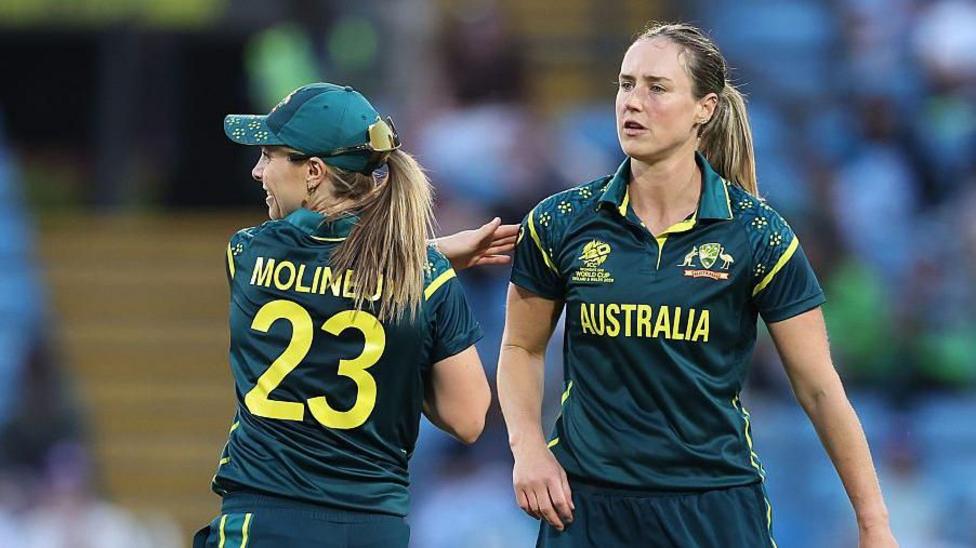
Australia's Ruthless Machine Rolls On As Perry Orchestrates Pakistan Demolition
Ellyse Perry's masterful 71 powered Australia to a 113-run annihilation of Pakistan, tightening their grip on semi-final qualification.

Fitzpatrick Shares Scottish Open Lead Before Fog Halts Play
Matt Fitzpatrick's four bogeys put him tied for the lead at the Scottish Open before fog suspended third-round play at The Renaissance Club.
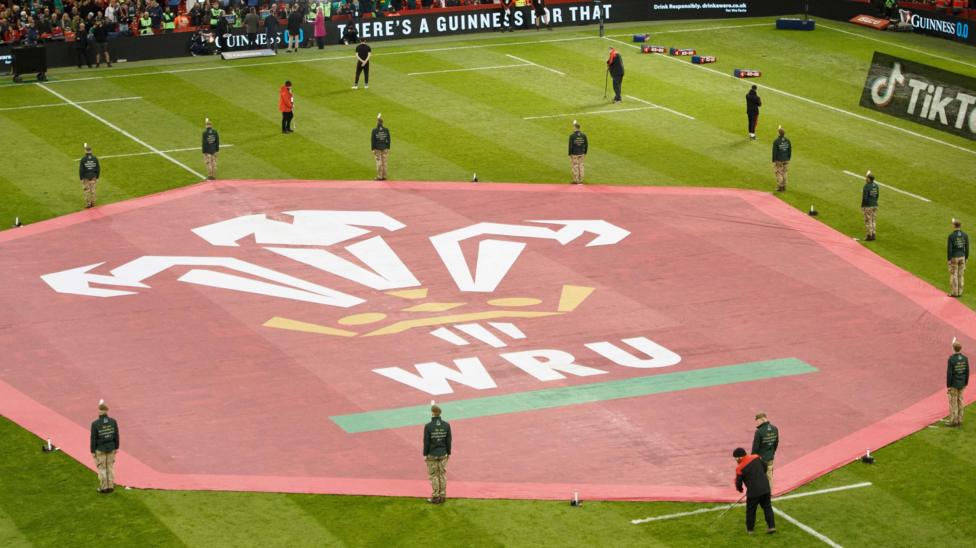
WRU Kicks the Can: Plan to Axe a Pro Side Gets Another Delay
The Welsh Rugby Union once again postpones revealing which professional region faces the axe under its 2028 restructuring plan.